
The Commune, by Louise Michel
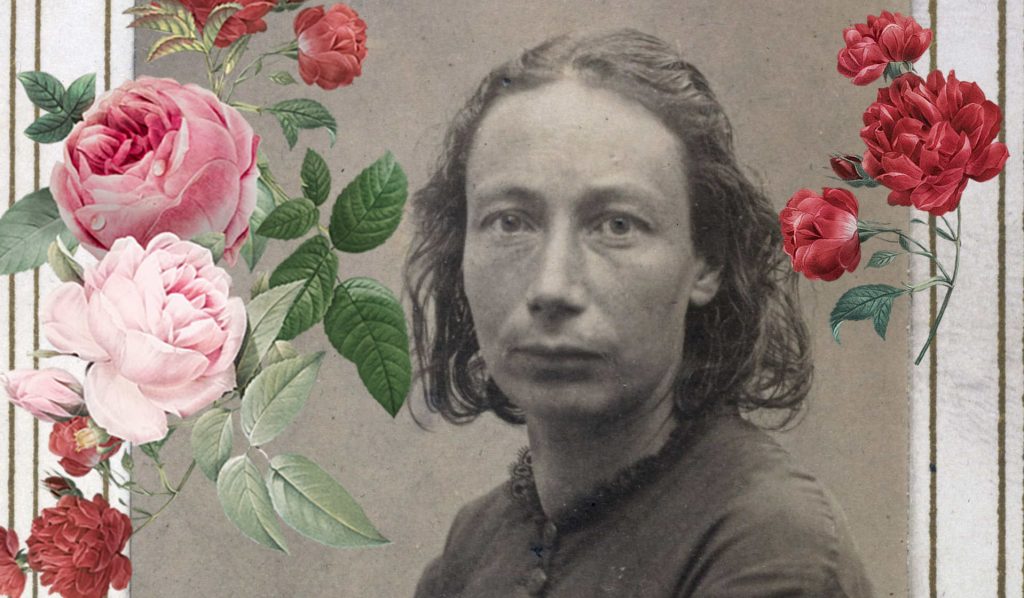
PART I – THE AGONY OF THE EMPIRE
Chapter 2 – Literature at the end of the Empire – Manifestations of Peace
Chapter 3 – The Internationale – Foundation, Trial, and Protests Against War by the Internationale
Chapter 4 – The Funeral of Victor Noir – The Story as Told by Rochefort
Chapter 5 – The Trial of Blois
Chapter 6 – The War – Official Dispatches
Chapter 7 – The Affair of La Villette — Sedan
PART II – THE REPUBLIC OF 4 SEPTEMBER
Chapter 2 – The National Reform
Chapter 4 – From 31 October to 22 January
PART III – THE COMMUNE
Chapter 2 – The Lies of Versailles — Manifesto — The Central Committee
Chapter 3 – The Affair of March 22
Chapter 4 – Proclamation of the Commune
Chapter 5 – The Early Days of the Commune – Measures – Life in Paris
Chapter 9 – The Provincial Communes
Chapter 10 – The Army of the Commune — The Women of 1871
Chapter 11 – The Last Days of Freedom
Chapter 13 – The Exchange of Blanqui for the Archbishop and Other Hostages
PART IV – THE MASSACRE
Chapter 1 – The Struggle in Paris — The Slaughter
Chapter 3 – From the Bastions to Satory and Versailles
Chapter 4 – The Prisons of Versailles – The Posts of Satory – Trials
PART V – SINCE
Foreword
When the foolish walks silently today,
Like the ocean, she will roar.
When she breathes to the point of delight,
The Commune will rise again.
We will return, countless and united,
We will come by every path.
Avenging specters emerging from the shadows,
We will come, hand in hand.
The night will carry the banner,
The black flag draped in blood;
And crimson will blossom on the earth,
Free under the blazing sky.
*
The Commune is now ripe.
The events, from a distance of twenty-five years, are taking shape, gathering in their true form.
On the horizon’s distant edges, events accumulate today in the same way, with one difference: back then, France was awakening; today, it is the world.
A few years before its end, the dying Empire clung to everything—grass as much as rock; even the rock crumbled. The Empire, its claws bleeding, clung still, with nothing beneath it but the abyss. And yet it persisted.
Defeat was the mountain that crushed it as it fell.
Between Sedan and now, things have become spectral, and we ourselves are specters, having lived through so much death.
This epoch is the prologue to the drama that will shift the axis of human societies. Our imperfect languages cannot convey the magnificent and terrible impression of the past disappearing as it merges with the rising future.
In this book, I have sought above all to revive the drama of 1871:
A world being born from the ruins of a world in its final hour.
Yes, the present is much like the end of the Empire, with a fierce intensification of repression, a sharper ferocity of bloody horrors resurrected from the cruel past.
As if anything could stop the eternal pull of progress! You cannot kill an idea with cannon fire or bind it with chains. The end hastens all the more as the real ideal emerges, powerful and beautiful, surpassing all the fictions that came before it.
The more the present crushes the masses, the greater their haste to break free.
Writing this book is to relive those terrible days when liberty brushed us with her wing and then flew away from the slaughterhouse. It is to reopen the bloody grave where, under the tragic dome of the flames, the Commune lay down beautiful for her wedding with death— the red wedding of martyrdom.
In this terrible grandeur, her courage in the supreme hour will forgive the scruples and hesitations of her profound honesty.
In future struggles, we will no longer find such generous scruples, for with every popular defeat, the masses are bled like animals at the slaughterhouse. What we will find is implacable resolve.
The dead on Versailles’ side were a mere handful, each of whom had thousands of victims sacrificed to their whims. On the Commune’s side, the victims were nameless and countless. The heaps of corpses defied estimation. Official lists admitted thirty thousand, but a hundred thousand, or more, would be closer to the truth.
Though they carted off the dead in heaps, new mounds kept forming, like piles of wheat ready for sowing. They were buried hastily. Only the buzzing of flies in the charnel houses terrified the butchers.
For a moment, we had hoped for the peace of deliverance, the Marianne of our fathers, the beautiful one who, they said, the earth awaited and still awaits. We hope for her still, more beautiful for having been so long delayed.
The journey is rough, but it will not be eternal. What is eternal is progress, placing on the horizon a new ideal when yesterday’s dream has been achieved.
Indeed, our dreadful times would seem paradisiacal to those who once wrestled prey and lair from great beasts.
As the age of caves has passed, so will ours sink into oblivion. Yesterday or today, they are both equally dead.
We loved, in our vigils of arms, to speak of struggles for liberty. And now, in this waiting for a new spring, we will tell of the days of the Commune and the twenty-five years that feel more like a century, from the massacre of ’71 to the dawn that rises.
Heroic times are beginning. The masses gather like swarms of bees in spring. The bards rise, singing a new epic. It is indeed the vigil of arms, where the specter of May will speak.
London, May 20, 1898.
PART ONE: THE AGONY OF THE EMPIRE
I. THE AWAKENING
The Empire was ending, killing at its leisure.
In its chamber, where the threshold smelled of blood,
It feasted; but in the air, La Marseillaise
Was blowing, red was the rising sun.
(L. M., Songs of the Prisons)
In the terrifying night that had covered the Third Empire since December, France seemed dead; but in times when nations slumber as if entombed, life grows and branches out silently. Events call to each other, responding like echoes; in the same way, one vibrating string causes another to vibrate.
Grand awakenings follow these apparent deaths, and the transformations that emerge from slow evolutions burst forth.
Then, invisible forces envelop beings, gathering them, driving them forward, so powerfully that action seems to precede will. Events accelerate—it is the hour when hearts are tempered as steel is forged in a furnace.
Over there, through the cyclones, when sky and earth become a single night, where waves groan like human chests, hurling their furious claws at the rocks White with foam, under the howling wind, one feels alive, deep in time, amidst the unleashed elements. Yet through revolutionary storms, the pull is forward.
The epigraph of this chapter conveys the feeling experienced at the end of the Empire by those who threw themselves into the struggle for freedom:
The Empire was ending, killing at its leisure.
In its chamber, where the threshold smelled of blood,
It reigned; but in the air blew La Marseillaise,
Red was the rising sun.
Liberty swept across the world, and the Internationale was its voice, crying out across borders the demands of the dispossessed.
The fabric of police conspiracies, woven under Bonaparte, became evident: the slaughter of the Roman Republic, the expeditions to China and Mexico revealing their hideous truths, the memory of those killed during the coup d’état—all of it formed a mournful procession for the man Victor Hugo called “Napoleon the Small.” He was drenched in blood up to the belly of his horse.
Everywhere, like a tidal wave, misery was rising, and the loans from the society of the Imperial Prince could do little to stem it. Paris, nonetheless, paid heavy taxes for this society and perhaps still owes two million.
Terror surrounded the Élysée in its revelry. The legend of the First Empire and the infamous seven million votes extorted through fear and corruption formed a supposedly impenetrable barrier around Napoleon III. The man with the wandering eyes hoped to reign forever.
Yet the barrier was riddled with breaches, and through the one at Sedan, the revolution finally passed.
None of us then thought anything could equal the crimes of the Empire.
This era and ours resemble each other, as Rochefort put it, like two drops of blood. In that inferno, as today, poets sang the epic that would be lived and died for—some in fiery stanzas, others with bitter laughter. How many of our songs from then would still be relevant today?
Bread is expensive, money is scarce,
Haussmann raises the rents,
The government is stingy,
Only the spies are well-paid!
Tired of this long Lent
That weighs on the poor folk,
It just might be, all the same,
That we’ll take the bit between our teeth!
Let’s dance the Bonaparte,
It’s not us footing the bill!
Let’s dance the Bonaparte!
And we’ll add to the tune
The violins.
—J.-B. Clément
Words held no fear in denouncing the ignominies of power to its face.
The song of La Badinguette made the imperialist ranks howl with fury:
Friends of power,
Do you want to know
How Badinguette,
With a flick of the wand,
By chance became
Madame Caesar?
The beauty in the depths of Spain
Resided there.
Ah! The Champagne drinker
That she was!
Friends of power, etc.
That my people may cry or blaspheme,
I couldn’t care less!
Who was a spy in England,
Then an executioner,
Can well, without disgrace,
Become a pimp…
Friends of power, etc.
—Henri Rochefort
Among the joyful memories of our prisons is the song of La Badinguette, sung one evening at full voice by the mass of us prisoners at the Versailles workyards, between the two smoky lamps that lit our bodies stretched out on the ground against the walls.
The soldiers guarding us, for whom the Empire still endured, were at once terrified and furious.
“We will impose exemplary punishment for insulting His Majesty the Emperor!” they shouted.
Another refrain, picked up by the crowd and shaking off the imperial rags, had the same power to enrage our captors:
Two sous for the whole bunch:
The father, the mother, Badingue,
And little Badinguet!
The belief in the Empire’s permanence was still so strong within the Versailles army that, as certainly many others did, I was able to read on the indictment order delivered to me for trial at the Versailles court:
“In view of the report and the opinion of Mr. Reporter and the conclusions of Mr. Imperial Commissioner, requesting referral to the 6th War Council, etc.”
The government did not think it worth the trouble to change the wording.
For a long time, the resignation of the masses to suffering had held us back…
During the final tormented years of Napoleon III, indignation swelled. We, the enthusiasts of deliverance, had seen it coming so far in advance that our impatience only grew greater. Fragments from that time have stayed with me:
TO THOSE WHO CHOOSE TO REMAIN SLAVES
Since the people want the imperial eagle
To soar over their degradation,
Since they sleep, crushed under the cold gust
Of eternal oppression;
Since they, all of them, still wish to be slaughtered,
Offering their chests to the blade,
Let us, O my friends, storm the horrible slaughterhouse—
We will liberate the flock!
One alone is a legion when he gives his life,
When he bids farewell to all:
One by one, we will march—boldness terrifies.
We have steel and fire!
Enough cowardice—the cowards are traitors;
Vile mob, drink, eat, and sleep.
Since you wish to wait, then wait, licking your masters.
Have you not had enough deaths?
The blood of your children reddens the earth,
Sleep in the charnel house with deaf walls.
Sleep, while bee by bee,
The heroic swarm of the suburbs gathers!
Montmartre, Belleville, O valiant legions,
Come, the time has come to end this.
Rise! Shame is heavy, and the chains are weighty.
Rise! It is beautiful to die!
—L. N.
Oh, how long we had wanted to rip our bleeding hearts from our chests and hurl them into the face of the imperial monster!
How long we had been saying, coldly resolved, these lines from Les Châtiments:
Harmodius, it is time,
You can strike this man with serenity.
And so it was done, as one might remove an obstructive stone from the rails.
At that time, tyranny had but one head; the dream of the future enveloped us, and the Man of December – Louis Napoleon III – seemed to us the only obstacle to liberty.
II
LITERATURE AT THE END OF THE EMPIRE
MANIFESTATIONS OF PEACE
Come, crows. Come in countless numbers.
You will all be sated.
(L. M., Songs of ’78)
The bottled-up rage, fermenting in silence for twenty years, was rumbling from all sides. Thought was breaking loose. Books that had once entered France only in secret began to be published openly in Paris.
The frightened Empire put on a mask, calling itself liberal; but no one believed it. Every time it invoked 1789, people thought of 1852.
The Echéance de 69 (The Deadline of ’69) by Rogeart summed up the general sentiment:
The fall of ’69, he said, is a fateful date; there is but one voice calling for the Empire’s collapse in ’69.
People awaited liberty as the millennia awaited the return of the Messiah. It was known as surely as an astronomer knows the law of an eclipse. It was simply a matter of checking one’s watch and observing the phenomenon as it passed; so few are the minutes that “still separate France from the light.”
“The deep-rooted causes,” Rogeart continued in this book, “lie in the constant and irreconcilable opposition between the tendencies of governments and those of society; the perpetual violation of all the interests of the governed; the contradiction between what the rulers say and what they do.
“The ostentation of the principles of 1789 and the application of those of 1852.
“The necessity for governments to engage in war, especially wars of conquest, as the lifeblood of a military monarchy, and the unpopularity of wars of conquest, annexation, plunder, and invasion in a century that is industrious, industrial, educated, and somewhat more reasonable than its predecessors.
“The necessity of political police and political magistrates in a country where the government is at odds with the nation—a necessity that dishonors the judiciary and the police, emboldens criminals, and discourages honest people.”
(Rogeart, Echéance de 69, published by N. Parent, 10 Montagne de Sion, 1866.)
Rogeart adds in the same work: “There is an immense expansion of popular sentiment, alongside a resurgence of imperial repression; and if compression increases on one side while expansion grows on the other, it is clear that the machine will explode.
“I see this agony, just as you do, and I refuse to wait.
“Opinion is rising—it’s true—rapid and irresistible, I admit it, but why tell the tide: you shall not rise any faster?
“The Empire is dying; the Empire is dead. It is by this that it lingers on; the task is to end it, not prolong it, listening to it wheeze; it is not a matter of taking its pulse, but of sounding its final charge.”
(Rogeart, same book.)
Antonin Dubost, later Minister of Justice and Keeper of the Seals of the Third Republic, and the reporter of the “villainous law,” wrote in The Suspects, a work recounting the crimes of the Empire:
“As we wrote their names, it felt as though we were watching their heads fall one by one under the executioner’s axe.
“In carrying out this act of reparation, we sought to avenge the memory of the dead.
“The time had come when, without cause, without explanation, without trial, they were thrown into the prisons of power and transported to Cayenne or Africa.”
(Antonin Dubost, 1868.)
The financiers to whom Napoleon III had handed over Mexico were hoping for new spoils to devour from another war of conquest. That war delivered the death blow to the Empire.
There were rallies of men, like hunting packs at the time of a chase; but the fanfares of brass instruments and promises of spoils did not stir the masses. The Empire then began to sing La Marseillaise.
The people stood up, unaware, singing, believing that with La Marseillaise they would gain liberty.
Spies and fools shouted, “To Berlin, to Berlin!”
“To Berlin!” echoed the naïve, imagining they would march there singing about the German Rhine. But this time, it was not wine in our glasses; it was our blood, where the hoofprints of horses were stamped.
The financiers returned to the stage, one of the most infamous among them being Jecker. Rochefort speaks of him in The Adventures of My Life:
“It is known—or perhaps no longer known—that this financier, corrupt like all financiers, had lent at a rate three or four hundred times usurious, at most one and a half million francs to the government of General Miramon, which in return recognized a debt of seventy-five million.
“When the President of the Mexican Republic, Juarez, came to power, he naturally refused to honor the promissory notes whose signatures had been so brazenly extorted.
“Jecker, armed with his seventy-five million in paper, approached Morny, promising him a 30% commission if he could persuade the Emperor to demand that Juarez honor the treaty made with Miramon.
“In 1870, tasked with sorting through the papers left behind at the Tuileries, abandoned by the fleeing Empress and her servants—most of whom had sworn to die for her—I found material evidence of Morny’s complicity. In exchange for Jecker’s promise to give him twenty-two million of the seventy-five, Morny involved us in a liberty-crushing war that would cost us more than a billion and pave the way for Sedan.
“This Jecker, who was Swiss, had overnight obtained French naturalization papers, and it was in his name that the claim was presented to the intrepid Juarez. The affair, for that matter, was almost exactly repeated under the guise of the Tunisian expedition.”
(H. Rochefort, Aventures de ma vie, Vol. 1)
An American-style duel between the journalist Odysse Barot and the financier Jecker caused a great stir sometime after the Mexican War. This was especially true because Barot, who was expected to die after being shot in the chest, suddenly recovered and fully healed. He declared triumphantly that the enemies of the Empire had remarkable resilience.
The world has since witnessed financial ventures even more monstrous than those of that time. Opposing the rallies for war, there were demonstrations for peace, composed of students, members of the International, and revolutionaries.
The following verses, written one night after the assommade (violent suppression), give an idea of the sentiment:
MANIFESTATION OF PEACE
It is evening; we march in long lines,
Along the boulevards, saying: peace! peace!
In the shadows, we are watched by servile packs.
O Liberty! will your day never come?
And the cobblestones, struck by heavy cane blows,
Echo dully—the bandit seeks to endure;
To refresh his fading laurel with blood,
He needs battles, from which France will sink.
Cursed one! From your palace, do you feel these men pass?
It is your end! Do you see them, in a terrifying dream,
Wandering through Paris, like ghosts?
Do you hear it? In Paris, whose blood you will drink.
And the march, paced with its strange rhythm,
Through the assommade, like a great herd,
Passes; and Caesar raises, multiplied a hundredfold, his phalanx,
Sharpening his blade to strike France.
Since battles are necessary, since war is desired,
Peoples, with heads bowed, sadder than death,
It is against tyrants that we must fight together:
Bonaparte and Wilhelm will meet the same fate.
(L. M., 1870)
Rochefort, having written in La Marseillaise that the road to Berlin would not be a simple military stroll, saw the presses of the newspaper destroyed by agents disguised as workers—known as “the white blouses”—who brought with them unwitting accomplices.
Yet the cry, “Peace! Peace!” sometimes drowned out that of the imperial bands shouting, “To Berlin! To Berlin!”
Paris was increasingly distancing itself from Bonaparte; the eagle had lead in its wings.
The revolution called to all who were young, passionate, and intelligent. Oh, how beautiful the Republic was then!
Rochefort’s La Lanterne, wandering through the slaughterhouse, illuminated its depths. Over it all rang the brazen voice of Les Châtiments in the air:
Toll today the death knell, bell of Notre-Dame,
Toll today the death knell, and tomorrow the tocsin.
Malon painted a deeply realistic picture of the final days of the Empire:
“At that time,” he said, “the straitjacket in which humanity was suffocating was tearing apart in every direction; an unfamiliar shiver stirred both worlds. The Indian people revolted against the English capitalists. North America fought and triumphed for the emancipation of Black people. Ireland and Hungary were in turmoil.
“Poland had risen. Liberal opinion in Russia forced the beginning of the emancipation of the Slavic peasants. Meanwhile, young Russia, inspired by the voices of Tchernyshevsky, Herzen, and Bakunin, became a propagandist for social revolution. Germany, stirred by Karl Marx, Lassalle, Becker, Bebel, and Liebknecht, entered the socialist movement. English workers, preserving the memory of Ernest Jones and Owen, were deeply engaged in the movement for association. In Belgium, Switzerland, Italy, and Spain, workers realized that their politicians were deceiving them and sought ways to improve their condition.
“French workers were emerging from the torpor into which June and December had plunged them. From every direction…
“The movement gained momentum, and the proletariat united to help articulate their aspirations—still vague, but passionate.”
(J.-B. Malon, 3rd Defeat of the Proletariat, page 2)
All intelligent men opposed the war. Michelet wrote the following letter to a journalist friend for publication:
Dear Friend,
Nobody wants this war, and yet it is being prepared, with efforts to make Europe believe that we desire it. This is a coup of surprise and deception. Millions of peasants voted blindly yesterday. Why? Believing they were avoiding a shock that frightened them. Did they think they were voting for war, for the death of their children?
It is horrific to take advantage of this thoughtless vote. But the height of shame, the death of morality, would be for France to allow itself to be led this way—against all its sentiments, against all its interests. Let us conduct our plebiscite, and let it be serious this time. Let us consult calmly, from the wealthiest classes to the poorest, from urban dwellers to peasants; let us consult the nation. Let us turn to those who, just moments ago, created this forgetful majority—forgetful of their promises. To each of them, it was said: ‘Yes, but above all, no war!’
They may have forgotten, but France remembers. It will sign with us a message of fraternity for Europe, of respect for Spanish independence.
Let us raise the flag of peace. War only against those who might desire war in this world.
(Michelet, July 10, 1870)
The great historian could not have been unaware that those who hold power rarely yield to reason. Force, when used in the service of justice…
Against Napoleon III and Bismarck, only unified action could stop their conspiracy, which sacrificed countless human lives to the crows.
On July 15, war was declared! Marshal Leboeuf announced the next day that nothing was lacking in the army, “not even a gaiter button!”
III
THE INTERNATIONALE – FOUNDATION, TRIAL, AND PROTESTS AGAINST WAR BY THE INTERNATIONALE
“The Polish people suffer, but there exists in the world a greater oppressed nation: the proletariat.”
(Meeting of September 28, 1864)
On September 28, 1864, a meeting was held at Saint-Martin’s Hall in London, convened to discuss Poland. Delegates from all over the world painted such a vivid picture of the workers’ plight that the resolution was adopted to consider the universal suffering of humanity as part of the common cause of the dispossessed.
Thus was born the Internationale, at just the right moment; and thanks to its trials during the final years of the Empire, it grew rapidly.
In the days approaching 1871, climbing the dusty staircase of the building at the Corderie du Temple, where the sections of the Internationale met, felt like ascending the steps of a temple. And indeed, it was a temple—the temple of world peace in liberty.
The Internationale had published its manifestos in newspapers across Europe and America. But the Empire, uneasy as though it were judging itself, decided to treat it as a secret society.
It was so far from being secret that the sections had organized themselves publicly, yet it was still classified as a clandestine group.
The members of the Internationale, declared criminals and enemies of the state, appeared for the first time on March 26, 1868, before the Paris Correctional Tribunal, 6th Chamber, under the presidency of Delesveaux. The defendants numbered fifteen:
Chémalé, Tolain, Héligon, Murat, Camélinat, Perrachon, Fournaise, Dantier, Gautier, Bellamy, Gérardin, Bastier, Guyard, Delahaye, and Delorme.
The evidence seized appeared, at least to the authorities, to be extremely dangerous to the security of the state. Unfortunately for them, it was not.
Tolain presented the general conclusions of the accused:
“What you have just heard from the public prosecutor is the greatest proof of the danger faced by workers when they seek to study questions that concern their dearest interests, to enlighten one another, and, finally, to recognize the paths they blindly follow.
“Whatever they do, however many precautions they take, no matter their prudence or good faith, they are always threatened, prosecuted, and fall under the application of the law.”
They fell under the law this time, as always, but the sentencing was relatively mild compared to what followed later.
Each defendant was fined 100 francs, and the Internationale was declared dissolved—a ruling that ironically became the best way to multiply its influence.
At that time, court judgments were widely recalled and discussed, as the tribunals were the only public platform in France. During these appeals, the principles of the Internationale were explained, and its members declared their refusal to use their energy to select their masters or fight for the choice of tyrants. Each individual was free within the free association.
It was a moving sight to see these few men standing before the Empire in its tribunals. Tolain, who usually presented the conclusions, ended his remarks this time with the following:
“The word ‘arbitrary’ offends you. And yet, what has happened to us? One day, a bureaucrat woke up in a gloomy mood, and an incident reminded him of the International Association. That day, seeing everything through a dark lens, we, who were innocent the day before, suddenly became guilty without even knowing it. Then, in the middle of the night, they invaded the homes of those they supposed to be the leaders, as though we directed our members, while in fact all our efforts aim to draw inspiration from their spirit and to execute their decisions. They searched everywhere, seizing whatever they could suspect. But they found nothing that could serve as a basis for any accusation.
“All that is known about the Internationale is what was already public knowledge, what had been disseminated to the four winds through publicity.
“Admit, then, that we are being subjected to a trial for tendencies, not for crimes we have committed, but for those they believe we might commit.”
Would one not think this was a modern trial of libertarians, likewise called a trial of criminals?
The judgment was upheld, even though all the supposedly secret documents had been made public knowledge.
The propaganda spread by the tribunal only made the Internationale more popular, and on May 23, new defendants appeared under the same accusations, approaching the treacheries of the so-called villainous law.
The defendants were Varlin, Malon, Humbert, Grandjean, Bourdon, Charbonneau, Combault, Sandrin, and Moilin.
They declared themselves members of the Internationale and active propagators of its principles. Combault affirmed that, in his convictions, workers had the right to manage their own affairs. Delesveaux exclaimed, “This is a fight against justice!”
“It is, on the contrary, a fight for justice,” replied Combault, supported by his co-defendants.
The citations taken by the judges from the seized documents often turned against them; such was the case with a letter from Dr. Pallay of Oxford University, which stated that misery should not disappear through the extinction of the unfortunate but through the participation of all in life.
“Antiquity,” he said, “perished because it kept the plague of slavery within its body. The modern era will have its end if it persists in believing that all must work and impose sacrifices on themselves to provide luxury for a few.”
The Internationale was, as usual, declared dissolved, and each defendant was sentenced to three months in prison and a fine of one hundred francs. Another trial was already anticipated.
The records of the Internationale had been retained by the investigating judge. Combault, Murat, and Tolain reconstructed their accounts from memory in a letter published by Le Réveil—an “aggravating circumstance” cited as proof that the Internationale both operated under secrecy and engaged with the public.
Now came the major trials.
As the number of members in the Internationale increased in direct proportion to each dissolution of the society, the final trial involved thirty-seven defendants, although, by some inclination toward round numbers, it was called the trial of the thirty.
They were divided into two categories: those considered to be leaders and those regarded as affiliates, though it was unclear why, as the accusations cited the same actions for both groups.
The first category included Varlin, Malon, Murat, Johannard, Pindy, Combault, Héligon, Avrial, Sabourdy, Colmia (known as Franquin), Passedouet, Rocher, Assi, Langevin, Pagnerre, Robin, Leblanc Carle, and Allard.
The second category included Theisz, Collot, Germain-Casse, Ducauquie, Flahaut, Landeck, Chalain, Ansel, Berthin, Boyer, Cirode, Delacour, Durand, Duval, Fournaise, Frankel, Girot, and Malzieux.
The public prosecutor was Aulois. The defense lawyers were Lachaux, Bigot, Lenté, Rousselle, and Laurier, who was to present the general considerations.
The court heard alarming details about the results of the searches, emphasizing the dangers of leaving unpunished criminals who threatened the state, the family, property, the homeland, and Napoleon III, for good measure. There were reports of violent speeches and articles on strikes published in La Marseillaise and the Moniteur de l’insurrection.
Varlin had said on April 29, 1870, at a meeting in the La Marseillaise hall:
“The Internationale has already overcome the prejudices between nations. We know where we stand on Providence, which has always favored the wealthy. The good Lord has had his time—that is enough. We call on all those who suffer and struggle; we are the strength and the right; we must rely on ourselves.
“It is against the legal, economic, and religious order that our efforts must be directed.”
The defendants approved. Combault exclaimed:
“We want social revolution and all its consequences!”
The three thousand people crammed into the hall stood up and applauded, while the panicked court created a terrifying concoction of words like potassium picrate, nitroglycerin, bombs, etc., in reference to the supposed tools in the hands of a handful of individuals.
“The Internationale,” said Avrial, “is not a handful of individuals but the great working masses demanding their rights. It is the harshness of exploitation that drives us to revolt.”
Some seized letters contained comments that were conflated with accusations, though it was unclear what they truly signified.
One letter from Lins included the following prophetic passage:
“I do not understand this race to join the powers of the state on the part of sections of the Internationale. Why would you want to enter these governments? Companions, let us not follow this path.”
During the trial, public declarations of support were made. Assi stated:
“I am not part of the Internationale, but I hope to join it one day.” This served as his admission.
An accusation of conspiracy against the life of Napoleon III was prudently dropped; the idea was present in the air, but they feared invoking it directly.
The general prosecutor was so flustered that he interpreted common trade terms as mysterious signs. Words like companions, commonly used in Belgium, were incriminated. Germain Casse and Combault expressed the collective sentiment of the defendants.
“We will not seek, through a lie,” said Germain Casse, “to avoid a few months in prison. The law is nothing more than a weapon in the service of vengeance and passion; it no longer deserves respect. We want it subjected to justice and to equality.”
He concluded with: “Allow me, Mr. Prosecutor General, to return to you the words of my friend Mallet: ‘Do not touch the axe; the weapon is weak, and our throne is heavy, your gnarled hand will falter.’”
Combault, refuting the tribunal’s claim that there were leaders and followers within the Internationale, said:
“Each of us is free and acts freely; there is no pressure of thought among the members of the Internationale.
“I am all the more perplexed by the public prosecutor’s insistence on accusing us of what we have not done, when they could more easily accuse us of what we openly acknowledge having done. The propaganda of the Internationale, despite Articles 291 and 292, which we openly violate, continues unabated, even though the society has been officially dissolved.
“Despite this dissolution, the Paris bureau continues to meet. Personally, I have never interacted so frequently with the members of this bureau as I have in the three months between July 15 and October 15, 1868.
“Each of us acted on our own; we have no chains. Each individual develops their ideas independently.”
This trial was captivating above all others. Chalin, presenting the collective defense, asserted that condemning the Internationale was tantamount to clashing with the global proletariat.
“Hundreds of thousands of new members have responded to the call in just a few weeks, at a time when all the delegates are either imprisoned or exiled. At this moment,” he said, “there is a sort of ‘holy alliance’ of governments and reactionaries against the Internationale. Let monarchists and conservatives understand clearly: it is the expression of a claim for social justice—too fair and too aligned with contemporary aspirations to fail before reaching its goal.
“The proletariat is tired of resignation, tired of seeing their attempts at emancipation always repressed, always followed by reprisals; they are tired of being the victims of parasitism, condemned to endless labor without hope, to an indefinite state of subordination, tired of seeing their lives devoured by exhaustion and deprivation, and tired of collecting the crumbs from a banquet for which they bear all the costs.
“What the people want is, first and foremost, to govern themselves without intermediaries and especially without saviors; it is complete liberty.
“Whatever your verdict may be, we will continue, as we have in the past, to align our actions openly with our convictions.”
After the insults from the imperial prosecutor, Combault added:
“It is a duel to the death between us and the law. The law will perish because it is unjust. If, in 1868, when we were few in number, you failed to eliminate us, do you believe you can do so now that we are thousands strong? You can strike at individuals, but you will not extinguish the idea, for ideas survive all forms of persecution.”
The sentences were then handed down:
• One year in prison and a 100-franc fine: Varlin, Malon, Pindy, Combault, Héligon, Murat, Johannard.
• Two months in prison and a 25-franc fine: Avrial, Sabourdy, Colmia (known as Franquin), Passedouet, Rocher, Langevin, Pagnerie, Robin, Leblanc, Carle, Allard, Theisz, Collot, Germain Casse, Chalain, Mangold, Ansel, Bertin, Royer, Cirode, Delacour, Durand, Duval, Fournaise, Giot, Malezieux.
• Acquitted: Assi, Ducanquie, Flahaut, and Landeck.
All were collectively stripped of their civil rights and condemned to pay court costs.
Those members of the Internationale sentenced to a year of imprisonment did not serve their full term; events soon set them free.
These men, so resolute before imperial justice, would later join with revolutionaries, Blanquists, and club orators to form the Commune. There, the burden of legality and power drained their energy—until, liberated once more by the ultimate struggle, they regained their willpower.
France, already under the Empire, was the least free country in Europe.
Tolain, a delegate to the Brussels Congress in 1868, rightly remarked on the need for caution in a land where there was “neither freedom of assembly nor freedom of association.” He added:
“If the Internationale no longer officially exists in Paris, we all remain members of the great association, even if we must affiliate individually in London, Brussels, or Geneva. We hope that from the Brussels Congress will emerge a solemn alliance of workers from all countries against war, which has never served anyone but tyrants and always worked against the liberty of nations.”
Indeed, protests against the war were being made everywhere. French members of the Internationale sent the following message to German workers:
Brothers of Germany,
In the name of peace, do not listen to the hired or servile voices that seek to deceive you about the true spirit of France.
Turn a deaf ear to senseless provocations, for war between us would be fratricidal.
Remain calm, as only a great and courageous people can do without compromising its dignity.
Our divisions would bring nothing on either side of the Rhine but the complete triumph of despotism.
Brothers of Spain, we too, twenty years ago, believed we saw the dawn of liberty. Let the history of our mistakes serve at least as an example to you.
Now masters of your destinies, do not bow as we did under a new yoke.
The independence you have already conquered, sealed with our blood, is the supreme good. Its loss, believe us, is for mature nations the cause of the most profound regret.
Workers of all countries, whatever may come of our shared efforts, we, members of the Internationale of Workers, who no longer recognize borders, send you, as a pledge of unbreakable solidarity, the wishes and greetings of the workers of France.
The French Internationals.
The German Internationals responded:
Brothers of France,
We too want peace, work, and liberty, and for this reason, we wholeheartedly join your protest, inspired by passionate enthusiasm against all the obstacles placed in the way of our peaceful development, especially by savage wars.
Animated by fraternal sentiments, we join hands with you and affirm as men of honor, who do not know how to lie, that there is not the slightest trace of national hatred in our hearts. We suffer under force and enter the war bands only under duress and compulsion, which will spread misery and ruin across the peaceful fields of our countries.
We too are men of struggle, but we wish to fight by working peacefully, and with all our strength, for the good of our own and of humanity. We wish to fight for liberty, equality, and fraternity—against the despotism of tyrants who oppress sacred freedom, and against lies and treachery, wherever they may come from.“We solemnly promise you that neither the sound of drums, nor the thunder of cannons, nor victory, nor defeat will turn us away from our work toward the union of proletarians of all countries.
We too no longer recognize borders because we know that on both sides of the Rhine, in old Europe as well as in young America, live our brothers, with whom we are ready to go to death for the goal of our efforts: the social republic. Long live peace, work, and liberty!
—In the name of the members of the International Association of Workers in Berlin, Gustave Kwasniewski
Attached to the manifesto of the French workers was this additional message:
TO THE WORKERS OF ALL COUNTRIES
Workers,
We protest against the systematic destruction of the human race, against the squandering of the people’s gold, which should serve only to enrich the soil and industry, and against the bloodshed for the hateful satisfaction of vanity, pride, and unfulfilled monarchical ambitions.
Yes, with all our energy, we protest against war—as men, as citizens, and as workers.
War is the awakening of savage instincts and national hatreds.
War is the covert method used by governments to stifle public freedoms.
—The French Internationals
These just demands were drowned out by the warlike cries of the imperialist factions in both countries, driving the French and German masses like herds to the same slaughterhouse.
May the blood of the proletarians from both countries cement the alliance of peoples against their oppressors!
IV
THE FUNERAL OF VICTOR NOIR – THE STORY AS TOLD BY ROCHEFORT
“We were three hundred thousand choking on our sobs,
Ready to die standing before the chassepots.”
(Song of Victor Noir, 1870)
The year 1870 began tragically with the assassination of Victor Noir by Pierre Bonaparte at his house in Auteuil, where Noir had gone with Ulrich de Fonvielle as a witness for Paschal Grousset.
This cold-blooded crime added to the wave of horror inspired by the Bonaparte family.
Like a bull in the arena shaking off darts piercing its skin, the crowd shuddered with rage.
Victor Noir’s funeral seemed destined to bring about resolution. The murder was one of those fateful events that topple even the most firmly established tyrannies.
Almost everyone who attended the funeral believed they would either return home to a republic or not return at all.
People armed themselves with whatever they could for a fight to the death, from revolvers to compasses.
It seemed as though they were finally going to attack the imperial monster by the throat.
I myself carried a dagger that I had stolen from my uncle some time ago, dreaming of Harmodius, and I dressed as a man so as not to hinder or be hindered.
The Blanquists, many revolutionaries, and all those from Montmartre were armed; death hung in the air, and one could sense the approaching liberation.
On the side of the Empire, all forces had been summoned; such a mobilization had not been seen since December.
The procession stretched out endlessly, spreading a sort of terror around it; in certain places, strange sensations passed through the air. People felt cold, yet their eyes burned as if they were on fire. It seemed like an unstoppable force, and the triumphant Republic was already in sight.
But along the way, the old Delescluze, who would die heroically a few months later, remembered December. Fearing the unnecessary sacrifice of so many thousands of men, he persuaded Rochefort to forgo parading the body through Paris, aligning with those who preferred to take it directly to the cemetery. Who can say whether the sacrifice would truly have been in vain? Everyone believed the Empire was about to attack, and they stood ready.
Half of the delegates from the labor unions supported the idea of carrying the body through Paris to La Marseillaise, while the other half wanted to take it to the cemetery.
Louis Noir, who was thought to favor immediate vengeance, settled the matter by declaring that he did not want a bloody funeral for his brother.
Those who wished to parade the body through Paris initially refused to comply.
The divided will of the crowd created a moment of hesitation, where the human waves rose and fell, forming wide gaps between them.
Heads bowed, they retreated, still under the Empire. Some contemplated suicide but reconsidered, realizing that the Empire’s multiplicity of crimes would also multiply opportunities for liberation.
This one had been a golden chance, but the prevailing opinion was that such a desperate attempt would have ended in slaughter, given that all imperial forces were prepared.
Varlin, as brave as Delescluze, wrote from prison that had the fight begun that day, the most fervent soldiers of the revolution would have perished, and he commended Rochefort and Delescluze for their decision.
Pierre Bonaparte was put on trial in Tours in June 1870—a farcical trial—which resulted in the derisory ruling of 25,000 francs in compensation to the family of Victor Noir, adding further horror to the crime.
More than anyone else, Rochefort was deeply involved in the Victor Noir affair, and thus his account is particularly insightful.
Pierre Bonaparte’s estrangement from Napoleon III’s family was no secret. Badingue (a nickname for Napoleon III) had insulted his impoverished relative, who had begged him to purchase his Corsican property, reproaching him for the illegitimacy of his children.
Pierre Bonaparte retaliated by insulting his cousin’s marriage alliance with Mademoiselle de Montijo.
“The political world,” Rochefort said, “was well aware of this family hatred, which almost made Pierre Bonaparte seem sympathetic. So, I was quite surprised to receive the following letter at my newspaper La Marseillaise:”
Sir,
After insulting every one of my family members, sparing neither women nor children, you have now turned your pen against me through one of your operatives. This is only natural; my turn was bound to come.
However, I may have one advantage over most who share my name: I am a simple private citizen, despite being a Bonaparte.
I therefore request to know whether your inkwell is protected by your chest, though I admit to having little confidence in the outcome of this endeavor.
I have read in the newspapers that your readers have given you the mandate to refuse any matter of honor and to safeguard your precious existence.
Nevertheless, I dare to venture, hoping that some faint remnant of French sentiment within you will allow you to set aside the precautions in which you have taken refuge.
Should you, by chance, consent to remove the protective locks that render your honorable self twice inviolable, you will not find me in a palace or a castle.
I live humbly at 59 Rue d’Auteuil, and I promise you that if you come, no one will tell you I am out.
Awaiting your response, sir, I remain, respectfully yours,
Pierre-Napoléon Bonaparte.”
This letter, while extremely insulting, was also entirely incorrect from the standpoint of what is commonly understood as a provocation. The article that provoked it was not written by me but by one of my collaborators, Ernest Lavigne. It responded, in almost moderate terms, to a passage in a document signed by Pierre Bonaparte, which included the following despicable sentence about Republicans:
“How many brave soldiers, skilled hunters, daring sailors, and hardworking farmers does Corsica not count among those who abhor the sacrilegious and would already have spilled their guts in the fields if they hadn’t been held back!”
Secondly, when one desires satisfaction by arms, one writes to their insulter:
“I consider myself offended by such and such a passage in your article, and I am sending two of my friends whom I kindly ask you to connect with yours.”
Pierre Bonaparte, who had been condemned in Rome for a murder committed in Italy, had fought often enough to know that matters of honor are settled through intermediaries and not between the adversaries themselves.
This strange way of summoning me to his residence, where I had no business being, while taking care to point out that I would not find him in a palace or a castle, resembled a trap in which he had evidently hoped, through a torrent of insults, to make me fall.
Indeed, his impertinences had no justification, given that I had never refused to fight and that it was precisely because I had fought too much that, at an electoral meeting I didn’t even attend, the voters had passed a resolution instructing me not to fight again.
It was peculiar that the Bonaparte asking me for satisfaction on behalf of his family was the same one who had insultingly reproached Napoleon III for his misalliance—his marriage to Mademoiselle de Montijo.
Where, then, did this sudden reversal come from? It is easy to guess. Prince Pierre, who had temporarily wrapped himself in the dignity of an exile, had grown tired of his austere existence and, with considerable practicality, decided that the surest way to reconcile with his cousin was to rid him of me.
But I was young and agile, and while I may not have been an excellent swordsman, I was dangerous enough with a blade. Pierre, however, was overweight, gout-stricken, and if I had “marked” him, as they say, it would have been a severe blow to the Bonapartist cause.
The fact is—and this is the gravest point for his memory—that after directly sending me the most violent provocation, he hadn’t even appointed his witnesses. Therefore, what he awaited at his home, where he summoned me, were not my witnesses but me personally.
It was only later, after Victor Noir’s murder, when I reread his letter, that I understood all the perfidy it concealed. At first, I saw it only as a barrage of insults, so I asked Millière and Arthur Arnould, my collaborators, to meet with him for an immediate duel.
I would have understood if Ernest Lavigne, the author of the article I hadn’t even read, had claimed the right to replace me. But I often wondered what obsession drove our collaborator, Paschal Grousset, to send his witnesses to Prince Pierre Bonaparte, who had not mentioned him and had no reason to concern himself with him.
It appears that Grousset, as a correspondent for the Corsican newspaper La Revanche, implicated by the Emperor’s cousin, took it upon himself to risk a move that could not succeed. It was clear that the prince had a personal vendetta against me alone.
Victor Noir, who was killed, was therefore not, as commonly believed, my witness but Grousset’s. He had been sent to Auteuil with Ulrich de Fonvielle without even informing me.
Later in the day, I learned of this intervention, which delayed and disrupted my own plans. As I was sure that Pierre Bonaparte would ignore this new demand for satisfaction, I awaited the return of my witnesses, Millière and Arnould, who were negotiating the duel for the next day.
I showed several left-wing members of the Legislative Assembly the provocation letter Bonaparte had sent me. Emmanuel Arago immediately suspected a trap.
“Take precautions on the field,” he told me, “and above all, do not go to his home. He has already been involved in regrettable affairs.”
The affair indeed would have been regrettable. Grousset’s witnesses found Bonaparte in his living room, dressed in a robe, with a loaded revolver in his pocket—not waiting for them, but for me.
By five in the evening, as I was preparing to leave the Palais Bourbon to practice my fencing, I received a telegram from Paschal Grousset:
Victor Noir has been shot by Prince Pierre Bonaparte. He is dead.
I was unaware that his witnesses had preceded mine to Auteuil, so at first, the dispatch seemed inexplicable. Only at the offices of La Marseillaise, where I arrived in haste, did I learn all the details of the affair.
Victor Noir was a tall and robust young man of about twenty-one, lively, spontaneous, and outgoing, who often contributed short pieces and fresh news to our paper. His tragic and unexpected death overwhelmed us with an indescribable fury.
Millière and Arnould, who arrived at the scene ten minutes after Noir and Fonvielle, were blocked by the growing crowd outside 59 Rue d’Auteuil.
“— Don’t go in there,” they were shouted at, “someone is being murdered inside!”
They saw poor Victor Noir lying on the sidewalk, his chest pierced, and they picked up his hat, which had fallen from his hand.
Deeply disappointed by the arrival of strangers he wasn’t expecting, instead of the person he had hoped for, Pierre Bonaparte, after a brief exchange with them, pulled a ten-shot revolver from his dressing gown, probably thinking that if the first shot missed, he’d have nine others to fall back on. Then he fired at point-blank range at Victor Noir with this multi-barrel weapon, the latest innovation in French armory—what could be called “the last word,” or rather “the word of death.”
After also firing two shots at Ulrich de Fonvielle, which fortunately only hit his clothing, he invented, to justify his assault on Victor Noir, the story he had undoubtedly prepared for me. He claimed his victim had slapped him, just as he would have argued that I had struck him if I had gone to his residence after his invitation.
Having been sentenced to four months in prison for assaulting the printer Rochette, it would have been easy to convince specially selected jurors—who were only too willing to believe in the innocence of the accused—that I had let my usual temper flare against the prince, who had found himself in a situation of self-defense.
This fabrication, however, did not explain why the prince carried a ten-shot revolver in the pocket of his dressing gown while walking around his salon, nor why, before seeking an inevitable encounter—one he himself provoked—he refrained from appointing witnesses. But I was the enemy, and the councilors chosen to form the high court to judge the murderer would not have hesitated to lay the acquittal at the feet of the Emperor.
The Empress, upon hearing news of the murder, reportedly said something that revealed her mindset, as well as that of her entire entourage:
“Ah, what a good relative!” she exclaimed, speaking of the assassin without any concern for the murdered.
The official newspapers, in their characteristically insipid candor, did not hesitate to report this incriminating exclamation as if it honored her.
The shock that this treacherous act caused in Paris was immeasurable. I do not know if it reconciled Pierre Bonaparte with the Tuileries, but it forever alienated the Tuileries from France.
I was informed of the crime at five in the evening. By six o’clock, I was drafting this article, which was more of a broadside, given the bold type in which we printed it:
I was naive enough to believe that a Bonaparte could be anything other than an assassin!
I dared to imagine that a fair duel was possible in this family, where murder and ambush are traditions and habits.
Our collaborator Paschal Grousset shared my mistake, and today we mourn our poor, dear friend Victor Noir, murdered by the bandit Pierre-Napoléon Bonaparte.
For eighteen years, France has been in the bloodied hands of these cutthroats who, not content with shooting Republicans in the streets, lure them into vile traps to slaughter them at home.
French people, don’t you think this is enough?
Henri Rochefort.
This alarm call was immediately brought before the courts as an incitement to arms, although it could just as well have been an appeal to universal suffrage.
At the same time as punishing me for my unwillingness to be “revolverized,” they arrested the murderer to give a semblance of satisfaction to outraged public opinion. Pierre Bonaparte was installed at the Conciergerie, in the director’s apartments, where he dined at his table.
Immediately after firing his revolver, the prince summoned a doctor who, unsurprisingly, hastened to declare that there was a mark on the murderer’s cheek resembling a slap. Doctors, after all, are accustomed to certifying whatever is desired, just as they daily issue certificates to actresses claiming illnesses that prevent them from performing in the evening, though not from dining in the most expensive restaurants.
Moreover, if Victor Noir, chosen as a witness by Paschal Grousset, had forgotten himself to the point of slapping his client’s opponent, I would have been personally informed of this act of violence and the motives behind it.
Ulrich de Fonvielle, at whom Pierre Bonaparte had fired two missed shots, might have had an interest in denying before the court the supposed slap. But to me, his collaborator and editor-in-chief, he had no reason to hide anything. And I give my word of honor here: he consistently affirmed to me that not only did our friend never slap anyone, but that while holding his hat in his gloved hand, he maintained the calmest demeanor, never making the slightest gesture that could suggest an aggressive intent.
In any case, no one was deceived by this fabrication—not the general councilors who acquitted the prince by order, nor the public prosecutor Grandperret, who lied shamelessly, nor the despicable Émile Ollivier, who, in this case and later in the matter of the Franco-Prussian War, proved himself the most abject accomplice of Napoleonic revenge.
The wretched minister did not utter a word of blame for the murderer, nor a word of regret for the young and loyal victim. He pushed servility toward his new master to its most abject limits.
Had he, instead of indulging his turkey-like vanity, resolutely thrown his portfolio at the Emperor’s feet after this crime, he could have created a magnificent situation for himself, even among the moderates he sought to win over. His resignation on the evening of Victor Noir’s death would have spared him the disgrace of a few months later and the condemnation of an entire nation.
But the miserable man had lingered too long in antechambers to consider leaving the salon where he had finally been allowed to sit.
At the thunderous news of the crime, numerous public protest meetings were organized that evening. Amouroux, later a member of the Commune and condemned to hard labor by the Versailles war councils, covered the platform with a large black drape. Cries of fury erupted in the streets. Groups formed to retrieve Victor Noir’s body, which had been placed in a private house in Neuilly, and bring it back to Paris to the offices of La Marseillaise, where the funeral procession was to start. It was a veritable frenzy of vengeance.
In reality, the murderer’s arrest had no other purpose than to save him from the crowd, which would certainly have lynched him. There was even talk of attacking the Conciergerie to kill the so-called prisoner.
The failure of this plot, I was told after September 4th, threw the Tuileries court into panic. They wanted my death—not that of the young Victor Noir, whose murder would cost the government dearly.”
“The next day, when I entered the chamber of the Corps Législatif, pale and utterly exhausted, I was met with a silence that was more ominous for the Empire than for myself.
I already knew that Ollivier had referred me to his subservient correctional courts, and I overheard him in the corridors responding to a deputy who remarked on the danger of such proceedings:
‘We must put an end to this; it is impossible to govern with Mr. Rochefort.’
I immediately requested the floor, and I reproduce here, based on the Official Gazette, the incident that followed.
M. Henri Rochefort: ‘I wish to address a question to the Minister of Justice.’
M. President Schneider: ‘Have you informed him in advance?’
M. Rochefort: ‘No, Mr. President.’
M. President Schneider: ‘You may speak; the Minister will decide whether to respond immediately.’
M. Émile Ollivier, Minister of Justice: ‘Yes, immediately.’
M. Henri Rochefort: ‘A murder was committed yesterday against a young man carrying a sacred mandate, that of a witness—essentially a parliamentarian. The assassin is a member of the imperial family.
I ask the Minister of Justice whether he intends to shield the perpetrator from judgment and probable condemnation with the same legal maneuvers used to protect citizens who have been cheated or even beaten by high dignitaries of the Empire. The situation is grave, the agitation is immense.’ (Interruptions.) ‘The murdered man was a child of the people…’ (Noise.)
M. President Schneider: ‘Yesterday, it was agreed that questions should be introduced briefly, without elaboration. Your question is clear and concise; it is now up to the Minister to decide whether to respond today.’ (That’s right!)
M. Henri Rochefort: ‘I say that the murdered man was a child of the people. The people demand the right to judge the assassin themselves… They demand that the ordinary jury…’ (Interruptions and noise.)
M. President Schneider: ‘We are all children of the people here; everyone is equal before the law. It is not your place to draw distinctions.’ (Well said!)
M. Henri Rochefort: ‘Then why provide judges loyal to the family?’
M. President Schneider: ‘You are casting doubt on judges you do not know. I invite you, for now, to restrict yourself to your question. I cannot allow anything more.’
M. Henri Rochefort: ‘Well then! I wonder, in light of yesterday’s event and the long-standing occurrences, whether we are dealing with the Bonapartes or the Borgias.’ (Exclamations; cries of ‘Order! Order!’) ‘I invite all citizens to arm themselves and seek justice on their own.’
The cowardly Ollivier hastily signaled President Schneider to end the debate, which was beginning to inflame the galleries. After requesting the floor, he referred to the previous day’s crime as ‘a painful event.’
‘Call it murder!’ Raspail shouted at him. The Minister of Justice then explained that the law, specifically crafted for members of the Bonaparte family in 1852, did not allow Prince Pierre to be tried before a jury, which would have condemned him without question. The only option was to refer him to a high court, where jurors would be hand-picked and promised various favors and honors in exchange for a verdict of acquittal.
Ollivier, after praising his respect for equality, concluded with these threats directed at us:
‘We are moderation; we are liberty, and if you force us, we will be strength.’
This raising of bayonets was met with enthusiastic applause from the majority, a group that, only months later, would collapse into disgrace, silence, and remorse. Many members later prostrated themselves before me, repeating, ‘You were right!’
An indignant Raspail requested the floor to respond to the ministerial mob’s cheers.
‘What has been committed,’ he said, ‘is a murder so shocking that even Troppmann’s crimes’—then being tried—‘did not provoke such an impression. And yet, the justice you appeal to is not justice: what we need is a jury that is not chosen from among the enemies of the popular cause.’
When reminded of the independence of the judiciary, he retorted:
‘I know your high courts; I’ve been through them. One of them even included a man condemned to the galleys.’
Raspail was interrupted by the president, who announced that he had just received from Prosecutor General Grandperret a request for authorization to prosecute me for offenses against the Emperor, incitement to revolt, and provocation of civil war.
Five minutes earlier, Émile Ollivier had declared that he scorned my attacks. That was hardly scorn.
I have preserved for the public the atmosphere of this portion of the session, where Raspail and I were alone on stage.
It is worth noting that not a single member of the left intervened—not Gambetta, nor Jules Favre, nor Ernest Picard. This abandonment gave Ollivier’s cynical insolence a significant authority over the ministerial majority. The minister thus had the right—which he used and abused—to point out that all my opposition colleagues, except one, refused to stand in solidarity with me.
The funeral was scheduled for the following day, and the day promised to be tumultuous. By morning, the house on Rue du Marché in Neuilly, where the coffin rested on two chairs, was overrun by a crowd so large that movement was nearly impossible. How could the hearse possibly be brought to the door? It seemed an insoluble problem.
I arrived exhausted, having neither eaten for three days nor slept for three nights, so consumed was I by emotions of all kinds. I was carried by force to the house’s entrance, where I climbed inside and found Delescluze and Louis Noir, the well-known novelist and brother of the victim.
Soon Flourens arrived, and a dispute began between those advocating for burial in Paris, at Père Lachaise, and those favoring burial in Neuilly.
A hundred thousand soldiers, both infantry and cavalry, had been mobilized from nearby garrisons to crush any attempt at insurrection. The crowd, however, was unarmed, having been caught off guard by the sudden blow from Auteuil. It had neither the time nor the opportunity to organize.
Moved by a shared sense of outrage, it came spontaneously to protest against two murderers: the one in the Tuileries and the other.
Delescluze and I addressed our supporters, and the overwhelming majority agreed to follow our lead. But on the road to the Auteuil cemetery, Flourens and several of his associates—whose allegiances he, unfortunately, did not always verify—rushed to the horses and attempted to turn them back toward Paris. When the funeral driver refused, they began cutting the harnesses to pull the hearse themselves.
I was leading the funeral—or rather, the funeral was leading me—and pressed by the crushing human tide around me, I was repeatedly thrown against the wheels, which, with the slightest push, could have run me over.
I was eventually lifted onto the hearse itself, where I sat with my legs dangling beside the coffin. From this grim vantage point, I saw the crowd surge, people falling and rising, others nearly trampled by horses or the carriage, constantly at risk of being crushed.
No matter how desperately I shouted at them to step aside, my calls were drowned out in the noise of the procession and didn’t even reach them. To make matters worse, the open air, combined with my nearly empty stomach after three days without eating, suddenly brought on a ravenous hunger that drained the last of my strength. Without any apparent cause, my head began to spin, and I collapsed unconscious from the hearse.
When I opened my eyes, I found myself in a carriage with Jules Vallès and two editors of La Marseillaise. My first words were: ‘Quickly, get me something to eat; I’m starving.’
Vallès himself got out and ran to a bakery, where he bought a two-pound loaf of bread. I devoured half of it and took a sip from a bottle of wine he brought back. By then, we were in Paris, near the end of the Avenue des Champs-Élysées, close to the Barrière de l’Étoile.
I vaguely remembered being taken to a grocer who had rubbed vinegar on my temples and called the carriage in which I later woke up.
Such is the story of this fainting spell, which the Bonapartist reaction greatly reproached me for, though it was, in truth, due to the extreme exhaustion caused by seventy-five hours of overexertion without food or sleep. Human strength has its limits, and mine had been surpassed. It was impossible for me to remain standing—or even sitting—any longer.
This explanation, the only true and plausible one (since I faced no risk in the midst of 200,000 supporters, all of whom were loyal to me), did not prevent the official newspapers from accusing me of weakness. I repeat: there was absolutely nothing for me to fear. Indeed, after a brief struggle, common sense prevailed, and the burial, as Delescluze and I desired, took place at the cemetery in Neuilly.
It was in Paris, however, that the real danger unfolded. After the ceremony, many of us walked back through the Arc de Triomphe. At the Rond-Point des Champs-Élysées, several squadrons of cavalry, swords drawn, were stationed to disperse the crowd—even though, in reality, they faced only mourners returning from a funeral who had no other route home.
But the foolish Ollivier wanted to prove he was “the force,” as he had declared, and suddenly I saw a police commissioner with a tricolor sash approach my carriage, announcing that he would order a cavalry charge after three warnings.
First drumroll.
Reinvigorated by my makeshift meal, I jumped out of the carriage and approached the police commissioner, shouting words I later found reported in a La Marseillaise article about that day:
‘Sir, the citizens around me are taking the same route back from the funeral that they used to get there. Do you intend to block their way?’
Second drumroll.
‘Whatever you say is useless,’ replied the man with the sash. ‘Step aside; force will be used, and you will be cut down.’
‘I am a deputy,’ I replied, showing him my medal. ‘Please let me pass.’
‘No,’ he said, ‘you will be the first to be cut down.’
At that moment, I turned around. The avenue was almost empty; most of the demonstrators had moved to the sides.
‘Step back,’ I told the others. ‘There is no need to let yourselves be slaughtered unnecessarily. Besides, whatever happens now, the Empire has received its death blow.’
Everyone obeyed, and the cavalry, undeterred, charged at the trees along the Champs-Élysées. One rider even fell off his horse and lay motionless, which greatly amused the onlookers standing safely out of reach of the swords—for the corpse of an enemy is always welcome.
While the trial of the occupant of the Conciergerie moved at a snail’s pace, mine sped ahead like wildfire. The discussion on the charges against me took place the day after the proposal was submitted. Ollivier, who supported the charges, declared that he wanted no more “days of unrest.”
‘And the coup d’état of December 2nd—are you fine with that day?’ I shouted from my seat.
– Excerpt from Henri Rochefort. Les Aventures de ma vie.
V
THE TRIAL OF BLOIS
Everywhere, shady policemen creep.
Everything is an ambush; we wander, fierce,
Into their traps.
(L.M. Le Coupe-Gorge)
Like all governments seeking to distract public opinion, the Empire surrounded itself with constant noise: conspiracies it fabricated itself, bombs supplied by informers, scandals, and crimes uncovered at convenient times—though they had long been known and held in reserve. These ploys often surface toward the end of a reign.
It wasn’t difficult to entangle even the bravest revolutionaries in some of these machinations. A policeman offering projectiles would have found a hundred eager hands reaching for them. But such things, offered by informers, are never timely—the strings of the puppet are visible, and the time comes when an open conspiracy, as grand as France or the world, is what’s truly needed. Traitors like Guérin and others easily provided their masters with the appearance of a conspiracy.
Amid the storm gathering over the Empire, the trial of Blois was staged.
Guérin, who had provided the bombs, knew where to retrieve them and directed the authorities to them. But the scenario was poorly constructed despite the grandeur of its elements. From such massive material, one could have crafted a play capable of thrilling even the man of December himself. Informers usually lack imagination, and so the script was absurd.
The venue chosen to stage this accusation—intended to terrify the world by exposing revolutionary activity—was the grand hall of the Estates of Blois.
The Empire wanted a spectacle; it got one, but inversely proportional to its desires.
We, on the other hand, found that the grandeur of the setting suited those who stood at the Empire’s bar to represent the fight for justice. They felt at home there, boldly throwing truth in the judges’ faces.
The accused were: Bertrand, Drain, Th. Ferré, Ruisseau, Grosnier, Meusnier, Ramey, Godinot, Chassaigne, Jarrige, Grenier, Greffier, Vité, Cellier, Fontaine, Prost, Benel, Guérin, Claeys, Lyon, Sapia, Mégy, Villeneuve, Dupont, Lerenard, Tony Moilin, Perriquet, Blaizot, Letouze, Cayol, Beaury, Berger, Launay, Dercure, Laygues, Mabille, Razoua, Notril, Ochs, Rondet, Biré, Evilleneuve, Gareau, Carme, Pehian, Joly, Ballot, Cournet, Pasquelin, Verdier, Pellerin, and Bailly.
The defense attorneys included Protot and Floquet, the latter reputed for his remark to the Tsar, “Long live Poland, sir!”
Some of the defendants, who had never met before, formed strong friendships during the trial.
As in trials of the Internationale, labeled as “associations of criminals,” the defendants were divided into two categories, although all openly declared their hatred and contempt for the Empire and their love for the Republic.
The furious judges lost their composure; perhaps they, too, sensed the coming revolution, which the defendants spoke of so boldly.
There were sentences of imprisonment and forced labor, given without justification for one or the other.
The accusations were so flimsy that one element in the same case would collapse another.
As a result, some were inevitably acquitted, including Ferré, who had insulted the court but against whom the evidence was so clumsily constructed that it fell apart in front of the astonished audience. The charges attributed to him had no basis, and the contradictory testimonies revealed only the heavy-handed incompetence of the police.
Those among the convicted who were to be deported never had the chance to leave.
The Empire had vainly relied on the Blois trial, scheduled for July 15 and coinciding with the declaration of war, to justify that war—born of an agreement between despots—as necessary and glorious. At the same time, the trial was meant to legitimize the persecution of revolutionaries.
The men involved in the Blois trial were capable of fighting and conspiring against Napoleon III, but not in the manner described by the police. They were bold individuals, and the authorities failed to assign them roles that fit their character. Between the fear of revolution and the triumphant march to Berlin, Napoleon III, congratulated by Zangiacommi for supposedly escaping a plot against his life, wondered if these police machinations might eventually give rise to a real conspiracy.
Meanwhile, the old burgraves Bismarck and Wilhelm dreamed of the Western Empire, of Charlemagne and his peers.
The traitor Guérin appeared with the others, but his suspicious demeanor, the blunders of the high court, and old doubts about him—rekindled during the interrogation—cemented public opinion about the vile mission he had carried out.
Since we will no longer have occasion to speak of this individual, let us record the final phase of his existence here.
No longer able to serve the prefecture because he had been “burned,” Guérin found it ungrateful.
Unable to figure out how to make a living or what to do next, he went to London, where exiles from the Commune had sought refuge.
He posed as a political refugee to those who did not know him, taking care to change his name and looking for work.
In this guise, Guérin approached one of the exiles, Varlet, who had never met him, asking for help in finding employment.
Moved by the apparent distress of this unknown man, Varlet referred him to a friend, also in exile.
As soon as Guérin entered the house, he fled in terror: he had recognized the voice of Mallet, who held undeniable evidence against him.
Guérin is now a sordid old man, with an anxious demeanor.
He frequently turns his head as if to look behind him. What he sees there, always, is his betrayal.
VI
THE WAR – OFFICIAL DISPATCHES
Napoleon III, having had his 18 Brumaire on December 2, now wanted his Austerlitz. For this reason, from the very beginning, all defeats were labeled as victories.
Those who had cried out under the repression, “Peace, peace!” and those who had written, “We will not march to Berlin on a military promenade,” rose up, unwilling to accept invasion.
Public sentiment was with them, sensing the truth beneath the official falsehoods—a truth that later emerged clearly with the publication of the official dispatches.
The official inquiry into the war of 1870 revealed the truth as it was perceived throughout.
Here are some of the reports sent from the eastern provinces to the Ministry of War, which assured that not a single gaiter button was missing from the army and dismissed all complaints.
Metz, July 10, 1870
General de Failly informs me that the 17th battalions of his corps have arrived, and I transcribe his urgent dispatch as follows:
‘No resources, no money in the coffers or within the corps. I demand hard cash. We lack everything in every respect. Send vehicles for the staff; no one has any. Send ambulance supplies as well.’
On July 20, General Intendant Blondeau, Administrative Director of the War, wrote from Metz to Paris:
Metz, July 20, 1870, 9:50 a.m.
There is no sugar, coffee, rice, brandy, or salt in Metz; little bacon and biscuits. Send at least a million rations urgently to Thionville.
On the same day, General Ducrot wrote to the Ministry of War:
Strasbourg, July 20, 1870, 7:30 p.m.
Tomorrow, there will barely be fifty men to guard Neuf-Brissac and Fort Mortier. Petite Pierre and Lichlemberg are also unguarded; this is the consequence of the orders we are executing. It seems certain that the Prussians already control all the passes of the Black Forest.
In the first days of August, fewer than 220,000 men guarded the borders.
The Garde Mobile, which until then had been used only during uprisings to shoot at crowds and existed only on the Ministry of War’s registers in peacetime, was finally equipped.
It was somehow learned in Paris that a certain general could not find his troops. At first, no one could believe such a joke. Much later, it was confirmed as true, as recorded in the inquiry into the war of 1870:
General Michel to the War Office, Paris:
Arrived at Belfort. Did not find my brigade. Did not find divisional general. What should I do? I do not know where my regiments are.
According to the official dispatches, the supplies urgently requested by General Blondeau on July 20 had not yet reached Thionville by July 24, as confirmed by the general commanding the 4th Corps in a report to the Major General in Paris:
Thionville, July 24, 1870, 9:12 a.m.
The 4th Corps still has no canteens, ambulances, or transport for the corps and staff. Everything is completely lacking.
The unbelievable oversight continued:
Quartermaster of the 3rd Corps to War Office:
Metz, July 24, 1870, 7:00 p.m.
The 3rd Corps departs tomorrow. I have no medics, no administrative workers, no ambulance wagons, no field hay, no supply trains, no weighing equipment, and not even a single staff officer for the 4th Cavalry Division.
This pattern repeated itself throughout July and August without interruption. Was it fate, panic, ignorance? The dispatches confessed the negligence:
Sub-Intendant to War Office, 6th Division, Bureau of Subsistence, Paris:
Mézières, July 25, 1870, 9:20 a.m.
There are no biscuits or salted provisions in Mézières.
Colonel, Director of the Arsenal, 3rd Corps, to Artillery Director, War Ministry, Paris:
The rifle cannon ammunition has not arrived.
Major General to War Office, Paris:
Metz, July 27, 1870, 1:15 p.m.
The detachments joining the army continue to arrive without cartridges or tents.
Major General to War Office, Paris:
Metz, July 29, 1870, 5:36 a.m.
We lack biscuits to march forward.
Marshal Bazaine to General Ladmirault, Thionville:
Boulay, July 30, 1870.
You should have received Information Sheet No. 5, notifying you of major troop movements along the Saar and the arrival of the King of Prussia in Koblenz. I met the Emperor yesterday at Saint-Cloud; nothing has yet been decided about the operations the French army is to undertake. However, there seems to be a tendency toward an offensive movement by the 3rd Corps.
At that very moment, Rouher was telling the Emperor: “Thanks to your care, sire, France is ready!”
Almost immediately, it became clear that nothing was ready—not even a tenth of what was needed.
While these dispatches, then secret, were being exchanged, the small group of men scattered along the borders was being overwhelmed by the sheer numbers of Wilhelm’s soldiers.
Forty thousand Prussians followed the banks of the Lauter, crushing scattered bands in their path—this was General Douay’s division.
At Frœschwiller, Mac-Mahon, positioned between Reichshoffen and Elsanhausen, was calmly waiting for de Failly, who never came. Meanwhile, without realizing it, small groups of Prussian soldiers were gradually assembling in the plain. This was the army of King Frederick of Prussia. When their numbers reached about 120,000 men, supported by 400 cannons, they launched an attack, breaking through both flanks of the French forces simultaneously.
Mac-Mahon, with just 40,000 men, was taken by surprise. As in the past, the cuirassiers sacrificed themselves—this became known as the Charge of Reichshoffen.
On the same day, at Forbach, the 2nd Corps suffered defeat.
The collapse was swift. The dispatches that followed were increasingly dire:
Subdivision General to Division General, Metz.
Verdun, August 7, 1870, 5:45 p.m.
Verdun is lacking the following supplies: wine, brandy, sugar, coffee, bacon, dried vegetables, fresh meat. Please urgently provide these for the 4,000 unarmed mobiles.
Nothing could be sent, as evidenced by this report:
Quartermaster of the 6th Corps to War Office, Paris.
Camp of Châlons, August 8, 1870, 10:52 a.m.
I have received a request from the Chief Intendant of the Army of the Rhine for 500,000 rations of field provisions.
I have not a single ration of biscuits or field provisions, except for sugar and coffee.
General Frossard’s statement on the situation leaves no room for doubt:
The total strength at the beginning barely reached 200,000 men. After the arrival of various contingents, it rose to 250,000 but never exceeded that number. The Grand General Staff reported 243,171 men on August 1, 1870.
The material organization was incomplete; the army corps commanders were still unaware of any campaign plan. We only knew that we were about to face German forces of approximately 250,000 men, which could double in a very short time.
A similarly grim account is found in French Fortresses During the War of 1870 by Lieutenant-Colonel Prévost:
“When war was declared on Prussia, none of the towns near the German border were adequately armed, especially in terms of mounts for cannons. Rifled guns and new artillery pieces were rare, as were munitions, provisions, and supplies of all kinds.”
General de Palikao’s writings include this letter from a senior officer:
Upon my arrival in Strasbourg (about twelve days ago), I was struck by the inadequacy of the administration and artillery. You will hardly believe that in Strasbourg, the great arsenal of the East, it was impossible to find needles, washers, or movable heads for our rifles.
The first thing battery commanders of mitrailleuses told us was that we would need to ration ammunition because there was so little of it.
Indeed, during the battle on the 7th, the mitrailleuse batteries and others had to leave the battlefield for extended periods to retrieve supplies from the reserve depot, which itself was poorly stocked.
On the 6th, when the order was given to blow up a bridge, there was no blasting powder to be found in the entire army corps—neither in the engineering corps nor the artillery.
The Prussians entered France simultaneously through Nancy, Toul, and Lunéville.
Frederick marched on Paris, pursuing Mac-Mahon, who, simple and stubborn, invoked Notre-Dame d’Auray. Perhaps in concert with Eugénie, who called this disastrous series of defeats her war, he also prayed to some Andalusian Madonna.
Meanwhile, the young Bonaparte, whom we mockingly called Little Badinguet and whom the old leather breeches prematurely dubbed Napoleon IV, foolishly collected bullets from the fields after the battles—at an age when so many heroic children had fought like men during the days of May.
The grotesque mingled with the horrific.
VII.
THE AFFAIR OF LA VILLETTE – SEDAN
“We cried: Forward! Long live the Republic!
All of Paris will answer. All of Paris, united,
All of Paris, sublime and heroic,
Washed clean of the Empire in its generous blood.
But the great city remained silent.
Every shutter was closed, and the streets were deserted.
And in our rage, we cried: To the Prussians!”
(L.M.)
Only the Republic could deliver France from invasion, cleanse it of twenty years of imperial rule, and fling open the gates to a future sealed by piles of corpses.
In Montmartre, Belleville, and the Latin Quarter, revolutionary spirits—above all the Blanquists—called for arms.
The collapse was evident, though the government admitted only one thing: the charge of the cuirassiers.
It was known that 4,000 corpses and the rest captured were all that remained of Frossard’s army corps.
It was known that the Prussians had established themselves in France. But the more terrible the situation, the greater the courage. The Republic would heal the wounds and elevate the spirit.
The Republic! Living for it was not enough; people longed to die for it.
It was in this spirit that the Affair of La Villette took place on August 14, 1870.
The Blanquists, in particular, believed they could proclaim the Republic before the crumbling Empire collapsed on its own.
For this, weapons were needed, and as there were not enough, the first plan was to take the fire station on Boulevard de la Villette, at 141 (if I remember correctly), and seize its arms.
A firefighter, it was said, had been killed, but he was only wounded, as he later confirmed himself. The station was well-manned and heavily armed. Somehow, the police were alerted and descended on the revolutionaries. Those from Montmartre, arriving late, found the deserted boulevard, with shutters noisily closed, and the carriage holding Eudes and Brideau, now prisoners, surrounded by informers and fools shouting, “To the Prussians!”
It was all over, for now at least, but the opportunity would return.
On August 16, a supposed victory by Bazaine at Borny—exaggerated by the government to manipulate popular credulity—seemed to delay the French army’s inevitable retreat.
The battles of Gravelotte, Rézonville, Vionville, and Mars-la-Tour were the last before the convergence of the two Prussian armies, which encircled the French forces in a semicircle.
Soon, the circle would close. The government continued to announce victories.
These “victories” made it easier to condemn Eudes and Brideau to death. Even some radicals called the heroes of La Villette “bandits.” Gambetta initially proposed their immediate execution without trial.
For a time, the “conspiracy of La Villette” became a watchword of bourgeois terror.
Yet the revolutionaries were not the only ones correctly assessing the situation and its players.
Even within the army, there were some Republican officers. One of them, Nathaniel Rossel, wrote the following letter to his father on August 14 (the same day an attempt was made to proclaim the Republic in Paris). This letter, preserved in his posthumous papers, reads:
*“Since the start of the war, I’ve had numerous strange adventures. But one particular detail may surprise you: I have never been sent into combat. On occasion, I’ve gone on my own, for my own interest, but I’ve faced little danger.
In Metz, I quickly recognized the incompetence of our generals and staff officers—an incurable incompetence acknowledged by the entire army. Being the sort to follow deductions to their logical end, I was already contemplating, even before the 14th, how to rid ourselves of this clique.
I came up with ideas that were not entirely impractical. I recall, one evening, walking with my comrade X, a generous and resolute spirit entirely won over to my ideas. We strolled past the noisy hotels on Rue des Clercs, always bustling with horses, carriages, staff officers decked in braid, and the insolent revelry of the general staff.
We studied the entrances, noting the position of the doors and how, with fifty determined men, we could capture those scoundrels. We searched for those fifty men but couldn’t even find ten.
On August 14, near evening, we stood on the ramparts of Serpenoise, watching the horizon from Saint-Julien to Queuleu illuminated by the fires of battle.
By the 16th, the army had crossed the Moselle and encountered the enemy. As soon as I was freed from my duties, I rode on horseback through Moulins and Chatel to the Gravelotte plateau, where I witnessed part of the action near a mitrailleuse battery magnificently commanded.
(I saw the battery’s captain again on the day of the capitulation.) On the 18th, I returned in the evening to view the battle and encountered General Grenier. He was leaving the battlefield, his division disbanding after seven hours of combat without relief. The next day, the encirclement was complete.*
*Still, I continued seeking ways to challenge these inept generals.
On August 31 and September 1, they attempted to fight a battle but didn’t even know how to deploy their troops.
Poor Lebœuf, it is said, tried to get himself killed, but only managed to get many brave men killed needlessly.
On the evening of the 31st, I went to observe the battle at Fort Saint-Julien. The following day, September 1, at the rear of the battlefield, I met Saillard, now a squadron commander, waiting with two batteries for the moment to engage.*
Rarely have I felt a deeper anguish than seeing our last chances so shamefully squandered, for each time we fought, I regained some hope.”
(Posthumous Papers of Rossel, collected by Jules Amigues.)
Isn’t it remarkable that men, unknown to each other, simultaneously dreamed of the same goal during that fateful hour—some to proclaim the liberating Republic, others to purge the army of the Empire’s insolent and hedonistic staff?
While the supposed “victories” continued to be trumpeted, heralding defeat after defeat, Eudes and Brideau might have been executed but for delays caused by a letter from Michelet. Signed by thousands in protest against this criminal measure, the letter created a wave of fear in Paris during the Empire’s final throes.
Many who enthusiastically signed at first later begged to withdraw their names, fearing for their own lives. (“It could cost us our heads!” they said.)
Concerned above all with the lives of our friends Eudes and Brideau, I confess I refused to remove any signatures from the lists entrusted to me.
Adèle Esquiros, André Léo, and I were tasked with delivering the voluminous dossier to Paris’ governor, General Trochu.
Though difficult, we relied on feminine audacity. The more we were told it was impossible to see the governor, the more determined we became.
We forced our way into an antechamber, typically reserved for those awaiting the governor. Finding it empty, we seated ourselves and declared that we came on behalf of the people of Paris to personally deliver important documents to General Trochu.
The mention of “on behalf of the people” gave pause; no one dared eject us. Attempts to have us leave the documents on a table failed.
Eventually, a secretary, claiming to represent Trochu, agreed to receive the dossier after verifying our legitimacy.
Though time pressed and the secretary assured us of Trochu’s respect for public will, we lived in constant fear of hearing that Eudes and Brideau had been executed in a fit of imperialist frenzy.
Meanwhile, an advancing German army forced the French to retreat to Sedan.
In this fateful battle, French forces were surrounded and crushed by German artillery from the heights. The slaughter was immense. Napoleon III surrendered, and with him, the Empire fell, never to rise again.
The Commune – Part II
CHAPTER 1 – 4 SEPTEMBER
Friends, beneath the cursed Empire,
How beautiful the Republic was!
(L. M. Song of the Prisons)
Amid the dread inspired by the Empire, the sense that its end was near spread through Paris, and we, carried by enthusiasm, dreamed of a social revolution in the highest sense of the word.
The old braggarts who had shouted “To Berlin!”—while still claiming the French army was victorious everywhere—were beginning to show cowardly leanings toward surrender. These were quickly silenced: people told them Paris would die before it yielded, and that anyone spreading such talk would be thrown into the Seine. They slunk away elsewhere.
On the evening of 2 September, rumours of victory came from suspicious sources—that is to say, from the government—and we immediately understood that all was lost.
A restless crowd filled the streets all that day, and grew even larger through the night.
On the 3rd, the Corps Législatif held a night session at the request of Palikao, who admitted receiving grave dispatches.
The Place de la Concorde was filled with groups of people; others moved along the boulevards, speaking solemnly—there was anxiety in the air.
Early that morning, a young man who was one of the first to read the government’s notice began describing it with gestures of disbelief; he was immediately surrounded by people calling him a Prussian spy, and dragged to the Bonne-Nouvelle station, where an officer threw himself on him and mortally wounded him.
Another, who claimed to have read of the disaster on the notice, was about to be beaten to death when one of his assailants—acting in good faith—happened to look up and saw the following proclamation, which all of Paris was reading with shock at that very moment:
The Council of Ministers to the French People
A great misfortune has struck the homeland. After three days of heroic struggle by Marshal MacMahon’s army against three hundred thousand enemies, forty thousand men have been taken prisoner!
General Wimpffen, who assumed command after Marshal MacMahon was gravely wounded, has signed a capitulation. This cruel setback does not shake our courage.
Paris is today in a state of defence; the nation’s forces are organizing. Before long, a new army will stand under the walls of Paris.
Another army is forming on the banks of the Loire.
Your patriotism, your unity, your energy will save France.
The Emperor was taken prisoner during the fighting.
The government, in concert with the public authorities, is taking all measures demanded by the gravity of events.
The Council of Ministers:
Count de Palikao, Henri Chevreau, Admiral Rigault de Genouilly, Jules Brame, Latour-d’Auvergne, Grandperret, Clément Duvernois, Magne, Busson, Billot, Jérôme David.
However skilful this proclamation, no one could imagine that the Empire might survive the surrender of an entire army—its guns, arms, and equipment—everything needed to fight and win.
Paris wasted no concern on Napoleon III; the Republic existed before it was proclaimed.
And above the defeat, whose shame lay upon the Empire, the very thought of the Republic set light upon every face—suddenly the future opened radiant before us.
A human sea filled the Place de la Concorde.
At the back, in battle order, stood the Empire’s last defenders—municipal guards and police sergeants, obedient to the discipline of the coup d’État. But all knew they could not wake it from the dead.
Around noon, armed National Guards arrived by the Rue Royale.
In front of them, the municipal guards, sabres drawn, formed into tight battalions—but when the Guards advanced with bayonets fixed, they fell back with the police sergeants.
Then a great cry rose from the crowd, a clamor hurled to the heavens like seed scattered to the wind:
Long live the Republic!
The police and municipal guards surrounded the Corps Législatif, but the surging crowd pressed up to the gates, shouting: Long live the Republic!
The Republic! It was like a vision from a dream—was it truly coming?
Police sabres flashed in the air, the gates were broken, and the crowd and National Guards flooded into the legislative chamber.
The noise of debate spilled out into the streets, punctuated now and again by the cry: Long live the Republic! Those who had entered threw papers from the windows bearing names proposed for the provisional government.
The crowd sang La Marseillaise—but the Empire had profaned it, and we, the rebels, would not sing it anymore.
Instead, the Song of the Good Man cut through the air with its fiery refrain:
Good man, good man,
Sharpen well your scythe!
We felt that we ourselves were the revolt, and we wanted it.
Names kept passing from hand to hand. At some—like Ferry—there were murmurs. Others said, “What does it matter? We have the Republic; we’ll change those who are worthless.”
It was the rulers who drew up the lists. The final one read: Arago, Crémieux, Jules Favre, Jules Ferry, Gambetta, Garnier-Pagès, Glais-Bizoin, Eugène Pelletan, Ernest Picard, Jules Simon, and Trochu, governor of Paris.
The crowd cried: Rochefort! They added him to the list—it was now the people who commanded.
A new roar rose from the Hôtel de Ville. What had been grand at the Corps Législatif was greater still outside! The crowd rolled toward the Hôtel de Ville—it was one of those days when Paris herself seemed divine.
The provisional government was already there. Only one man wore the red sash: Rochefort, just freed from prison.
Again came the cry: Long live the Republic!
We breathed deliverance—so we thought.
Rochefort, Eudes, Brideau—four men condemned by false police reports for the “Villette Affair,” of which they knew nothing—together with the defendants from the Blois trials and others persecuted by the Empire, were all set free.
On 5 September, Blanqui, Flotte, Rigaud, Théophile Ferré, Breullé, Granger, Verlet (Henri Place), Ranvier, and others waited at the prison gates for Eudes and Brideau, whose release Eugène Pelletan had personally signed at Cherche-Midi Prison.
We believed that with the Republic would come both victory and liberty.
Anyone who spoke of surrender would have been crushed.
Under the September sun, Paris bristled with fifteen forts—like warships manned by daring sailors. What invading army would dare board them?
Besides, there would be no long siege to endure, but great massed sorties. It was no longer Badingue—it was the Republic.
The universal Republic
Rises in the burning skies,
Covering nations with her wings
As a mother shields her children.
In the East dawn whitens the horizon—
The dawn of the giant century!
Arise! why sleep still?
Arise, people, be strong and great!
The government swore that Paris would never surrender.
Every good will devoted itself to death if need be; one wished for a thousand lives to offer.
Revolutionaries were everywhere, multiplying—the air itself was alive with energy; it seemed that we were the Revolution itself.
We moved through Paris like a living Marseillaise, replacing the one the Empire had sullied.
“This will not last,” said old Miot, remembering ’48.
One day, on the steps of the Hôtel de Ville, Jules Favre threw his arms around three of us—Rigaud, Ferré, and me—calling us “his dear children.”
For my part, I had known him long; he had been, like Eugène Pelletan, president of the Society for Elementary Instruction, and in the Rue Hautefeuille, where the classes were held, we had shouted Long live the Republic! long before the Empire’s end.
I thought of that during the May days at Satory, before the bloody pond where the victors washed their hands—the only water given to the prisoners lying in the rain, in the red mud of the courtyard.
II
THE NATIONAL REFORM
Friends, we have the Republic.
The sombre past is about to end.
Stand up, all of you, the heroic hour has arrived.
Strong is the one who knows how to die.
(L. M. Respublica.)
Was it really power that transformed the men of September so completely?
Those whom we had seen standing proud before the Empire were seized with terror at the Revolution.
Facing the abyss they had to cross, they refused to take the leap. They promised, they swore, they contemplated the situation, and wanted to remain shut up inside it forever.
With different feelings, we too understood.
Guillaume was approaching, all the better! A torrent-like uprising of Paris would crush the invasion! The provincial armies would join him — had we not the Republic?
And once peace was won again, it would not be a belligerent Republic, aggressive toward other peoples. The Internationale would fill the world beneath the burning surge of the social germinal.
With a deep conviction of duty, we demanded weapons that the government refused to give. Perhaps they feared arming the revolutionaries; perhaps they truly lacked weapons; there were promises, that was all. The Prussians continued advancing; they had reached the point where the railway no longer ran to Paris — closer and ever closer.
But as the newspapers published the progress of the Prussians, an official note announcing the quantity of supplies reassured the crowd.
In the parks — Luxembourg, the Bois de Boulogne — two hundred thousand sheep, forty thousand oxen, twelve thousand pigs, piled together, were dying of hunger and sadness, the poor beasts! But to those who were anxious they offered a visible hope.
The flour reserves, combined with those of the bakers, exceeded five hundred thousand quintals; there were around one hundred thousand of rice, ten thousand of coffee, thirty to forty thousand of salted meat — not counting the enormous store of provisions that speculators brought in, calculating their price by the hundredfold, and which, if worst came to worst, would certainly be consumed with the rest for the general survival.
The stations, the markets, all public buildings were full.
At the new Opéra, whose main structure was completed, the architect Garnier had the concrete layer supporting the foundations drilled through; a stream running down from Montmartre gushed out: there would be water.
It would have been better if everything had lacked — in the first days of the siege the provisional scarcity would not have hindered Paris’s heroic impulse; the invasion could perhaps still have been defeated.
A few mayors acted in agreement with the people of Paris; Malon in the Batignolles, Clemenceau in Montmartre, were openly revolutionary.
The Montmartre mairie, with Jaclard, Dereure, Lafont as Clemenceau’s deputies, at times made the reaction tremble.
It soon recovered its confidence; the proudest courage was rendered useless in the old machinery of the Empire, where under new names the dispossessed continued to be ground down.
The Prussians gained ground; on the 18th of September they were beneath the forts, on the 19th they established themselves on the Châtillon plateau. But rather than surrender, Paris would burn like Moscow of old.
Rumours of government treason began circulating — it was only incapable. Power was doing its eternal work, as long as force upheld privilege it would continue.
The moment had come when, had the rulers turned the cannon mouths against the revolutionaries, none of us would have been surprised.
But the worse the situation grew, the more the fervour for struggle increased.
The impulse was so universal that everyone felt the need to end it all.
Le Siècle itself published on September 5 an article titled Appeal to the Bold, beginning:
To us, the bold. In difficult circumstances, what is needed is swift intelligence and unknown daring.
To us, the young. The reckless, the undisciplined bold ones are our men. Thought and action must be free. Do not restrain yourselves, do not regulate yourselves, free yourselves once and for all from the old collars and old ropes: such was the advice our friend Joigneaux gave the other day, and that advice is salvation.
(Le Siècle, 7 September 1870.)
They came in crowds, the bold — there was no need to summon them, it was the Republic! Soon the slow functioning of the administrations — the same ones as under the Empire — paralysed everything.
Nothing had changed, since all the wheels of power had merely taken on new names; they wore a mask, that was all.
The falsified ammunition, supplies delivered only on paper, the lack of everything necessary for battle, the scandalous profits of suppliers, the insufficient armament — none of this was in doubt: it was the same story.
By admission of the Minister of War, the only fully armed battalion was that of the ministry employees.
“Do not speak to me of this stupidity,” said General Guyard, referring to those loading rifles from the breech.
It is true that the worst weapons would have been good enough in the desperate momentum of men determined to win back their liberty.
Félix Pyat, too suspicious (though paid to be), and the escapees of June and December, saw again the days they had already lived. The revolutionaries, hoping to win without the government, turned above all to the people of Paris in the vigilance committees and the clubs.
Strasbourg, besieged since August 13, had not yet surrendered on September 18. As Paris that day felt the agony of Strasbourg — wounded, bombarded from all sides, unwilling to die — the idea came to some of us, rather to some women, for we were mostly women, to obtain weapons and set out across the country to help Strasbourg defend itself or die with it.
Our small group headed for the Hôtel-de-Ville shouting: “To Strasbourg! To Strasbourg! Volunteers for Strasbourg!”
At each step new demonstrators joined, women and young people, mostly students.
Soon there was a considerable crowd.
Upon the knees of the statue of Strasbourg lay an open book; we went to sign our voluntary commitment.
From there, in silence, we headed back to the Hôtel-de-Ville; we were a little army.
Many schoolteachers had come; some from the rue du Faubourg-du-Temple whom I have seen since; I met Madame Vincent there for the first time — perhaps she took from that demonstration the idea of women’s organisations.
We were delegated — André Léo and I — to demand weapons.
To our great surprise we were received without difficulty, and we thought our request granted, when, having been led into a vast room with only benches inside, the door was shut behind us.
There were already two prisoners — a student belonging to the demonstration named, I think, Sénart, and an old woman who, having crossed the square carrying a little oil bottle she had just bought, had been arrested without knowing why, nor did those who took her know. She trembled so violently that the oil spilled around her, soaking her dress.
After three or four hours, a colonel came to question us, but we refused to answer until the poor old woman was freed; her terror, and the oil-can shaking in her hands, were enough to show she had not been demonstrating.
Eventually we reached an understanding; she left trembling, trying not to spill her bottle whose oil continued to drip.
Then they began questioning us, and as we seized the opportunity to put forth our request for weapons for our volunteer battalion, the officer, who did not seem to understand, cried out stupidly:
“What does it matter to you if Strasbourg perishes, since you are not there!”
He was a fat man, with a regular and stupid face, square-shouldered, well set — a gilt-edged specimen of the rank of colonel.
There was nothing to answer except to look him full in the face.
As I said aloud the number of his képi, he perhaps understood what he had just uttered, and left.
A few hours later, a member of the government arriving at the Hôtel-de-Ville ordered that the student, André Léo, and I be released.
Half by force, half by trickery, the demonstration had been dispersed.
That very day, Strasbourg succumbed.
People spoke much about the Army of the Loire — Guillaume, they said, would find himself caught between that army and a formidable sortie of the Parisians.
Confidence in the government diminished day by day; it was judged incapable, like every government. But people still relied on the impulse of Paris.
Meanwhile everyone found time to practise shooting in the booths; I myself became quite skilled, as we later confirmed in the marching companies of the Commune.
Paris, wanting to defend itself, watched over itself.
The federal council of the International met at the Corderie du Temple; there the delegates of the clubs gathered; thus was formed the Central Committee of the Twenty Arrondissements, which in turn created vigilance committees in each arrondissement, made up of ardent revolutionaries.
One of the first acts of the central committee was to present to the government the will of Paris, expressed in few words on a red poster that was torn down in central Paris by the “party of order,” applauded in the suburbs, and foolishly attributed by the government to Prussian agents — an obsession with them. Here is the poster:
THE LEVÉE EN MASSE!
THE ACCELERATION OF ARMAMENT!
RATIONING!
The signatories were Avrial, Beslay, Briosne, Chalain, Combault, Camélinat, Chardon, Demay, Duval, Dereure, Frankel, Th. Ferré, Flourens, Johannard, Jaclard, Lefrançais, Langevin, Longuet, Malon, Oudet, Pottier, Pindy, Ranvier, Régère, Rigaud, Serrailler, Tridon, Theisz, Trinquet, Vaillant, Varlin, Vallès.
In response to the poster — which truly expressed the will of Paris — rumours of victory spread as under the Empire, announcing the imminent arrival of the Army of the Loire.
It was not the Army of the Loire that arrived, but the news of the defeat of Bourget and the surrender of Metz by Marshal Bazaine, delivering to the enemy a fortress that no one before had been able to take — the forts, the ammunition, one hundred thousand men — leaving the North and East undefended.
On September 4, while André Léo and I were walking through Paris, a lady invited us into her carriage and told us that the army lacked food, ammunition — everything — answering in advance the accusation that would later be made after the fall of Metz. She assured us that Bazaine would never betray. She was his sister.
Perhaps he was more coward than traitor — the result is the same.
The newspaper Le Combat, Félix Pyat’s, on October 27, announced the surrender of Metz. The news, it said, came from a reliable source — indeed, it came from Rochefort, who, imposed upon the government by the crowd on September 4, could not, without betraying, remain silent, and had told Flourens, commander of the Belleville battalions. He transmitted it to Félix Pyat, who published it in Le Combat.
At once the news was denied, and the presses of Le Combat were destroyed by the “party of order,” but each moment brought new proof. Pelletan also had not kept silent regarding the surrender of Metz.
The other members of the National Defence, hypnotised by their evil genius — the dwarf Foutriquet — who re-entered Paris after preparing the surrender in every court of Europe, continued to deny, maddened between defeat and the rising tide of the people.
A note appeared in the Journal Officiel, almost announcing that Felix Pyat was to be delivered to a court martial.
Here is the note dated October 28, 1870:
[The government] has considered it an honour to respect the freedom of the press. Despite the inconvenience it may sometimes pose in a besieged city, it might have, in the name of public safety, suppressed or restricted it; it preferred instead to appeal to public opinion, which is its true force. To that opinion it denounces the odious lines that follow, written in the newspaper Le Combat, directed by M. Félix Pyat:
The surrender of Bazaine, a true, sure, certain fact that the National Defence government keeps as a state secret and which we denounce to the indignation of France as a high treason.
Marshal Bazaine has sent a colonel to the King of Prussia to negotiate the surrender of Metz and peace in the name of His Majesty Emperor Napoleon III.’ (Le Combat.)
The author of this infamous slander has not dared reveal his name; he has signed: Le Combat. It is surely the combat of Prussia against France, for lacking a bullet to strike at the heart of the country, he directs against those who defend it an accusation as infamous as it is false; he asserts that the government deceives the public by concealing important news and that the glorious soldier of Metz dishonours his country by a betrayal.
We give to these inventions the firmest denial.
Denounced before a court martial, they would expose their author to the severest punishment. We believe public opinion is the most effective; it will brand, as they deserve, these so-called patriots whose trade is to sow suspicion in the face of the enemy and to ruin, by their lies, the authority of those who fight.
Since August 17 no direct dispatch from Marshal Bazaine has crossed the lines. But we know that, far from contemplating the treason imputed to him without shame, he has not ceased harassing the enemy with brilliant sorties.
General Bourbaki succeeded in escaping, and his relations with the delegation of Tours and his acceptance of an important command sufficiently demonstrate the fabricated nature of the news we submit to the indignation of all honest people.
(Journal Officiel, 28 October 1870.)
The next day, the government’s declaration, printed in Le Combat, was followed by this note:
“It is citizen Flourens who denounced to me, for the salvation of the people, the Bazaine plan, and who told me he had it directly from citizen Rochefort, member of the provisional government of National Defence.”
— Félix Pyat.
(Le Combat, 29 October 1870.)
It was no longer only Trochu’s plan — deposited, according to the song and also according to history, in the office of his notary, Me Duclou — but also Bazaine’s plan, which consisted in surrendering everything.
An official despatch posted in Paris on October 29 announced with infinite caution the fall of Bourget; — from the report signed Schmidt, the police could hear the Parisian reactions, little favourable to the government.
The fools claimed the despatch was false, and the “party of order” hastened to support this insane opinion in order to gain time. On the evening of the 30th, a new despatch almost admitted the massacre at Bourget.
The next morning, one read the following poster:
M. Thiers arrived today in Paris; he immediately went to the Ministry of Foreign Affairs and reported to the government on his mission. — Thanks to the strong impression produced in Europe by the resistance of Paris, four major neutral powers — England, Switzerland, Austria, Italy — have agreed on a common idea. They propose to the belligerents an armistice whose objective would be the convocation of a National Assembly.
It is well understood that such an armistice must include the condition of supplying provisions proportionate to its duration for the entire country.
The Minister of Foreign Affairs, acting also as Minister of the Interior,
Jules Favre.
This was followed by the news of the capitulation of Metz and the abandonment of Bourget.
“We could not,” wrote Jules Favre in his History of the National Defence, “delay the disclosure of the first two pieces of news. As the arrival of M. Thiers had been announced, we had to tell the public what he was going to do in Versailles.
“The evacuation of Bourget had been known in Paris since the morning of the 30th; in the evening all Paris knew it. Hesitation was only possible for Metz; we had no official report, but unfortunately we could not doubt. It seemed to us we had no right to remain silent. We would have given credence to the slanders of Le Combat. According to our decision, the Officiel of the 31st published the following:
‘The government has just learned the painful news of the surrender of Metz. Marshal Bazaine and his army had to surrender after heroic efforts that the lack of food and ammunition no longer permitted; they are prisoners of war.
‘This cruel outcome of a struggle of nearly three months will cause throughout France a profound and painful emotion, but it will not lower our courage. Grateful to the brave soldiers, to the generous population that fought step by step for the fatherland, the city of Paris will want to be worthy of them; it will be sustained by their example and the hope of avenging them.’
Finally, the military report announced in its lines the disaster and the abandonment of Bourget.
30 October, one-thirty in the afternoon.
The Bourget, a village in front of our lines, which had been occupied by our troops, was bombarded all day yesterday without success for the enemy.
This morning, at dawn, masses of infantry estimated at more than eighteen thousand men appeared in front with numerous artillery, while other columns encircled the village from Dugny and Blanc-Mesnil.
A certain number of men in the northern part of Bourget were cut off from the main body and remained in enemy hands; their exact number is unknown; it will be known tomorrow.
The village of Drancy, occupied for only twenty-four hours, was no longer held on its left, and there was no time to put it in a respectable state of defence.
It was evacuated so as not to endanger the troops stationed there. The village of Bourget was not part of our general system of defence; its occupation was of very secondary importance, and the rumours attributing great significance to the incidents just described are without foundation.
(Officiel, 31 October, cited by Jules Favre, History of the National Defence, vol. 1.)
Thus, with these floods of courtly holy water, the catastrophe was confessed. The fierce tribunes who had fought the Empire — nothing remained of them; they had entered, like squirrels, into the cage where others before them had run, turning uselessly the same wheel that others had turned before and still others would turn afterward.
That wheel is power — eternally crushing the dispossessed.
III
31 OCTOBER
Trust lies dead in the depths of savage hearts,
Man, you lie, sun, heavens, you lie!
Blow, winds of the night, carry away, carry away
Honour and virtue, that dark chimera.
(Victor Hugo.)
The news of the defeats, the incredible mystery the government had tried to hide, the resolution never to surrender and the certainty that, in secret, surrender was taking place — these things struck like an icy current hurled into a volcano in ignition. One breathed fire, burning smoke.
Paris, which neither wanted to surrender nor to be surrendered and which had had enough of official lies, rose up.
Just as people had shouted on 4 September: Long live the Republic!, they shouted on 31 October: Long live the Commune!
Those who on 4 September had headed for the Chamber now went toward the Hôtel-de-Ville; sometimes on the way one met some bleating crowd, saying that the Prussian army had narrowly escaped being cut into two or three pieces — I no longer know by whom; or lamenting that French officers had not known a little road that would have taken them straight to the heart of the enemy; others added: We hold all the roads. — The three pieces were three German armies, and it was they who held all the roads.
A few gullible people, led on by informers, continued to howl in front of the government posters that these were false dispatches manufactured by Félix Pyat, Rochefort and Flourens to foment disorder and riot in the face of the enemy — which had been, from the beginning of the war and throughout its duration, the usual phrase used to hinder resistance and stop all generous impulses.
The currents followed the march to the Hôtel-de-Ville. Coming from every side, people shoved aside the gullible and the informers; the human sea swelled.
The National Guard massed before the grille; placards were paraded through the crowd.
NO ARMISTICE
THE COMMUNE
RESISTANCE TO THE DEATH
LONG LIVE THE REPUBLIC!
The crowd applauded and sometimes, sensing the enemy, burst out in formidable cries: Down with Thiers! — it sounded as if it were howling at death. Many of those who had been deceived shouted louder than the others: Treason! treason!
First delegates were turned away with the usual oaths that Paris would never be surrendered.
Trochu tried to speak, asserting that only by beating and driving out the Prussians through patriotism and unity could anything be done.
They would not let him continue and, always as on 4 September, a single cry rose to the sky: The Commune! Long live the Commune!
A tremendous push hurled the demonstrators into the Hôtel-de-Ville, where the Breton mobilised troops were piled in the stairways. Lefrançais wedged himself in like a wedge among them and the old man Beslay, hoisting Lacour of the bookbinders’ union onto his shoulders, passed him through a small window near the main door; volunteers from Tibaldi rushed in, the door was opened and swallowed the crowd as far as it could hold.
Around the table in the great hall were Trochu, Jules Favre, Jules Simon, to whom, sternly, men of the people demanded an account for the government’s cowardice.
Trochu, in phrases interrupted by indignant cries, explained that it had been advantageous for France to abandon the places taken the day before by the German army, given the circumstances!
The stubborn Breton continued nevertheless, when suddenly he turned pale; someone had handed him a paper on which the popular will was written.
Deposition of the government.
The Commune.
Resistance to the death.
No amnesty.
“It is the end of France!” Trochu said, deeply convinced.
He finally understood what for several hours had been repeated to him without ceasing: the deposition of the Government of National Defence.
At that moment Trochu removed an insignia he was wearing and handed it to an officer of the Breton mobilised troops.
— “This is a signal!” cried Cipriani, Flourens’s companion.
Feeling himself understood, Trochu looked around where the reactionaries in great numbers were beginning to slip away; he seemed reassured.
The members of the government withdrew to deliberate and, at their request, Rochefort consented to announce the appointment of the Commune, for nobody believed them any longer; he went to one of the Hôtel-de-Ville windows, told the crowd of the government’s promise, placed his resignation on the table and was taken by revolutionaries to Belleville where, they said, he was being requested.
Around Trochu stood the Bretons, naive and stubborn, keeping him as they would have kept a Notre-Dame in the moors of Armorica; they awaited his orders, but Trochu gave none.
Meanwhile, a few members of the government, counting on the good faith of Flourens and the national guards, slipped out under various pretexts and used the time to betray.
Picard sounded the recall and the 106th battalion of the National Guard, composed entirely of reactionaries, came under the leadership of Ibos, whose courage was worthy of a better cause, to line up at the Hôtel-de-Ville grille.
The 106th, shouting “Long live the Commune!” was allowed to enter.
Soon 40,000 men surrounded the Hôtel-de-Ville and “to avoid a conflict,” said Jules Ferry, the agreements being made the companies of Flourens were to withdraw.
Less naive than the others, Captain Greffier had arrested Ibos, but Trochu, Jules Favre and Jules Ferry, again giving their word for the appointment of the Commune, also promised that liberty would be guaranteed to all, whatever the outcome of events.
The members of the government who remained at the Hôtel-de-Ville grouped in the embrasure of a window from which one could see the men of the 106th battalion drawn up.
Millière, at that moment having the idea of a probable treason, wanted to call on the suburban National Guards, but Flourens refused, saying that was a needless distrust, the word having been given. — Millière, aligning with him, sent back his battalion which had come to take its place on the quay.
The crowd had calmed in front of the poster announcing the appointment of the Commune by election; those who, trusting, returned home learned the next day with stupefaction of the government’s new betrayal.
Ferry, who had gone to join Picard, returned at the head of large columns that took up battle formation.
At the same time, by the underground passage that ran from the Napoléon barracks to the Hôtel-de-Ville, new reinforcements of Breton mobilised troops arrived. — Trochu had said they would come:
“Monsieur de Charette told those from our region:
Come all;
We must fight the wolves.”
With the gas turned off for the ambush, the Bretons, bayonet first, slipped through the passage, while the battalions of order led by Jules Ferry entered through the grille.
Blanqui, not suspecting that his word could be so broken, had given Constant Martin the order to install Doctor Pilot at the town hall of the 1st arrondissement in place of mayor Tenaille-Saligny. At the town hall door a soldier crossed the bayonet; Constant Martin lifted his rifle and entered with his friends. In the council chamber, Méline, terrified, went to fetch the mayor — no less terrified; he handed over the seals and the safe to Blanqui’s envoys. But that evening the town hall was retaken. — Flourens had come out with the old Tamisier between two ranks of soldiers; Blanqui and Millière also came out, the government not daring at first to show its contempt for the word given; — that same evening, 31 October, there was a meeting of National Guard officers at the Bourse about the events of the past three days.
As people outside cried: “All officers to their posts,” a man holding a blank placard rushed into the office, the general call was sounded in Paris; the placard was the decree of convocation for the next day to name the Commune!
— “Long live the Commune!” cried the National Guards present. — “Better,” said a voice, “a revolutionary Commune appointed by the crowd.”
— “What does it matter!” cried Rochebrune, “provided it allows Paris to defend itself from invasion.”
He then expressed this idea, the same one Lullier had proposed a few weeks earlier, that Paris, invested, would never have on a single point of the enceinte an advantage that a few thousand men, supported by a sortie of two hundred thousand, could and should have overcome.
Acclamations rose; they wanted to appoint Rochebrune general of the National Guard, but he cried out: — “The Commune first!”
Then a newcomer rushed to the rostrum; he said that the 106th battalion had delivered the government, that the poster had lied, that the National Defence had lied, that Trochu’s plan more than ever dictated the march and order of the defeats and that Paris more than ever should see to it that it was not delivered. They shouted: Long live the Commune!
A big man who had been waiting there for some unknown reason mixed himself with the National Guards and tried to express his opinion: — “There must always be leaders,” he said, “there must always be a government to lead you.”
He must be an orator of the reaction; we had other things to do than listen to him.
Yes. The placard had lied, the government had lied.
Paris did not appoint its Commune.
All those who the day before had been cheered were decreed accused: Blanqui, Millière, Flourens, Jaclard, Vermorel, Félix Pyat, Lefrançais, Eudes, Levrault, Tridon, Ranvier, Razoua, Tibaldi, Goupil, Pillot, Vesinier, Régère, Cyrille, Maurice Joly, Eugène Chatelain.
Some were already prisoners. Félix Pyat, Vésinier, Vermorel, Tibaldi, Lefrançais, Goupil, Tridon, Ranvier, Jaclard, Baüer were already arrested; the prisons filled, containing among the revolutionaries a large number of poor folk arrested, as always, by mistake, and who had done nothing — those sad extras are never missing in all revolts. Some of them learn there why there are rebels.
The affair of 31 October was thus formulated by the judges in the service of the National Defence.
An attack, whose aim was to incite civil war by arming citizens against one another; comprising arbitrary sequestration and threats under conditions.
“Will the Empire return?” said the naive. It had never really disappeared; its laws had not ceased to exist, they had even been made harsher, but the ebbing of the tide made the storms more terrible.
The judges entrusted with the 31 October case were Quesenet, former judge of the Empire, Henri Didier, public prosecutor.
Leblond, Attorney-General (this same Leblond who had defended one of the accused before the high court of Blois, he almost recused himself, it is true, saying he was only the delegate of Jules Favre and Emmanuel Arago.)
Edmond Adam, prefect of police, gave his resignation, not wanting to carry out the arrests ordered of him.
At the Hôtel-de-Ville, the Breton mobilised troops, their blue eyes fixed into the distance, wondered whether Mr Trochu would soon rid France of the criminals who had caused so many disasters so that they might be allowed to see the sea again, the granite rocks hard as their skulls, the moors where the poulpiquets frisk about and dance at the pardons on days when Armorica is in festivity.
IV
FROM 31 OCTOBER TO 22 JANUARY
There they are, cloaked in the shroud of the empire,
Buried in it and France with them,
And the filthy little dwarf, the fateful gnome
Sewing the horrible veil with his hideous fingers.
(L. M. Les Spectres.)
Yes, it was indeed the Empire! Prisons full, fear and denunciations the order of the day, defeats turned into victories on the posters.
Sorties refused; the name of old Blanqui shaken like a scarecrow before human stupidity.
The generals, so slow in the face of the invasion, hastening to threaten the crowd.
June and December on the horizon, more dreadful than in the past.
Jules Favre, whom one cannot accuse of exaggerating revolutionary views, recounts the situation vis-à-vis the army as follows.
“The general Ducrot who occupied (on 31 October) the Porte Maillot, learning of the government’s failure did not wait for orders; he had his troop take up arms, harness his guns and marched toward Paris; he only retreated when it was over.”
Ducrot this time was not late; the question was the crowd.
Jules Favre, in the same book, says regarding the theory upheld by Trochu about the places abandoned by the army:
“As for the loss of Le Bourget, the general declared that it had no military significance and that the population of Paris had been much agitated about it for the wrong reasons. The occupation of the village had taken place without orders and contrary to the general system decided by the Paris government and the defence committee: one should always have withdrawn.”
(Jules Favre, The Government of the National Defence, volume 1.)
It was indeed the same Jules Favre who under the Empire had boldly said: “This trial can be regarded as a fragment of a broken mirror in which the country can see itself whole” — (he was speaking about the corruptions of the imperial regime); but no man resists power, it must fall.
The September Republic was into plebiscites. — Now every plebiscite, thanks to fear and ignorance, always gives the majority against right, that is to say in favour of the government that invokes it.
The soldiers, sailors, refugees from the environs of Paris voted militarily and perhaps the three hundred thousand Parisians who abstained were added, so that the National Defence counted 321,373 yes votes.
The rumours of victories did not cease. General Cambriel had accomplished so many exploits that nobody believed a single one.
The legend ran that the malefactors of 31 October had carried off the silverware and the state seals from the Hôtel-de-Ville.
After the plebiscite of 3 November, the government announced it would keep its promises and proceed to municipal elections.
Meanwhile, the accused of 31 October were still in prison, but when they appeared three months later before a council of war, all those present had to be acquitted; the accusation having reproached them for “having been enemies of the Empire” — since one professed to be in a Republic the accusation fell by itself. Constant Martin had been forgotten this time; they were to make up for it twenty-six years later.
Some of those who had been indicted were elected in protest to the various town halls of Paris; republican mayors and deputies were re-elected.
There were in various town halls, as mayors or deputies: Ranvier, Flourens, Lefrançais, Dereure, Jaclard, Millière, Malon, Poirier, Héligon, Tolain, Murat, Clemenceau, Lafont. (Ranvier, Flourens, Lefrançais, Millière, Jaclard were still prisoners.)
Montmartre, town hall, vigilance committees, clubs, inhabitants were, along with Belleville, the bogeymen of the men of order.
It was customary in the working-class districts not to worry too much about rulers; liberty was the leader; she would not surrender.
At the vigilance committees met the men absolutely devoted to the revolution, destined in advance for death; there courage was hardened.
One felt free there, looking at the past without too readily imitating ’93, and at the future without fearing the unknown.
People came attracted by a harmony of character: the enthusiastic and the sceptical, fanatics all, of the revolution, wanting it beautiful, ideally great!
Once assembled at No. 41 Chaussée Clignancourt, where one warmed oneself more often by the fire of the idea than by logs or coal, throwing only on great occasions a dictionary or a chair into the stove when receiving some delegate, one found it hard to leave.
Around five or six in the evening everyone arrived, summarised the day’s work, that to be done the next day; one talked and, seizing until the last minute, each left at eight for his respective club.
Sometimes several would go together to fall into some reactionary club and do republican propaganda.
At the Montmartre vigilance committee and at the “Patrie en danger,” I spent my finest hours of the siege; one lived there a little ahead of the time, with the joy of feeling in one’s element amid the intense struggle for liberty.
Several clubs were presided over by members of the vigilance committee: the Reine-Blanche by Burlot, another by Avronsart, the Salle Pérot by Ferré and the Justice of the Peace by me; we called the last two the clubs of the Revolution “district of the Grandes Carrières,” an appellation particularly displeasing to those who fancied they saw 1793 passing through there.
To preside then was not an honorary function but acceptance, before the government, of responsibility, which translated into prison, and into the duty of staying at one’s post to maintain the freedom of the meeting despite the reactionary battalions which came to the office to threaten and insult the speakers.
I usually laid near me on the desk a small old dogless pistol, which, cleverly placed and seized at the right moment, often stopped men of order who arrived, striking their rifles with bayonets to the ground.
The Latin Quarter clubs and those of the working arrondissements were in agreement.
A young man said, on 13 January, rue d’Arras:
“The situation is desperate, but the Commune will call on courage, science, energy, youth; it will repel the Prussians with an indomitable strength, but if they accept the social Republic, we will hold out our hand and mark the era of peoples’ happiness.”
Despite Paris’s insistence on demanding sorties, it was only on 19 January that the government consented to let the National Guard attempt to retake Montretout and Buzenval.
At first these positions were carried, but the men, entering to their ankles in the soaked mud, could not get the guns up on the hills; they had to fall back.
There hundreds remained, bravely giving their lives, National Guards, men of the people, artists, young men; the earth drank the blood of this first Parisian slaughter, it would be saturated with it.
Let Cipriani, who was part of the 19th regiment commanded by Rochebrune, tell of the battle of Montretout:
“We left Paris,” he said, “in the morning; in the evening we camped in the environs of Montretout.
“On the 19th, at five in the morning, after having eaten a piece of bread and drunk a glass of wine, we marched to the battlefield; at seven we took our place in the line.
“Fighting had already been going on for two hours.
“Rochebrune advanced quickly into the thick of the combat; a battalion commanded by de Boulen remained at the farm of la Fouilleuse, two companies took place at the pavilion de Chayne; the rest of the regiment boldly moved into the first line. We fought for another two hours. Then Rochebrune, turning to me, said:
“— Go fetch the battalion left at la Fouilleuse.
Arriving there I conveyed the order to Major de Boulen.
“— I need,” he replied, “an order from the commanding major to march.”
“— How,” I said to him, “your colonel asks because the combat demands it and you refuse.”
“— I cannot,” he said.
“I had to carry this cowardly reply to Rochebrune who, on hearing it, bit his hands with rage, exclaiming: ‘Treachery everywhere,’ and standing up on the wall that closed that side, he commanded: ‘Follow me.’ But at the same time he fell, mortally wounded.
“I have taken part in some battles, but in none have I seen soldiers in so great a perdition as the brave National Guards on that day, 19 January.
“They were raked by machine-gun fire in front by the Prussians, from behind by Mont-Valérien which sent its shells on us, thinking it was aiming at the enemy army. There was enclosed the famous governor of Paris who would not surrender; on the right we were raked again by a French battery placed at Rueil which managed to take us for the Prussians.
“Despite this, not one moved from his place and those who had exhausted their cartridges took those of the dead.
“At four in the afternoon, after nine hours of fighting, an order from Ducrot arrived to retreat.
“We refused, continuing the fusillade until ten at night. We could have continued forever, for the first who had already broken camp had no desire to surprise us. So that 19 January, without treachery or imbecility, the breach would have been made, Paris freed, France delivered.
“Trochu, Ducrot, Vinoy and all the others did not want it — the victorious Republic would have pushed back forever the hopes of the Empire and proven once and for all the incapacity of the generals of Napoleon III; a Restoration of the Empire required that the Republic sink and that is what was attempted.
“Throughout the battle of Montretout I saw Ducrot hiding behind a wall, a priest at his side, and before them, stretched at their feet, a negro who had had his head blown off by a shell from Mont-Valérien.
“That battle cost the lives of several thousand men.
“Around eleven in the evening, the remnants of the 19th regiment set off on Paris for Rochebrune’s burial.
“The news of the defeat at Montretout had stirred Parisians to such a point that the valiant Trochu no longer dared show himself; Vinoy took his place.
“The next day, 20 January, we were summoned Boulevard Richard le Noir, to attend the funeral of our poor friend Rochebrune.
“Everywhere one heard that those who had betrayed up to that day should be gotten rid of.
“People talked of seizing Rochebrune’s body and marching on the Hôtel-de-Ville. Time lacked to warn the men in whom the crowd trusted who were in prison, those of the Garibaldian legion, the republican league and the Internationale, scattered in all the battalions of the National Guard; a handful of resolute men were at the rendezvous, but a handful all the more insufficient because those in whom the crowd had confidence were in prison.
“Rochebrune’s burial therefore took place without incident, except that I saw de Boulen, who, seeing me, wanted to give me his hand calling me a brave man; I refused, replying:
“— That may be, but you cannot know it, because you hid; you are a traitor.
“To finish with that miserable man, I will say that a few days later I met him again; to my great astonishment I saw him decorated with the Legion of Honour and made colonel: that was the price of his treachery.
“Another was also decorated, Captain D… who had not appeared during the battle.
“These are the only two cowards I saw at Montretout; they were made knights of the Legion of Honour.”
At Montretout was killed, among others, Gustave Lambert who not long before the war was organising an expedition to the North Pole via the Bering Strait.
Those years people were preoccupied with the poles; it had been spoken of in 1870 of attempting it by balloon.
That same year 1870–71, the explorers numbered three, each by a different path; there was an American, an Englishman, a Frenchman.
The latter alone, who was Lambert, did not depart. These exciting expeditions found enthusiasts among us.
Today similar voyages are being prepared; the explorers are three as well: an American, Peary, an Englishman, Jackson.
A Norwegian, Jansen.
Another Norwegian, Nansen, returning now tells of his journey on the indestructible ship Fram.
And as twenty-five years ago, many of us dream ardently of the time eagerly awaited when, in the great peace of humanity, the earth will be known, science familiar to all, when fleets will traverse the air and glide under the waves, among corals, the underwater forests that cover so many wrecks, where elements will be tamed, harsh nature softened for the conscious and free being who will succeed us.
Often, at the bottom of my thought, passes the summoning of names at the club of the revolution — it is the call of the spectres, but to see eternal progress is in a few hours to live eternally.
V
22 JANUARY
The throne-dwellers sharpen their blades
And build their scaffolds,
Good man,
Good man,
Sharpen well your scythe.
(Dereu, Song of the Good Man)
On the evening of 21 January, delegates from all the clubs gathered at La Reine-Blanche in Montmartre to take a final resolution before defeat was sealed.
Companies of the National Guard, returning from Rochebrune’s funeral, went to La Reine-Blanche, crying all along the way: Deposition! The National Guards of the Faubourgs agreed to meet the next day, armed, at noon in the Place de l’Hôtel-de-Ville.
Women were to accompany them to protest against the latest rationing of bread. They could bear it, but only if it were for liberation.
As for protest, I resolved to take my rifle, like my comrades.
The measure being the last straw of cowardice and shame, there were no objectors to the next day’s rendezvous, meant to summon the government to account.
It had been declared that there was no bread left beyond 4 February; yet we would not surrender, even if we starved or were buried beneath the ruins of Paris.
Delegates from the Batignolles promised to bring their mayor and deputies to the Hôtel-de-Ville, wearing their insignia.
Those from Montmartre went straight to their town hall. Clemenceau being absent, the deputies promised to come — and they did.
A general understanding was reached between vigilance committees, club delegates, and the National Guard.
The session ended with cries of Long live the Commune!
That afternoon, 21 January, Henri Place — known then by the pseudonym Varlet — Cipriani, and several from the Blanquist group went to Mazas Prison, where Greffier asked to see a guard he had known while imprisoned.
They were let through with him; he observed that there was only a single sentry at the great entrance gate.
To the right of that gate was another, smaller and glass-panelled, where a guard stood day and night; that was the way into the prison.
Opposite stood a guardhouse where the order-keeping National Guards slept: it was a post.
At the rotunda, chatting indifferently with the guard, he asked where “the old man” was — thus affectionately they called Gustave Flourens, as they long had called Blanqui, who indeed was old.
“Corridor B, cell 9,” the guard naively replied.
Indeed, to the right of the rotunda they saw a corridor marked “B.”
They spoke of other things, and when they had seen all they needed to see, they left.
That night, at ten o’clock, in the Rue des Couronnes at Belleville, they found seventy-five armed men at the rendezvous.
The little troop, knowing the password, improvised itself as a patrol, exchanging recognition with other patrols that might cross their path. A corporal with two men came to challenge them; satisfied, he let them pass.
The coup could succeed only if executed with lightning speed.
The first twelve men were to disarm the sentry; the next four to seize the guard at the small glass door.
Thirty others were to rush the guardroom, place themselves between the gun rack and the camp-beds where the guards slept, and cover them with rifles to prevent any movement.
The remaining twenty-five were to go up the rotunda, seize the six remaining guards, make them open Flourens’s cell, lock them inside it, then descend quickly, lock the glass door that opened on the boulevard, and depart.
The plan was carried out with mathematical precision.
“There was only,” said Cipriani, “the director who hesitated a little; but with a revolver aimed at his face, he yielded, and Flourens was freed.”
After Mazas, the little troop, beginning its career with triumphs, went to the town hall of the 20th arrondissement, where Flourens had just been appointed deputy mayor. They rang the tocsin and, being twenty or so, proclaimed the Commune; but no one responded, believing it a trap set by the Party of Order.
At the Hôtel-de-Ville, the government members were in night session; they might easily have been arrested there.
Flourens, in prison, had not seen the scale of the revolutionary movement; he objected that they were too few.
Yet had not their first audacity already succeeded? The extreme decision acts on force like the sling on the stone it hurls.
On the morning of the 22nd, a furious poster by Clément Thomas — replacing Tamisier in command of the National Guard — was plastered over Paris.
The poster outlawed the revolutionaries; it called them fomenters of disorder and summoned all “men of order” to exterminate them.
It began:
“Last night, a handful of factionaries assaulted Mazas Prison and freed their leader Flourens.”
Then followed insults and threats.
The taking of Mazas and the liberation of Flourens filled the government members with terror; expecting a second edition of 31 October, they turned to Trochu, who packed the Hôtel-de-Ville with his Breton mobiles.
Chaudey commanded there, his hostility to the Commune being well known.
At noon, a huge crowd, largely unarmed, filled the square of the Hôtel-de-Ville.
Many National Guards had rifles without cartridges; those from Montmartre were armed.
Young men perched on lampposts shouted Deposition! — the curly-haired Bauer among them, shouting most passionately.
From time to time a clamour surged.
All who had promised, and many who had not, were there, and so too many women — André Léo, Mesdames Blin, Excoffon, Poirier, Danguet.
The unarmed Guards began to regret their lack of ammunition.
A day of battle was coming — we could not doubt it. What would tomorrow be? The Hôtel-de-Ville had been full of sandbags since the previous day; the Breton mobiles inside, crowded in the window embrasures, stared at us with pale, immobile faces, their blue eyes glinting like steel.
For them, the wolf-hunt was open.
For Monsieur Trochu had told those of Ancenis:
“My friends,
The king will bring back the fleur-de-lys.”
As on 31 October, the crowd kept growing.
Behind the gate, before the façade, stood Lieutenant-Colonel Léger of the mobiles, and Chaudey, the Hôtel-de-Ville governor, whom we distrusted.
“The strongest,” he had said, “will shoot the others.”
The government held overwhelming force.
Delegates were sent, declaring that Paris still affirmed her will never to surrender nor be surrendered; they asked in vain to be admitted — all doors were closed. The Bretons stayed at the windows.
The Hôtel-de-Ville at that moment looked like a ship, its portholes open on a human sea; the first waves surged, then stood still, waiting.
No one doubted any longer how the government would greet those who refused the surrender that dragged after it “Badingue” towed by William, or at least dragged only shame: it was too much.
Suddenly Chaudey entered the Hôtel-de-Ville; rumour said he would give the order to fire on the crowd. Yet people still tried to push through the gate, behind which officers shouted coarse insults.
“You don’t know what awaits you if you defy the people’s will,” said old Mabile, one of Flourens’s sharpshooters, to the insult-shouting officers.
“I don’t give a damn!” answered one, who had just hurled invective, and he aimed his revolver at Mabile’s neighbour, who in turn stepped toward him.
A few moments after Chaudey had gone inside, there was a sound like a pommel striking behind one of the doors — then a single shot.
Less than a second later, a compact volley swept the square.
The bullets rattled like summer hail.
Those who were armed fired back; the Bretons, coldly and steadily, shot without pause, their bullets tearing into living flesh — passers-by, onlookers, men, women, children fell around us.
Some National Guards later confessed that they had fired not at those shooting us down but at the walls — and indeed the marks of their bullets were found there.
I was not one of them; such conduct would mean eternal defeat, with its heaps of corpses and long miseries — even treason.
Standing before those cursed windows, I could not tear my eyes from those pale savage faces, shooting at us without emotion, mechanically, as if at a pack of wolves; and I thought: “We shall have you one day, brigands. You kill, but you believe; you are deceived, but you are not bought. We need those who will never sell themselves.”
And the tales of my grandfather passed before my eyes — the time when hero fought hero, when the peasants of Charette, Cathelineau, and La Rochejaquelein battled the army of the Republic.
Beside me, before the window, fell a tall woman in black, who resembled me, and the young man accompanying her. We never knew their names; no one did.
Two old men, standing on the barricade of Avenue Victoria, fired calmly — they seemed statues from Homeric times: they were Mabile and Malezieux.
That barricade, built of an overturned omnibus, held for some time against the fire from the Hôtel-de-Ville.
As Cipriani reached Avenue Victoria with Dussali and Sapia, he had the idea of stopping the Hôtel-de-Ville clock; he fired at the dial, which shattered — it was four hours and five minutes.
At that very instant, Sapia was killed by a bullet in the chest.
Henri Place had his arm broken, but as always — and as ever — the majority of victims were innocent folk, caught there by chance.
Passers-by in the nearby streets were killed by stray shots.
Having held out as long as possible, firing from the small buildings on the side of the square opposite the façade, we had to retreat.
The first time one defends one’s cause by arms, one lives the struggle so wholly that one becomes nothing but a projectile.
That evening we saw old Malezieux, his long coat riddled with bullet-holes like a sieve.
Dereure, who for a time had alone held the door of the Hôtel-de-Ville, returned to the Montmartre town hall, his red sash still at his belt.
“It takes a terrible lot of lead to kill a man,” said Malezieux, the old June insurgent.
Indeed it did take much for him — so much that all the bullets of the Bloody Week later passed without touching him; when he returned from deportation, too old for work, he killed himself.
Prosecutions for 22 January began at once.
The government, still swearing it would never surrender, tried to silence the vigilance committees, the federal chambers, the clubs; then everything became a club — the street a tribune, the paving stones rose of themselves.
Thousands of arrest warrants were issued, but only immediate arrests could be carried out; town halls refused, saying it would provoke uprisings.
People have often asked why, among all the members of the government — none of whom showed greatness — Paris had a special horror for Jules Ferry: it was above all because of his monstrous duplicity.
The day after 22 January he had this lying notice posted:
MAIRIE DE PARIS
22 January, 4:52 p.m.
A few seditious National Guards belonging to the 101st of March attempted to seize the Hôtel-de-Ville, fired on the officers, and gravely wounded a major-adjutant of the Mobile Guard. The troops replied; the Hôtel-de-Ville was fired on from the windows of houses opposite, which had been occupied in advance.
Bombs and explosive bullets were hurled at us; the aggression was the most cowardly and odious, first because more than a hundred shots were fired at the colonel and officers just as they were dismissing a deputation admitted a moment before; no less cowardly afterwards, when, after our first volley, the square having emptied and our fire having ceased, we were shot at from the windows opposite.
Tell all this to the National Guards and keep me informed when order is restored.
The Republican Guard and the National Guard occupy the square and approaches.
Jules Ferry.”
A writer sympathetic to the Government of National Defence, well acquainted with bourgeois thinking, made this candid admission about the repression of 22 January:
They had to content themselves with condemning to death in absentia Gustave Flourens, Blanqui, and Félix Pyat.
(Sempronius, History of the Commune, December, Alonier.)
Whether Jules Favre realised that disarming Paris would be a futile attempt leading surely to revolution, or whether he retained some faint sense of justice that the National Guard must keep its weapons, it was never disarmed — though his poster of 28 January announced the armistice Paris had always opposed.
It was the assured surrender; only the date remained uncertain for when the invading army would enter the betrayed city.
Those who had so long insisted the government would never yield — that Ducrot would return only dead or victorious, that not a foot of territory nor a stone of fortress would be given up — now saw they had been deceived.
Here is how the prisoners of 22 January, and those transferred to Vincennes who could not be freed with Flourens, were treated:
“The unfortunates,” said Lefrançais, “who had been transferred to Vincennes remained there eight days without fire, while snow blew through the windows of the dungeon where they lay huddled together on barely 150 square metres, literally in filth.
“One of them, citizen Tibaldi, detained for 31 October and who had suffered every physical and moral torment at Cayenne, where the Empire had kept him thirteen years, declared he had never seen the like.
“After being taken from Vincennes to La Santé, where they spent fifteen days in unheated, dripping cells — so wet that neither linen nor bedding could stay dry — they were sent to Sainte-Pélagie, where they had to wait two more months for trial before the councils of war.
“Among the prisoners of 22 January was Delescluze, arrested and thrown likewise into this hell. As editor-in-chief of Le Réveil, just suppressed, Delescluze, sixty-five years old, frail, already suffering from acute bronchitis, left prison dying; in the elections of 8 February he was sent to the Legislative Assembly at Bordeaux.
“A worker, citizen Magne, was arrested as he returned home from his workshop. Already ill, he died a month later at Sainte-Pélagie, victim of the treatment he had endured.”
(G. Lefrançais, Study of the Communalist Movement, 1871.)
That evening of 22 January the following decree was posted, closing the clubs of Paris:
The Government of National Defence,
Considering that, following the criminal incitements of which certain clubs have been the hotbeds, civil war has been begun by a few agitators disavowed by the entire population;
That it is urgent to end these detestable manoeuvres which endanger the fatherland and, if renewed, would tarnish the hitherto irreproachable honour of the defence of Paris, decrees:
The clubs are suppressed until the end of the siege; the premises where they meet shall be immediately closed.
Violators will be punished in accordance with the law.
Article 2. The Prefect of Police is charged with this decree.
General Trochu, Jules Favre, Emmanuel Arago, Jules Ferry.
As long as the bombardment of Paris continued, there was still hope of a final fight.
When it fell silent after the 28th, we felt betrayed. Only death remained, if revolt could not triumph.
What! — all those victims, piled in the furrows or on the paving stones, the old men dead from siege misery — all that had served only to prove popular abasement, and the name of Republic would be a mask!
What! — was that the glory we had seen from afar?
Anyone who was a republican was now declared an enemy of the Republic.
Jules Favre, Jules Simon, Garnier-Pagès toured the provinces; Gambetta had just crushed the communes of Lyon and Marseille, those born of 4 September, with the same easy cruelty with which, on 14 August, he had called for the death penalty against the “bandits of La Villette.”
THIRD PART
THE COMMUNE
I. March 18
“The extraordinary germination of new ideas surprised and terrified them; the smell of gunpowder disturbed their digestion; they were struck with vertigo, and they will never forgive us for it.”
(The Revenge of the Commune, J. B. Clément)
Aurelle de Paladine nominally commanded the National Guard of Paris, but it refused to obey her, having chosen Garibaldi as its leader.
Brunet and Piaza, also chosen as leaders by the National Guard on January 28 and sentenced to two years in prison by military tribunals, were freed during the night of February 26–27.
Authority broke down: the cannons at Place des Vosges, which the government ordered artillerymen to seize, were refused and instead hauled to the heights of Buttes-Chaumont.
The newspapers accused by reactionaries of collaborating with the enemy—Le Vengeur by Félix Pyat, Le Cri du Peuple by Vallès, Le Mot d’Ordre by Rochefort (founded the day after the armistice), Le Père Duchesne by Vermesch, Humbert, Maroteau, and Guillaume, La Bouche de fer by Vermorel, La Fédération by Odysse Barot, and La Caricature by Pilotelle—had all been suspended since March 12.
Posters replaced newspapers, and soldiers began defending them against the police. These posters urged soldiers not to massacre Paris but to help defend the Republic.
M. Thiers, the bane of France, returned to Paris on March 10 after his travels. That same day, Jules Favre sent him the following astonishing letter:
Paris, March 10, 1871, midnight.
Dear President and excellent friend,
The council has just received with great joy the good news of the Assembly’s vote.
It attributes this honor to your tireless devotion, which provides yet another reason for our gratitude. I rejoice in this on all fronts. It is a sign of your unity with the Assembly, it brings you back to us, and it finally allows you to begin fulfilling our various duties.
We must reassure and defend our poor country, so miserable and deeply troubled. We must start by enforcing the law. This evening, we decided to suppress five newspapers that preach murder daily: Le Vengeur, Le Mot d’Ordre, La Bouche de fer, Le Cri du Peuple, and La Caricature.
We are determined to deal with the strongholds of Montmartre and Belleville and hope to do so without bloodshed.
Tonight, the war council sentenced Flourens, Blanqui, and Levrault to death in absentia for their roles on October 31, while Vallès, present, received six months in prison.
Tomorrow morning, I am going to Ferrières to discuss a host of details with the Prussian authorities.
The Prussians remain intolerable; I will try to make arrangements with them to ease the plight of our unfortunate citizens.
I hope you can leave tomorrow, Saturday. You will find Paris and Versailles ready to receive you, and in Paris, someone very happy to see your return.
A thousand sincere regards,
Jules Favre
On the evening of March 17, government posters were plastered across Paris to be read early the next morning. But on March 18, no one paid attention to their proclamations.
This was curious because the authors believed they had crafted a skillful appeal. Blind to the sentiments of Paris, they spoke a language foreign to the people—the language of capitulation.
Inhabitants of Paris,
We appeal to your patriotism once again and hope you will listen.
Your great city, which can only thrive in order, is deeply troubled in some neighborhoods. This unrest, even without spreading further, is enough to prevent the return of work and prosperity.
For some time now, ill-intentioned individuals, under the pretext of resisting the Prussians (who are no longer in your city), have seized control of parts of it. They have built barricades, stand guard, and force you to join them under orders from a secret committee that claims to command part of the National Guard. This committee denies the authority of General d’Aurelle, who is so deserving of your trust, and seeks to form a legal government instituted by universal suffrage.
These individuals, who have already caused you so much harm and whom you yourselves dispersed on October 31, claim to defend you against the Prussians, who barely entered your city and whose actions delay their final departure. They point cannons, which, if fired, would destroy only your homes, your children, and yourselves.
These actions compromise the Republic rather than defend it. If the French people come to associate the Republic with disorder, it will be lost. Do not believe these men. Instead, listen to the truth we tell you sincerely.
The government, established by the entire nation, could already have reclaimed the cannons stolen from the state—which now threaten only you—and brought to justice those criminals who would dare replace a foreign war with civil war. But it chose to give deceived individuals time to distance themselves from their deceivers.
However, this time is at the expense of your peace, your well-being, and that of all France. It cannot be prolonged indefinitely.
As long as this situation persists, commerce is halted, your shops are deserted, orders from all over are suspended, your hands are idle, credit is not restored, and the government lacks the funds needed to free the country from the enemy’s presence. For your own sake, and that of Paris and France, the government is resolved to act.
The criminals who claimed to form a government will be brought to justice. The cannons stolen from the state will be returned to the arsenals. To carry out this urgent act of justice and reason, the government counts on your support.
Let good citizens separate themselves from bad ones and aid public order instead of resisting it. In doing so, they will hasten the return of prosperity to the city and serve the Republic itself, which disorder would ruin in the eyes of France.
Parisians, we address you in this way because we trust your good sense, wisdom, and patriotism. But once this warning is given, you will approve our recourse to force. Order, the foundation of your well-being, must be restored immediately, completely, and unalterably.”
Paris, March 17, 1871.
Thiers, Head of the Executive Power.
Far less attention was given to this proclamation than might have been afforded a declaration from King Dagobert.
Everyone knew the cannons, supposedly stolen from the state, belonged to the National Guard. Returning them would aid in a restoration. Thiers had fallen into his own trap: the lies were too obvious, the threats too blatant.
Even Jules Favre, with the unconsciousness of power, described the provocation plainly:
“Vinoy wanted to suppress the National Guard’s pay to incite conflict, but we deemed that method riskier than a direct provocation.”
(Jules Favre, History of the Government of National Defense, vol. 2, p. 209.)
A direct provocation was attempted. But the failed seizure of cannons at Place des Vosges had sounded the alarm. The events of October 31 and January 22 had shown what bourgeois haunted by the specter of revolution were capable of.
The soldiers, fraternally supported by Paris’s inhabitants, could not unite with repression. But without prompt action, Lefrançais observed, the Republic and liberty would fall, as on December 2.
On the night of March 17–18, troops invaded the suburbs. However, despite a few shots fired by Paris police and guards, they ultimately fraternized with the National Guard.
On the Butte was a post of the 61st Regiment keeping watch at No. 6 Rue des Rosiers. I had gone there on behalf of Dardelle for a communication and ended up staying.
Two suspicious men who had entered during the evening were sent under guard to the town hall, where they claimed affiliation but were unrecognized. They were detained but escaped the following morning during the attack.
A third suspicious individual, Souche, arrived under vague pretexts late at night and was spinning lies that no one believed. While being closely watched, the sentry Turpin suddenly fell, struck by a bullet. The post was taken by surprise; the blank cannon shot meant to signal an attack was never fired, yet it was clear the day’s events were far from over.
The cantinière and I bandaged Turpin using torn pieces of our own clothing. Just then, Clemenceau arrived, requesting cloth for bandages. On my word and his promise to return, I left the Butte with my carbine hidden under my coat, shouting, “Treason!”
A column was forming; the entire vigilance committee was there: Ferré, old Moreau, Avronsart, Lemoussu, Burlot, Scheiner, Bourdeille. Montmartre was awakening; the drumbeat of the call to arms sounded. I returned, but with reinforcements, to assault the Butte.
As dawn broke, the tocsin rang out. We marched uphill at a charge, knowing an army was arrayed at the summit. We believed we would die for liberty.
It felt as though we were lifted from the earth. Had we fallen, Paris would have risen. At certain moments, crowds are the vanguard of humanity’s great ocean.
The Butte was bathed in a white light—a splendid dawn of deliverance.
Suddenly, I saw my mother beside me, and a terrible anguish gripped me. Worried, she had come; all the women had ascended with us somehow.
Death did not await us on the Butte, though the army was already hitching cannons to join those seized from Batignolles during the night. Instead, we were met with the shock of a popular victory.
Between us and the army, the women threw themselves onto the cannons and mitrailleuses. The soldiers stood motionless.
As General Lecomte ordered the troops to fire on the crowd, a non-commissioned officer stepped forward, stood before his company, and, louder than Lecomte, shouted: “Bayonets in the air!” The soldiers obeyed. That man was Verdaguerre, who was executed by Versailles for this act a few months later.
The Revolution was accomplished.
Lecomte, arrested as he gave the fire command for the third time, was taken to Rue des Rosiers, where he was joined by Clément Thomas, recognized while dressed in civilian clothes as he studied the barricades of Montmartre.
By the laws of war, they were to perish.
At Château-Rouge, Montmartre’s headquarters, General Lecomte signed the evacuation of the Buttes.
From Château-Rouge to Rue des Rosiers, Clément Thomas and Lecomte faced their greatest adversaries—their own soldiers.
The silent accumulation of torments inflicted by military discipline builds equally implacable resentments.
The revolutionaries of Montmartre might have spared the generals, who so richly deserved death, despite the longstanding condemnation of Clément Thomas by the June escapees. Captain Herpin-Lacroix, a Garibaldian, even risked his life trying to defend them, though the complicity of these two men was evident. Tempers flared; a shot was fired, and then more rifles discharged almost of their own accord.
Clément Thomas and Lecomte were executed by firing squad around 4 a.m. on Rue des Rosiers.
Clément Thomas died well.
On Rue Houdon, an officer who wounded a soldier for refusing to fire on the crowd was himself shot and killed.
The gendarmes hiding behind the barracks on the outer boulevards could not hold their positions, and Vinoy fled from Place Pigalle, reportedly leaving his hat behind.
The victory was complete. It might have been lasting had the masses marched on Versailles the very next day, where the government had fled.
Many of us would have fallen on the way, but reactionary forces would have been crushed in their den. Instead, legality, universal suffrage, and other scruples—those perennial pitfalls of revolutions—came into play as usual.
On the evening of March 18, the officers captured alongside Lecomte and Clément Thomas were released by Jaclard and Ferré.
There was no desire for either weakness or unnecessary cruelty.
A few days later, Turpin died, happy, he said, to have witnessed the Revolution. He entrusted Clemenceau with the care of his wife, whom he left destitute.
A tumultuous crowd accompanied Turpin’s body to the cemetery.
“To Versailles!” shouted Th. Ferré from atop the funeral cart.
“To Versailles!” echoed the crowd.
It seemed they were already on their way; the thought of delay never crossed Montmartre’s mind.
But it was Versailles that came—scruples went so far as to await its arrival.
II
THE LIES OF VERSAILLES – MANIFESTO – THE CENTRAL COMMITTEE
“Future times, sublime vision!”
(Victor Hugo)
On March 19, Brunel, accompanied by National Guardsmen, seized the Prince Eugène barracks, while Pindy and Ranvier occupied the Hôtel de Ville. Meanwhile, a few central companies, Polytechnic students, and a small group of university students lamented the deaths of Clément Thomas and Lecomte. Up to that point, these groups had marched at the forefront.
The Central Committee convened at the Hôtel de Ville and declared that, although its mandate had expired, it would hold power only until the Commune was elected.
Oh, if only these devoted men had shown less respect for legality, how rightfully revolutionary the Commune would have been on the road to Versailles.
The manifestos of the Central Committee recounted the events of March 18 in response to government proclamations that continued to distort the facts. Even the central battalions read with astonishment the declarations of Thiers and his colleagues, who seemed utterly unaware of the situation—or perhaps genuinely did not understand it.
French Republic
March 18, 1871
National Guards of Paris,
The absurd rumor is being spread that the government is planning a coup d’état.
The government of the Republic can have no other goal than the salvation of the Republic. The measures it has taken were indispensable for maintaining order. It sought, and still seeks, to put an end to an insurrectional committee whose members, almost all unknown to the population, represent only communist doctrines. These doctrines would plunder Paris and bury France if the National Guard did not rise in unison to defend the nation and the Republic.
Paris, March 18, 1871.
Signed: A. Thiers, Dufaure, E. Picard, J. Favre, J. Simon, Pouyet-Quertier, General Le Flo, Admiral Pothuau, Lambreght de Sarcy.
General d’Aurelle de Paladine, imagining himself still in command of the National Guard of Paris, issued his own proclamation:
Paris, March 18, 1871
National Guards,
The government invites you to defend your city, your families, and your property.
A few misguided men, placing themselves above the law and obeying only secret leaders, are turning against Paris the cannons that were removed from the Prussians. They are resisting the National Guard and the army by force. Will you allow this?
Will you, under the eyes of a foreign enemy ready to exploit our discord, abandon Paris to sedition? If you do not extinguish this uprising at its origin, Paris—and perhaps France—will be lost.
Their fate is in your hands. The government has ensured that you retain your arms.
Seize them resolutely to restore the rule of law and save the Republic from the anarchy that would destroy it.
Gather around your leaders; it is the only way to avoid ruin and foreign domination.
The Minister of the Interior, E. Picard.
The General Commander of the National Guard, d’Aurelle.
The ancients used to say that Jupiter blinds those he wishes to destroy. In this case, Jupiter was power itself.
The thunderbolts of Versailles missed their mark, being utterly out of tune with the situation.
Liberty, Equality, Fraternity
French Republic
March 19, 1871
To the People,
Citizens, the people of Paris have thrown off the yoke that was to be imposed on them.
Calm and unprovoked, they waited fearlessly for the shameless fools who dared attack the Republic.
This time, our brothers in the army refused to raise their hands against the sacred ark of liberty. We thank them all. Let everyone, together with France, lay the foundation for a Republic embraced with all its consequences—the only government that will forever end the era of invasions and civil wars.
The state of siege is lifted, and the people of Paris are summoned to their sections to conduct communal elections. The safety of all citizens is assured by the National Guard.
The Central Committee
Signed: Assi, Billioray, Ferrat, Babiek, Ed. Moreau, Ch. Dupont, Varlin, Boursier, Mortier, Gouhier, Lavalette, Jourde, Rousseau, Ch. Lullier, Blanchet, Grollard, Barroud, H. Deresme, Fabre, Fougeret.
A second declaration elaborated further on the situation:
French Republic
Liberty, Equality, Fraternity
Citizens,
You entrusted us with organizing the defense of Paris and your rights.
We are confident that we have fulfilled this mission with the aid of your generous courage and admirable composure.
We have driven out the government that betrayed us.
At this moment, our mandate is complete, and we return it to you. We do not wish to take the place of those the people’s will has just overthrown.
Prepare and hold your communal elections immediately, and give us the only reward we have ever sought: to see you establish the true Republic.
In the meantime, we hold the Hôtel de Ville in the name of the French people.
Hôtel de Ville, Paris, March 19, 1871
The Central Committee of the National Guard
Poor comrades, neither you nor the others realized that no declaration could speak more eloquently than a revolution culminating in victory and delivering freedom.
Yet so much focus had been given to the events of 1789 and 1793 that the language of those years was still spoken.
Versailles, however, spoke an even older dialect, with undertones of cloak-and-dagger schemes betraying a lurking ambush.
The provinces initially dismissed the lies, but slowly, drop by drop, they seeped into minds until they were saturated.
The sinister gnome of Transnonain seized the moment. One of his more telling proclamations was addressed to government administrators:
“By order of the Executive Power, you are requested to report to Versailles and place yourselves at its disposal.
By government order, no correspondence originating from Paris is to be forwarded or distributed.
All such items, whether in sealed dispatches or otherwise, must be sent directly to Versailles without exception.”
By virtue of this order executed by provincial post offices, Mr. Thiers later accused the Commune of intercepting letters.
The Journal Officiel of Versailles, distributed throughout France, contained the following statement:
“The government, formed by an assembly elected through universal suffrage, has repeatedly declared its intention to establish the Republic.
“Those who seek to overthrow it are men of disorder, assassins who do not hesitate to spread terror and death in a city that can only be saved by calm and respect for the law.
“These men can only be agents paid by the enemy or despotism. Their crimes, we hope, will provoke the righteous indignation of the people of Paris, who will rise to inflict upon them the punishment they deserve.”
Signed: A. Thiers, Chief of the Executive Power.
The dispatch of this enraged old bourgeois to the Rouen town hall is even more explicit. Having fled Paris, he wanted to assassinate it peacefully from his home, just as Pierre Bonaparte killed in his chamber.
Versailles, March 19, 1871, 8:25 a.m.
The President of the Government Council, Chief of the Executive Power, to the Prefects, Generals commanding the military divisions, Chief Justices of the Courts of Appeal, Attorneys General, Archbishops, and Bishops.
The entire government is assembled in Versailles, and the assembly is meeting there as well.
The army, numbering 400,000 men, has been concentrated there in good order under the command of General Vinoy.
All authorities, all army leaders have arrived there. Civil and military authorities shall execute no orders other than those of the regular government residing in Versailles, under penalty of being considered guilty of misdeeds.
Members of the National Assembly are invited to hasten their return to be present at the session on March 20.
This circular letter will be made public.
The Chief of the Executive Power,
A. Thiers.
To relive that era, one must pile up the documents, speak the language of that past of twenty-six years, aged a thousand years, through the childish scruples of heroic men who placed so little value on their lives.
The Central Committee believed it their duty to defend themselves against the slanders from Versailles.
They were accused of being occult; their members had signed their names on all the proclamations.
They were not unknown, having been elected by the votes of two hundred and fifteen battalions.
They had called upon all intellects, all abilities.
Their members were labeled assassins, yet they had never signed a death sentence.
It was a close call that one of the most timid members nearly upheld the motion that the Central Committee should protest against the execution of Lecomte and Clément Thomas. — A remark by Rousseau stopped it. — “Beware of disavowing the people, or fear that they will disavow you in turn.” — This put an end to the idea of dissociating their responsibility or that of a group within a revolutionary movement.
The government, fleeing to Versailles, had left the coffers empty; the sick in hospitals, the ambulance service, and cemeteries were without resources, and services were disorganized. Varlin and Jourde obtained four million from the bank, but with the keys in Versailles, they did not wish to force the vaults — they requested a credit of one million from Rothschild, which was then paid into the bank.
Wages were distributed to the National Guard, who were content with their thirty sous, believing it to be a useful sacrifice.
Hospitals and other services received what they needed, and the so-called assassins and plunderers of the Central Committee began the strict economy that would last until the end, continued by the so-called bandits of the Commune.
It is terrifying to realize how much respect for that heart of the capitalist vampire, called the Bank, could have saved human lives: — it was the true hostage.
Opponents of the Commune admit today that the Commune, daring to use these treasures that belonged to all for the common cause, would have triumphed.
The proof is easy to establish, among others, through excerpts from an article in Le Matin dated June 11, 1897:
Under the Commune, the history of the Bank during and after the insurrection.
There was thus a fortune of three billion three hundred twenty-three million francs in the Bank of France, more than half of the war ransom.
What would have happened if the Commune had been able to seize this treasure, which it could have done very easily without any opposition if the bank had been a state bank like all the other public institutions it took over?
There is no doubt that with such a sinew of war, it would have been victorious.
Certainly, the Bank was forced to pay several sums to the Commune. The accounts of Jourde, the delegate to the Ministry of Finance, recognized as accurate, show payments amounting to 7,750,000 francs. But what is that compared to the 3.5 billion contained in the Bank’s vaults?
Already, the infantry regiment that had been guarding the Bank had joined Versailles. The Bank had only about 430 men left for its defense, its employees, commanded by an employee, Mr. Bernard, a former battalion chief; they were poorly armed, with only ten thousand cartridges. On March 23, following the departure of Mr. Rouland for Versailles, Mr. de Pleuc found himself invested with the governance of the Bank, etc.
At the start, Mr. de Pleuc received a threatening letter from Jourde and Varlin. He sent the chief cashier to the first and second districts and Admiral Saisset to ask whether he could initiate a fight and whether he would be supported.
Admiral Saisset had not arrived from Versailles and was nowhere to be found.
The deputy of the first district, Méline, sent word to Mr. de Pleuc to avoid a confrontation and to use conciliation. There was no other possible conciliation than the disbursement of money. After consulting his council of regency, Mr. de Pleuc agreed to pay 350,000 out of the 700,000 francs demanded by Jourde.
On the same day, he made a payment of 200,000 to an agent of the Treasury sent from Versailles, etc.
The Central Committee learned of this and notified Mr. de Pleuc that any payment on behalf of Versailles would be considered an act of high treason.
On March 24, Mr. de Pleuc finally met Admiral Saisset, who declared in front of Messrs. Tirard and Schœlcher that he would defend the Bank. However, upon accompanying him, he admitted that he was not in a position to do so. Evacuating the Bank was not an option, as it would have required eighty vehicles and a military corps to protect them, etc.
Mr. de Pleuc used these negotiations to remove thirty-two plates from Paris and also to hinder the printing of banknotes in case the Commune took control of the Bank.
He (Mr. de Pleuc) suggested to Beslay, the delegate assigned to him, that it would be better to appoint a delegated commissioner, whom he would receive, provided it was Beslay himself and that he agreed to limit his mandate to overseeing the relations between the Bank, Versailles, and the city of Paris. — ‘Let us be reasonable, Mr. Beslay,’ he said, ‘the role I am offering you is significant enough; help me save this. It is the fortune of your country, the fortune of France.’
Beslay was convinced, and the Commune was content with a delegated commissioner, etc.
On the morning of March 24, for the first time in sixty-seven days, soldiers appeared in front of the Bank, but instead of immediately focusing on its defense against a final attempt, they passed by without stopping. — A second battalion passed by as well. Mr. de Pleuc then had the tricolor flag hoisted; by 8 a.m., General l’Héritier entered the Bank and established his headquarters there, etc.
(Le Matin, June 11, 1897.)
These thirty sous, on which families barely had enough to eat, had these treasures at their disposal for nearly three months. They shared the same sentiment as the poor old Beslay, so odiously deceived; they believed they were safeguarding the fortune of France.
A collective declaration by several newspapers, claiming that the convening of the electorate, being an act of popular sovereignty, could not take place without the consent of powers themselves derived from universal suffrage, recognized March 18 as a popular victory while attempting to mediate between Paris and Versailles. Tirard, Desmarets, Vautrin, and Dubail went to the first district’s town hall, where Jules Ferry remained. Ferry sent them to Hendlé, secretary to Jules Favre, who declared that he would not negotiate with the insurgency.”
Millière, Malon, Clemenceau, Tolain, Poirier, and Villeneuve asked the Central Committee to defer without conflict or Prussian intervention to the municipalities, which committed to ensuring that municipal elections would be conducted freely, with the police prefecture abolished and the Central Committee retaining the maintenance of security in Paris.
Varlin, presiding over the session at the Central Committee, replied that the government had been the aggressor, but neither the Central Committee nor the National Guard desired civil war.
Varlin, Jourde, and Moreau accompanied the delegates to the Bank’s town hall, where discussions were held without reaching an agreement, as the Central Committee could not abandon its position.
Time passed in negotiations until the 23rd. On that day, during the assembly session, Millière, Clemenceau, Malon, Lockroy, and Tolain demanded municipal elections for the city of Paris.
The impression of this session can only be expressed through the account of one of the delegates. Here is Malon’s:
March 23, 1871, 6:30 a.m.
“I leave the assembly hall overwhelmed by the most profound emotion. The session has just ended in one of those appalling parliamentary storms whose only precedent can be found in the annals of the Convention. But at least, when one rereads those somber pages of the late 18th century, the conclusion always consoles the tragic sorrows of the drama. The fatherland, the Republic, emerges greater from these crises, and the most turbulent debates give birth to some heroic resolution.
“You will find nothing of the sort in my account.
“The first two galleries on the right opened, and the spectators who filled them rose and left. Thirteen mayors of Paris, wearing their sashes, appeared.
“Immediately, on all the benches of the left, frenetic applause erupted, along with repeated cries of Vive la République! Some even added Vive la France!
“Then, on a few benches on the right, it was no longer anger—it was fury, delirium. People cried out to the attack! shaking their fists at the mayors.
“A number of deputies rushed toward the tribune where the unfortunate Raze was still flailing, shaking their fists at him and the president. The tumult was dreadful, indescribable.
“Finally, no doubt from exhaustion, the noise subsided. The extreme right sat down and began heading toward the door.
“The president, who had been ringing the alarm bell throughout the storm, covered himself and declared the session adjourned, as the agenda had been exhausted. The agitation reached its peak in the galleries, which emptied slowly.
“The poor mayors stood there, embarrassed and distressed. Arnaud de l’Ariège joined them, and they left last.
“Upon leaving, I saw women from the highest society, of the most distinguished spirit and the greatest heart, weeping at the spectacle they had just witnessed. How I understand them! Is it not with all our tears that we should write the grim page of history we have been making for months now? Such was how the people of Versailles understood and desired reconciliation.”
(Benoît Malon, La Troisième Défaite du Prolétariat.)
— “You will bear the consequences of what is about to happen,” Clemenceau shouted to the assembly, and Floquet added, “These people are mad.”
Indeed, they were mad—mad with fear of revolution. But wasn’t such a reception well deserved for those who sought out these enraged individuals?
The majority of the mayors aligned themselves with one last proposal, which came to nothing: Dorian as Mayor of Paris, Edmond Adam as Prefect of Police, and Langlois as General of the National Guard.
But while this proposal was being made, Langlois gathered the battalions of order and massed them at the Grand Hôtel. Edmond Adam refused.
Admiral Saisset, having secured the ratification of his appointment at Versailles, issued proclamations maintaining the Republic, ensuring municipal liberties, scheduling elections in the near future, and addressing laws on payments and rents.
Does it not seem as if a Spanish ministry were legislating on the independence of Cuba with Weyler as chief of staff?
Paris knew what to expect.
On March 25, a letter from the deputies of Paris, submitted to the Assembly at Versailles, begged the government not to leave the city without a municipal council any longer.
Appended to the files, it remained unanswered.
Negotiations continued between the Central Committee and the mayors; the committee sensed that any attempt at pacification would be futile. The mayors aligned themselves with the Central Committee.
Declaration of the Mayors and Deputies of Paris, assembled in council at Saint-Germain-l’Auxerrois, March 25, 1871.
“The deputies of Paris, the mayors and deputies reinstated in the municipal offices of their districts, and the members of the Federal Central Council of the National Guard,
“Convinced that the only means to avoid civil war and bloodshed in Paris, while at the same time strengthening the Republic, is to proceed with immediate elections, hereby summon all citizens to the electoral colleges tomorrow, Sunday.”
“Polling stations will open at eight in the morning and close at noon.”
“Long live the Republic!”
The Mayors and Deputies of Paris.
• 1st District: Edmond Adam, Méline, deputy.
• 2nd: Émile Brelay, Loiseau-Pinson.
• 3rd: Bonvalet, mayor; Ch. Murat, deputy.
• 4th: Vautrin, mayor; de Chatillon, Loiseau, deputies.
• 5th: Jourdan, Collin, deputies.
• 6th: A. Leroy, deputy.
• 9th: Desmarets, mayor; E. Ferry, André Nast, deputies.
• 11th: Mottu, mayor; Blanchon, Poirier, Tolain, deputies.
• 12th: Grivot, mayor; Denisson, Dumas, Turillon, deputies.
• 13th: Combes, Léo Meillet, deputies.
• 15th: Jubbes, Duval, Sextus-Michel, deputies.
• 16th: Chaudey, Sévestre, deputies.
• 17th: François Favre, mayor; Malon, Villeneuve, Cacheux, deputies.
• 18th: Clemenceau, mayor; J. Lafont, Dereure, Juclard, deputies.
• 19th: Deveaux, Salory, deputies.
Representatives of the Seine present in Paris:
Lockroy, Floquet, Tolain, Clemenceau, Schœlcher, Greppo.
The National Guard Committee:
Avoine fils, Antoine Arnaud, G. Arnold, Assi, Audignoux, Bouit, Jules Bergeret, Babick, Baron, Billioray, Blanchit, L. Boursier, Castioni, Chonteau, A. Dupont, Fabre, Ferrat, Henri Fortuné, Fleury, Fougeret, G. Gaudier, Gouhier, M. Géresme, Grélier, Grolard, Jourde, Josselin, Lavalette, Lisbonne, Maljournal, Edouard Moreau, Mortier, Prudhomme, Rousseau, Ranvier, Varlin.
As soon as this manifesto was published, M. Thiers sent a telegraph throughout France, following his usual practice of provocations and falsehoods:
“Resolved and indignant, France rallies around the government of the National Assembly to suppress the anarchy that continues to attempt to dominate Paris.
“An agreement, to which the government has remained uninvolved, has been established between the so-called Commune and the mayors to hold elections. These will take place without freedom and thus without moral authority.
“The nation should not concern itself with this and must trust that order will be restored in Paris as it has been elsewhere.”
A. Thiers.
While Mr. Thiers and his accomplices were spreading these falsehoods, the Central Committee, assisted by a few fervent revolutionaries such as Eudes, Vaillant, Ferré, and Varlin, managed everything, and the Journal Officiel in Paris published the following measures:
• “The state of siege is lifted in the department of the Seine.
• The military tribunals of the standing army are abolished.
• A full and complete amnesty is granted for political crimes and offenses.
• All prison directors are ordered to immediately release all political detainees.
• The new government of the Republic assumes control of all ministries and administrations.
• This operation, carried out by the National Guard, imposes great responsibilities on the citizens who have accepted this task.
• The army, finally understanding its position and its duties, has merged with the citizens of the city; line troops, mobile guards, and marines have united for the common cause.
• Let us take advantage of this union to close our ranks and, once and for all, establish the Republic on solid and enduring foundations.
• Let the National Guard, united with the line troops and the mobile guard, continue its service with courage and devotion.
• Let the marching battalions, whose ranks are still nearly complete, occupy the forts and all advanced positions to ensure the defense of the capital.
• The municipal authorities of the districts, animated by the same zeal and patriotism as the National Guard and the army, have joined them to secure the Republic’s salvation and prepare for the communal council elections, which are about to take place. Let there be no division, perfect unity, and complete freedom.
The Central Committee of the National Guard.
III
THE AFFAIR OF MARCH 22
“The riot is too great for you,
Do not play this game.”
(Old Song)
Supporters of the regular government, men of order, and all reactionaries, dissatisfied with conspiring from Versailles, attempted an anti-revolutionary riot in Paris. However, they were so ill-suited to riot-making that their gathering at the Place de l’Opéra on the afternoon of March 22 seemed like a troupe of extras rehearsing a historical drama.
Some hints of their plans had leaked; they had spoken of stabbing guards while pretending to embrace them, but this sounded more like staging than a real threat. The very location was well-suited for a dramatic rehearsal. Observers waited to see what these people intended.
When the group had grown large enough, its mostly young and elegant members marched down the Rue de la Paix, led by known Bonapartists such as Messrs. de Pène, de Coetlogon, and de Heckeren. A flag without an inscription waved at the head of the column.
Unarmed National Guardsmen, asking about the purpose of the demonstration, were insulted and roughly treated. They retreated to Place Vendôme, where armed federates were stationed, who marched in battle formation to confront the demonstrators with orders not to fire.
When the two groups met, the demonstrators became aggressive, shouting, “Down with the Committee! Down with the assassins! Long live order!” A gunshot injured Maljournal of the Central Committee.
As tolerant as the National Guards were, it was clear this was not a peaceful demonstration. Bergeret issued a first warning, then a second, counting to ten.
At the final count, the shouts of “Long live order! Down with the assassins of March 18!” were mixed with gunfire. The National Guards retaliated; they had to repel the attack.
A distinctive feature of these soft-hearted federates, who so readily risked their lives but were reluctant to take others, was that many still fired into the air, as they had on January 22.
How hesitant these so-called “assassins of March 18” were to aim at human lives.
The assailants, however, showed no such restraint; gunfire came from the windows, and without the caution of the federates, there would have been a massacre.
Many demonstrators shot so poorly that they injured one another. Their rage against the National Guards was so intense that several Guards were wounded, and two were killed: Vahlin and François. There were also some deaths among the demonstrators. A young man, the Viscount de Molinat, was shot from behind, by his own side, and fell face down. On his body was found a dagger attached to his belt by a chain, as if this young dandy feared losing his weapon. This childish detail moved a National Guard.
As for Mr. de Pène, he was almost impaled by a bullet also fired from his side, from behind.
After the demonstrators’ rout, the ground was littered with weapons—daggers, sword-canes, revolvers—abandoned in their flight.
Dr. Rainlow, a former surgeon of the Toulouse camp’s general staff, along with other doctors, rushed to transport the dead and wounded to the Crédit Mobilier ambulance.
A sadness lingered among the National Guards who had fought these young men, despite their extreme generosity, so tender were their hearts.
I have often thought, during the bloody reprisals of Versailles, about the National Guards of March 22 and the entire struggle.
The Central Committee posted a notice threatening severe punishment for those conspiring against Paris, but from that time until the end of the Commune, reactionary forces conspired ceaselessly and with impunity.
Brave souls of ’71, brave souls of the hecatomb! You carried your gentleness with you beneath the blood-drenched earth, and it will only rise again when the struggle ends in the peace of a new world.
We will revisit the proclamations from the Revolution of March 18, when Paris was taken. The impassioned words of that time bring the drama back to life.
So much has piled up, one bleeding layer upon another; so much human dust was scattered to the wind, that through today’s cold resolutions, we would not find the same generous accents as then.
Oh, that generosity, that pure epic of men of astonishing kindness.
And I, accused of such boundless kindness, would, without flinching—like removing a stone from the tracks—have taken the life of that dwarf who was to cause so many victims! Pools of blood would not have flowed, heaps of the dead would not have filled Paris, rising as high as mountains, and turning the city into a charnel house.
Foreseeing the deeds of this bourgeois with the heart of a tiger, I thought that by killing Mr. Thiers at the Assembly, the terror that would result might halt the reaction.
How much I have reproached myself in the days of defeat for having sought advice—our two lives could have spared Paris from slaughter.
I confided my plan to Ferré, who reminded me how the deaths of Lecomte and Clément Thomas had served in the provinces, and even in Paris, as a pretext for fear, nearly leading to popular disavowal. “Perhaps,” he said, “this one might stop the movement.”
I didn’t believe it and cared little about disavowal if it was useful for the Revolution, but he might have been right.
Rigaud agreed with him. “Besides,” they added, “you wouldn’t make it to Versailles.”
I had the weakness to believe they might be right about that monster. But regarding the trip to Versailles, with a bit of resolve, I was sure I could manage it, and I decided to test the idea.
A few days later, dressed so finely that I barely recognized myself, I went calmly to Versailles and arrived without incident. Just as calmly, I wandered into the park itself, where the tattered tents of the army’s camp stood beneath leafless trees, and I spread propaganda for the Revolution of March 18.
The state of those tents, under the bare trees, was pitiful.
I no longer remember what I said to those men, but I felt it deeply, and they listened.
An officer came to Paris via Saint-Cyr the next day and promised to bring others.
The army was not in good shape at that moment; the cavalry had little more than phantom horses.
Leaving the park, I went to a large Versailles bookstore. There, I met a lady to whom I inspired great trust. I left with a bundle of newspapers, and after asking for the address of a hotel where one could stay safely, I returned to Montmartre. For amusement, I made disparaging remarks about myself to anyone who would listen.
At the time, Lemoussu, Schneider, Diancourt, and Burlot were commissioners in Montmartre. I first went to Burlot’s office, knowing he shared Ferré and Rigaud’s opinion. He didn’t recognize me.
“I just came from Versailles,” I told him and recounted my story, which I later shared with Rigaud and Ferré, calling them Girondins—though I wasn’t sure they weren’t right, or if the blood of that monster might not have been fatal to the Commune. Nothing could have been as fatal as the hecatomb of May, but perhaps the idea was grander.
Months later, after my trip to Versailles, while I was imprisoned at the Chantiers, where officers came on Sundays—some bringing richly dressed courtesans as if visiting a zoo—one officer suddenly said to me:
“You’re the one who came to the park in Versailles.”
“Yes,” I replied. “It was me. You can tell everyone; it’ll add to the picture. Besides, I have no desire to defend myself.”
“Do you take us for spies?” he exclaimed, genuinely indignant.
It was just as the slaughter had barely ended, and we were all under the weight of intense horror. Cruelly, I said to him:
“You’re nothing but murderers!”
He didn’t respond. I realized that many of them had been disgracefully deceived—and that some had begun to feel remorse.
IV
PROCLAMATION OF THE COMMUNE
They stood there upright, ready for sacrifice.
(Gallic Bards)
The proclamation of the Commune was magnificent; it was not a celebration of power but the solemnity of sacrifice. One could feel the elected representatives ready for death.
On the afternoon of March 28, under a bright sun reminiscent of the dawn of March 18, the 7th of Germinal in the year 79 of the Republic, the people of Paris, who had elected their Commune on the 26th, inaugurated its entry into the Hôtel de Ville.
A human ocean under arms, bayonets clustered like the stalks of a wheat field, brass instruments tearing through the air, drums beating dully, and, above all, the inimitable pounding of Montmartre’s two great drums—the same that, on the night of the Prussian entry and the morning of March 18, awakened Paris with their spectral drumsticks and steel wrists, conjuring strange resonances.
This time, the church bells were silent. The heavy rumble of cannon fire at regular intervals saluted the revolution.
Bayonets dipped before the red flags, which, gathered in clusters, surrounded the bust of the Republic.
At the top, an immense red flag waved. The battalions of Montmartre, Belleville, and La Chapelle carried their flags topped with Phrygian caps; they seemed like the sections of ’93.
Within their ranks were soldiers of all corps who had remained in Paris—infantry, marines, artillery, and Zouaves.
The ever-tightening bayonets spilled into the surrounding streets, and the square overflowed; it truly resembled a field of wheat. What would the harvest be?
All of Paris stood tall, the cannons roaring intermittently.
On a platform stood the Central Committee; in front of them, the Commune, all draped in red sashes.
Few words were spoken amidst the intervals punctuated by cannon fire. The Central Committee declared its mandate expired and handed over its powers to the Commune.
The roll call of names was made; an immense cry rose: “Vive la Commune!” Drums rolled, and artillery shook the ground.
“In the name of the people,” said Ranvier, “the Commune is proclaimed.”
Everything about this prologue of the Commune was grand, destined for an apotheosis of death.
No speeches were made—just one immense cry: “Vive la Commune!”
All the bands played La Marseillaise and Le Chant du Départ. A storm of voices joined in chorus.
A group of old men bowed their heads toward the ground, as if hearing the voices of the dead who had fought for liberty. These were survivors of June, December, and a few, entirely white-haired, even from 1830—Mabile, Malezieux, Cayol.
If any power could have achieved something, it would have been the Commune, composed of men of intelligence, courage, and incredible honesty, who had all—recently or long before—provided indisputable evidence of their devotion and energy. But power, without a doubt, annihilated them, leaving them only with an unrelenting resolve for sacrifice. They knew how to die heroically.
Power is cursed, and that is why I am an anarchist.
That very evening, March 28, the Commune held its first session, inaugurated by a measure worthy of the day’s grandeur: a resolution was passed to avoid any personal ambition, as individuals were to dissolve into the revolutionary collective. Henceforth, proclamations would bear only one signature: The Commune.
During this first session, some, overwhelmed by the fervent atmosphere of revolution, refused to go further and immediately resigned.
These resignations led to supplementary elections, giving Versailles the opportunity to exploit the time Paris lost in its ballot process.
Here is the declaration made during the first session of the Commune:
Paris, March 28, 1871.
“Citizens,
“Our Commune is constituted. The vote of March 26 sanctions the victorious Republic.
“A cowardly oppressive power had you by the throat. In your legitimate defense, you repelled this government, which sought to dishonor you by imposing a king. Today, the criminals whom you did not even wish to pursue abuse your magnanimity to organize, at the city’s gates, a center of monarchist conspiracy. They call for civil war, engage in all manner of corruption, accept every form of complicity, and have even dared to beg for the support of foreigners.
“We appeal against these vile machinations to the judgment of France and the world.
“Citizens, you have just given us institutions that defy all attempts at subversion.
“You are the masters of your destiny. Supported by you, the representation you have just established will repair the disasters caused by the deposed regime.
“The compromised industries, the suspended labor, the paralyzed commercial transactions will receive vigorous impetus.
“Starting today, a decision on rents will be made; tomorrow, on payment deadlines.
“All public services will be restored and simplified.”
**“The National Guard, now the sole armed force of the city, will be reorganized without delay.
“Such will be our first acts.
“The people’s elected representatives ask for nothing but your trust to secure the triumph of the Republic.
“As for them, they will do their duty.
“The Commune of Paris, March 28, 1871.”
Indeed, they did their duty, addressing all aspects of life’s security for the masses. But alas! The first and foremost security would have been to decisively defeat the reaction.
While confidence was being restored in Paris, the rats of Versailles were gnawing holes in the ship’s hull.
Some resignations occurred for various reasons: Ulysse Parent, Fruneau, Goupil, Lefebvre, Robinet, Méline.
Commissions were established in the early days, though not finalized. Members shifted between commissions according to their aptitudes.
The Commune was divided between a fiercely revolutionary majority and a socialist minority that sometimes overanalyzed for the pressing circumstances—similar in one respect: their fear of taking despotic or unjust measures often led them to the same conclusions.
A shared love for the Revolution bound their fates. “The majority also knows how to die,” Ferré said weeks later, as he kissed Delescluze, who had just fallen.
The members of the Commune elected in the supplementary elections were Cluseret, Pottier, Johannard, Andrieu, Serailler, Longuet, Pillot, Durand, Sicard, Philippe, Louelas, A. Dupont, Pompée, Viard, Trinquet, Courbet, Arnold.
Rogeart and Briosne refused to sit due to sensitivity over the number of votes they had received. These men of ’71 were truly candidates unlike any others.
Menotti Garibaldi was elected but did not come, perhaps still disillusioned by the Bordeaux Assembly, where Garibaldi, offering his sons to the Republic, had been met with jeers.
The commissions, often reorganized, were originally composed as follows:
• War: Delescluze, Tridon, Avrial, Arnold, Ranvier.
• Finances: Beslay, Billioray, Victor Clément, Le Français, Félix Pyat.
• Public Safety: Cournet, Vermorel, Ferré, Trinquet, Dupont.
• Education: Courbet, Verdure, Jules Miot, Vallès, J. B. Clément.
• Subsistence: Varlin, Parisel, Victor Clément, Arthur Arnould, Champy.
• Justice: Cambon, Dereure, Clemence, Langevin, Durand.
• Labor and Exchange: Theisz, Malon, Serailler, Ch. Longuet, Chalin.
• External Relations: Léo Meillet, Ch. Gérardin, Amouroux, Johannard, Vallès.
• Public Services: Ostyn, Vésinier, Rastoul, Antoine, Arnaud, Pottier.
Delegations:
• War: Cluseret
• Finances: Jourde
• Subsistence: Viard
• External Relations: Paschal Grousset
• Education: Vaillant
• Justice: Protot
• Public Safety: Raoul Rigaud
• Labor and Exchange: Frœnkel
• Public Services: Andrieu
“Whatever happens,” said the members of the Commune and the National Guards, “our blood will mark this stage profoundly.”
Indeed, it marked it so deeply that the earth became saturated with it, carving chasms that would be hard to cross to turn back. And like red roses, the flowering blood adorned the slopes.
V
THE EARLY DAYS OF THE COMMUNE – MEASURES – LIFE IN PARIS
Future times, sublime vision.
The people are out of the abyss!
The desolate desert is crossed;
After the sands, the meadow,
And the earth is like a bride,
And man is like a groom.
(Victor Hugo)
Paris breathed! Those who, during the rising tide, watch the waves that will soon cover their refuge, are in a similar situation. Slowly, surely, Versailles advanced.
The Commune’s first decrees included the abolition of the sale of pawned items, the elimination of the religious budget, and the abolition of conscription. At the time, and perhaps still today, it was imagined that the unholy union of Church and State—which drags so many corpses behind it—could ever be separated; they must disappear together.
The confiscation of ecclesiastical property was decreed. Pensions were provided for injured fédérés (National Guard soldiers), transferable to their wives—married or not—and children, legitimate or not, of those killed in combat.
Versailles took charge of ending those pensions through death.
Women seeking legal separation from their husbands on valid grounds were granted the right to an alimony pension.
Ordinary legal procedures were abolished, allowing parties to represent themselves in court.
Searches without a proper warrant were prohibited.
Double-dipping was banned, and a salary cap was set at 6,000 francs per year.
Members of the Commune received a daily salary of 15 francs, far below the maximum.
The Commune decided to organize a chamber of the Paris civil tribunal, to implement the election of judges, and to establish jury trials judged by peers.
Abandoned workshops were immediately repurposed for workers’ collectives.
Teachers’ salaries were set at 2,000 francs.
The demolition of the Vendôme Column—a symbol of brute force and imperial despotism—was decided, as it was deemed an insult to the fraternity of nations.
Later, to curb the execution of prisoners by Versailles, a decree on hostages was issued, targeting supporters of Versailles. [This was, in fact, the only measure that slowed the massacres of prisoners, implemented belatedly when it became impossible to stand idly by as captured fédérés were slaughtered.]
The Commune banned fines in workshops, abolished political and professional oaths, and issued calls to scientists, inventors, and artists.
Time passed, and Versailles was no longer at the stage where its cavalry had only shadow horses. M. Thiers lavished praise and flattery on the army, which he needed for his high and low schemes.
Pawned items valued at less than 25 francs were returned to their owners.
The Commune sought to abolish nighttime bakery work, deemed too grueling, but bakers, either out of habit or because daytime work proved even harsher, preferred to continue as before.
Everywhere, life bustled with intensity. In a passionate appeal, Courbet declared:
“By freely unleashing everyone’s genius, Paris will double its importance. The international city of Europe will offer the arts, industry, commerce, and transactions of all kinds to visitors from every nation, an enduring order—an order by citizens that cannot be interrupted by the pretexts of monstrous pretenders.”
Farewell to the old world and diplomacy.
Indeed, Paris hosted an exhibition that year, but it was organized by the old world and its diplomacy: the exhibition of the dead. More than 100,000, rather than the claimed 35,000, corpses were laid out in an immense morgue framed by the stone walls of the fortifications.
Yet art, undeterred, sowed its seeds, as the first epic would recount.
The federal commission of artists was composed as follows:
Painters:
Bouvin, Corot, Courbet, Daumier, Arnaud, Dursée, Hippolyte Dubois, Feyen, Perrin, Armand Gautier, Gluck, Jules Hereau, Lançon, Eugène Leroux, Edouard Manet, François Millet, Oulevay, Picchio.
Sculptors:
Becquet, Agénor Chapuy, Dalou, Lagrange, Edouard Lindencher, Moreau, Vauthier, Hippolyte Moulin, Otlin, Poitevin, Deblezer.
Architects:
Boileau fils, Delbrouck, Nicolle, Achille Oudinot, Raulin.
Engravers/Lithographers:
Georges Bellanger, Bracquemont, Flameng, André Gill, Huot, Pothey.
Industrial Artists:
Émile Aubin, Boudier, Chabert, Chesneau, Fuzier, Meyer, Ottin fils, Eugène Pottier, Ranber, Rester.
This commission began operating in mid-April while the Versailles Assembly propagated false claims about the Commune’s alleged intent to destroy the arts and sciences.
Museums were opened to the public, as were the Tuileries Garden and other spaces for children.
At the Academy of Sciences, scholars debated in peace, undisturbed by the Commune, which imposed no pressure on them.
Thénard, the Becquerels (father and son), and Élie de Beaumont continued meeting as usual.
For example, during the session on April 3, Mr. Sédillot sent a pamphlet on battlefield wound dressing, and Dr. Brouet presented on various cholera treatments—topics that were highly relevant at the time. Meanwhile, Simon Newcombe, an American, veered entirely away from the events on Earth, analyzing the Moon’s movement around the Earth on the chalkboard.
Mr. Delaunay corrected errors in meteorological observations, paying no mind to other matters.
Dr. Ducaisne studied moral nostalgia, suggesting that moral remedies were more effective than physical ones. He might have included the haunting fears and bloodlust of collapsing powers in his analysis.
The scientists engaged deeply in a wide array of topics, from the abnormal growth of a hyacinth bulb to electrical currents. Mr. Bourbouze, a chemist employed at the Sorbonne, had created an electric apparatus enabling wireless telegraphy over short distances. The Academy of Sciences authorized him to conduct experiments between the bridges on the Seine, as water was a better conductor of electricity than land.
The experiment succeeded, and the apparatus was used at the Auteuil viaduct to communicate with a point in Passy that was encircled by German lines.
The report concluded with an account of a second experiment involving an aerostat to receive messages sent from Auteuil. Mr. Bourbouze’s balloon was carried off by the wind—though not as far, it must be said, as Andrée’s balloon in modern times.
Mr. Chevreul, in a slightly hoarse voice, declared that, although not an absolute supporter of radial classification, he recognized the importance of embryological studies.
They discussed countless topics: the dark matter of meteorites, how different types of reproduction are influenced by the degree of heat applied to matter, and mixtures with similar compositions that yield differing effects. Mr. Chevreul also spoke about the necessity of not limiting research to the external phenomena of bodies, highlighting the indispensability of chemistry. On the day Versailles, in the name of order, brought death to Paris, the Academy turned its focus to celestial matters, discussing some new terms in the coefficient of the Moon’s titular equator. That, I believe, was the Academy’s last session.
Everywhere, schools were open, responding to the enthusiasm of youth.
People yearned simultaneously for arts, sciences, literature, and discoveries; life was ablaze. There was a collective hurry to escape the old world.
VI
THE ATTACK ON VERSAILLES – UNPUBLISHED ACCOUNT OF FLOURENS’ DEATH BY HECTOR FRANCE AND CIPRIANI
They invited the world to the sacred battle,
To the intoxication of great deeds,
And showed, through the hail of bullets,
The towering trees of peace.
(Victor Hugo)
In their desire to legitimize the Commune’s members through suffrage, they hesitated to attack Versailles, claiming they did not wish to provoke civil war under the enemy’s gaze, as if the only enemy of the people were not their tyrants!
When the generals, careful this time, were satisfied that no gaiter button or saber edge was out of place, Versailles launched its attack.
All the packs of slaves, howling their pain under the lash, blamed the Commune while aligning themselves with their masters.
The human herd is so conditioned to wait for orders that, on March 19, those who cried out in Versailles, Montmartre, and Belleville—an entire ardent army—did not think to gather, arm themselves, and march. Who knows if, in similar circumstances, people would act differently today?
On April 2, at around six in the morning, Paris was awakened by cannon fire.
At first, they thought it was some Prussian celebration outside the city, but the truth soon became known: Versailles was attacking.
The first victims were students from a boarding school in Neuilly, struck by cannon fire near a church doorway—perhaps while praying for Mr. Thiers and the National Assembly. The indiscriminate cannon fire struck indiscriminately. The God of murderers is known to recognize His own, especially when it’s too late.
Two armies marched on Paris, one through Montretout and Vaucresson, the other through Rueil and Nanterre. They united at the Rond-Point des Bergers, surprised, and slaughtered the fédérés at Courbevoie. After an initial retreat, the surviving fédérés, bolstered by Garibaldian sharpshooters, regrouped. That evening, Courbevoie was retaken. On the quay, the bodies of prisoners lay in rows.
This time, a counterattack was immediately decided.
The Commune’s armies set out at 4 a.m. on April 3.
Bergeret, Flourens, and Ranvier commanded the troops heading toward Mont-Valérien, which was still believed to be neutral; Eudes and Duval advanced toward Clamart and Meudon. They were marching on Versailles.
Suddenly, the fort was shrouded in smoke, and grapeshot rained down on the fédérés.
We have already mentioned that the commander of Mont-Valérien had promised Lullier, who was sent by the Central Committee, that the fort would remain neutral. However, he promptly informed Mr. Thiers, who, to ensure that no French officer would break his word, simply replaced him with another who had made no such promise. It was this new commander who opened fire that morning.
The small army, led by Flourens with Cipriani as chief of staff, split at the Neuilly Bridge. Flourens took the route along the Quai de Puteaux toward Montretout, while Bergeret moved via Avenue de Saint-Germain toward Nanterre. They were to meet in Rueil with approximately fifteen thousand men. Despite the disaster at Mont-Valérien, most of the fédérés continued their march to the rendezvous point.
Some, lost in the fields around Mont-Valérien, returned to Paris alone. The two armies finally met in Rueil, where they endured fire from Mont-Valérien, which continued to thunder relentlessly.
Only after the ground was strewn with the dead did the survivors scatter.
The Versaillais established a battery at the Courbevoie roundabout, bombarding the Neuilly Bridge.
A large number of fédérés were taken prisoner.
Gallifet, as Versailles opened fire, issued the following circular, leaving no doubt about his and the government’s intentions:
War has been declared by the bands of Paris.
Yesterday and today, they killed my soldiers!
It is a war without truce or mercy that I declare on these assassins.
This morning, I had to set an example—may it be a salutary one! I hope I will not be compelled to resort to such measures again.
Remember that the country, the law, and justice are with Versailles and the National Assembly, not with the grotesque assembly that calls itself the Commune.
Brigade Commander,
Gallifet.
April 3, 1871
Gallifet wrote this proclamation at the Rueil town hall, without even taking the time to wipe off the blood that covered him.
The town crier reading it aloud, between drum rolls in the streets of Rueil and Chatou, added, on superior orders:
“The president of the municipal commission of Chatou warns residents, in the interest of their safety, that anyone harboring enemies of the Assembly will be subject to the laws of war.”
This president’s name was Laubeuf.
And the good people of Rueil, Chatou, and other towns, clutching their heads with both hands to make sure they were still on their shoulders, scanned the roads for any fugitive from the battle to deliver to Versailles.
Duval’s army corps had been fighting since morning against detachments of the regular army, bolstered by city police officers. They retreated to Châtillon only after suffering a veritable massacre.
Duval, two of his officers, and several fédérés who were captured were nearly all executed the following morning, along with soldiers who had joined the Commune. Their ranks were stripped from them before they were put to death.
By the morning of April 4, the Déroja Brigade and General Pellé held the Châtillon plateau.
On the general’s promise of safe passage, the surrounded fédérés surrendered. But the soldiers identified among them were immediately executed, while the rest were sent to Versailles under a barrage of insults.
On the way, Vinoy encountered them and, not daring to execute all after Pellé’s promise, asked if there were any leaders among them.
Duval stepped forward. “I am,” he said. His chief of staff and the commander of the Montrouge volunteers also stepped forward and joined him.
“You are vile scoundrels!” shouted Vinoy, ordering their execution.
They lined themselves up against a wall, shook hands, and fell while shouting: “Vive la Commune!”
A Versaillais stole Duval’s boots and paraded them around—a common practice among the Versailles army, which routinely stripped the dead of the Commune of their shoes.
The next day, Vinoy said: “The fédérés surrendered unconditionally. Their leader, a man named Duval, was killed in the skirmish.” Another added: “These bandits die with a sort of arrogance.”
The grotesque figures of cruelty, dressed in luxury and coming from who knows where, appeared alongside the Versailles army. They insulted prisoners and poked at the eyes of the dead with their parasols.
These ghouls, thirsting for blood, were consumed by a frenzy of death. They came, it was said, from all walks of life, descending through the vile appetites of society. They were monstrous and as irresponsible as wolves.
Among the captured “assassins of Paris” was the geographer Élisée Reclus. He and his companions were sent to Satory and then transported to prison ships in cattle cars.
None were more deceived than the soldiers, who were as much cannon fodder as they were prey to lies. All those who had lived in Versailles had their minds filled with tales of banditry and collusion with the Prussians. These fabrications drove the army to commit acts of unimaginable savagery.
The account of the final moments and death of Flourens was given to me in London last year by Hector France, who was the last of our comrades to see Flourens alive, and by Amilcare Cipriani, his comrade-in-arms and the sole witness to his death, for inclusion in this history.
“I was,” said Hector France, **“with Flourens since the day before. He had taken me as his aide-de-camp, and I joined him at the Porte Maillot, where the fédérés battalions had gathered for the sortie.
“We spent the night without sleeping, attending a council with all the company captains. I returned with Flourens at first light, with the fédérés aligned along the road and him on horseback.”**
“We set out on the march. Upon arriving at the bridge, the planks had been removed: neither cannons nor omnibuses nor any vehicles could cross. Flourens said to me:
— Take the cannons and other munitions and go around by the other bridge.
It was necessary to pass beneath Mont-Valérien, which began firing on Bergeret’s army corps. I encountered battalions retreating toward Paris.
I continued on my way, shouting: To Versailles, to Versailles! But no longer knowing which path to take, I had to ask a railway worker. He replied that he didn’t know, but after I put my revolver to his forehead, he directed me. I followed at full gallop with three cannons and omnibuses loaded with munitions, escorted by fédérés. The cannons were manned by artillerymen, and we had half a company of National Guards accompanying us, as instructed by Flourens. However, unable to keep up at such a pace, they fell behind.
We passed beneath a fort that continued to fire on us without pause.
I reached Flourens without incident some distance from Chatou. He immediately sent me to inform Bergeret of my arrival and ask him to regroup with us.
It was at this moment that shells from Mont-Valérien began to rain down on Chatou.
When I returned to report to Flourens about my mission to Bergeret, I found him surrounded by Cipriani and a crowd of officers and regular guards, who were bombarding him with accusations, believing themselves betrayed. The shells falling on the village only fueled their fury.
Flourens, overwhelmed by the reproaches, dismounted from his horse without a word, very pale, and headed toward the countryside. I shared my concerns with Cipriani, saying:
— You know him better than I do. Follow him and stop him from doing something rash.
Cipriani dismounted and followed Flourens, who was already far off.
I remained alone on horseback. After a shell exploded, killing several fédérés, their fury turned against me. Still wearing my officer’s uniform from the chasseurs à cheval, they accused me of being a traitor, a Versaillais, and said I should be dealt with immediately. Fortunately, the artillerymen I had brought along, several of whom were still in their military trousers like me, defended me and calmed the fédérés’ anger. Meanwhile, shells continued to rain down. They said to me:
— Since you’re mounted, go see where Flourens is.
I galloped in the direction he had taken.
After crossing several fields, I reached deserted alleys where I saw only an old woman sitting by a window. I asked her if she had seen two high-ranking National Guard officers pass by. She replied:
— You’re looking for Flourens.
When I confirmed this, she pointed to a completely closed house. I knocked on the door and the neighboring doors but received no answer.
I galloped back to the fédérés; in the distance, one could see Bergeret’s army corps descending the hill toward Paris and, much farther away, the Versaillais vanguard advancing cautiously.
The fédérés’ first cry was: — Where is Flourens? What are we going to do? Gesturing toward Bergeret’s army corps, I said: — Follow them; we retreat. They obeyed. I stayed behind, more than two hundred meters away, always watching to see if Flourens would return.
Soon, gunfire erupted from all sides—in the fields, bushes, and hedges, targeting us.
The battle was lost; many fédérés were killed or captured by the enemy, only to be executed. Flourens, too, was lost.”
— Hector France
Cipriani’s Account of Flourens’ Last Moments
Cipriani added more harrowing details about Flourens’ tragic end, calling it a cold-blooded assassination by Captain Desmarets of the gendarmerie.
“It was April 3, 1871. The Paris Commune had ordered a mass sortie against the reactionary soldiers who relentlessly executed fédérés captured outside Paris. Flourens had been ordered to proceed to Chatou and wait for Duval and Bergeret. They were to attack the Versaillais at Châtillon and join forces to march on Versailles and oust the traitors.
Flourens arrived in Chatou around three in the afternoon, where he learned of Duval’s and Bergeret’s defeats at Châtillon and the Neuilly Bridge. Duval had been captured and executed. This setback made Flourens’ position untenable.
To his left, the fédérés were fleeing, pursued by the Versailles army, which was attempting to encircle us. Behind us was Mont-Valérien, now in enemy hands due to Lullier’s naivety, inflicting significant damage.
It was urgent to evacuate Chatou and retreat to Nanterre. Remaining would have meant being trapped like rats. We needed to form a secondary battle line to fend off further surprises.
However, the fédérés, having marched all day, were exhausted and starving. In such a state, they were in no condition to fight an enemy emboldened by victory at Châtillon.
Everything called for retreating to Nanterre, where fresh troops from Paris could arrive the next morning to capture Buzenval and Montretout heights and march on Versailles.
As Flourens’ friend and chief of staff of the column, I presented this plan to him and Bergeret, who approved. Flourens responded with a silent nod. I urged Bergeret to take the lead, Flourens the center, while I stayed behind to oversee Chatou’s complete evacuation.”
The supreme details given by Cipriani about the final moments of Flourens’ life form the second part of the grim odyssey.
“It is not,” said Cipriani, “the life of Flourens that I have to concern myself with, but his tragic death, a true assassination coldly committed by the captain of the gendarmerie, Desmarets.
“It was April 3, 1871. The Paris Commune, having decided on a mass sortie against the reactionary soldiers who were continuously executing captured federates outside Paris, had ordered Flourens to go to Chatou and wait for Duval and Bergeret, who were to attack the Versaillais at Châtillon and then join forces to march on Versailles and dislodge the traitors.
“Flourens arrived in Chatou around three in the afternoon. There, he learned of the defeat of Duval and Bergeret at Châtillon and the Neuilly Bridge.
“Duval had been captured and executed: this setback for the federates made Flourens’ position not just difficult but untenable.
“To his left, federates were retreating and being pursued by the Versailles army, which, through a flanking maneuver, was trying to encircle us.
“Behind us, Fort Mont-Valérien, which, through Lullier’s credulity, had fallen into the hands of our enemies, was causing us significant harm.
“It was urgent to leave Chatou and retreat to Nanterre; if we didn’t want to be cut off and trapped like in a mousetrap, we had to form a second battle line to protect us from any surprise.
“The federates, having marched all day, were exhausted and hungry; in such a state, it was not possible at three in the afternoon to engage in combat against an enemy emboldened by the success at Châtillon.
“Everything, therefore, demanded a retreat to Nanterre to prepare for the next morning, when fresh troops arriving from Paris could capture the heights of Buzenval and Montretout and march on Versailles.
“As a friend of Flourens and chief of staff of the column, I submitted this plan to Flourens and Bergeret, who had joined us; the latter approved it; Flourens replied to me:
‘I do not retreat.’
‘My friend,’ I told him, ‘this is not a retreat, much less a flight; it is a precautionary measure, if you prefer, imposed on us by everything I have already explained to you.’
“He responded with an affirmative nod.
“I asked Bergeret to take the head of the column, Flourens the center, while I stayed behind to ensure Chatou was completely evacuated.
“Everyone was on the move. I returned to the railway arch, where I had spoken with Bergeret and Flourens. I found the latter still on horseback in the same spot, pale, gloomy, silent.
“When I asked him to set out, he refused, dismounted, handed his mount to some National Guards present, and began walking along the riverbank.
“I pointed out to him that, as both his close friend and chief of staff of the column, I could neither abandon him in a place about to be invaded by the Versailles army nor leave his side. I would stay or leave with him.
“Tired, he lay down on the grass and fell into a deep sleep.
“Sitting beside him, I saw the Versailles cavalry in the distance galloping across the plain, advancing toward Chatou.
“It was my duty to do everything possible to save the beloved friend and leader of the crowd.
“I woke him and urged him not to stay where he would be captured like a child:
‘Your place is not here,’ I told him. ‘It is at the head of your column; if you are tired of life, then let yourself be killed tomorrow morning in the battle we will lead at the head of the men who have followed you this far out of sympathy, out of love.
‘You say you won’t retreat, but desertion is worse than a simple retreat; by staying here, you are deserting, doing worse! You are betraying the Revolution, which expects everything from you.’
“He stood up, took my arm: ‘Let’s go,’ he said. Leaving was easier said than done, almost impossible without being seen and tracked by the Versailles army, which was nearly encircling the village we were in.
“We had to hide and wait for nightfall to rejoin our troops in Nanterre.
“Reaching the Chatou quay, we entered a small house, a sort of tavern surrounded by wasteland, bearing number 21. We asked the mistress of the house if she had a room for us; she led us to the first floor.
“The room was furnished with a bed to the right upon entry, a dresser to the left, and a small table in the middle.
“Flourens, upon entering, placed his saber, revolver, and cap on the dresser and threw himself onto the bed, where he fell asleep.
“I took position at the window, with the shutter closed, to keep watch.
“A few moments later, I woke Flourens again to ask if he agreed that I send someone to scout if the road to Nanterre was clear.
“He agreed. I called the mistress of the house and asked if she had someone who could run an errand.
‘My husband,’ she said.
‘Send him up,’ I replied.
“The man, a farmer I believe, was asked to check if the road to Nanterre was clear and return immediately with an answer. I promised him twenty francs for his trouble. The man’s name was Lecoq.
“He left. I lit a cigar and resumed my position behind the shutter.
“Five minutes later, I saw a sub-lieutenant of the staff on horseback emerge from the right of a small street leading to Nanterre Street, attentively observing the area where we were.
“I informed Flourens of this and resumed my position at the window.
“The officer had disappeared. A few minutes later, from the same direction, I saw a gendarme approaching.
“Then, advancing toward our house and as if certain of his objective, he bent down for a moment in the wasteland in front of the house to see about forty gendarmes following him. I went to Flourens and told him:
‘The gendarmes are outside the house.’
‘What to do?’ he asked. ‘Surrender, never!’
‘Frankly,’ I replied, ‘there’s little we can do. You take the window, and I’ll handle the door.’ I grabbed the latch with my left hand and my revolver with my right.
“At that moment, someone outside was trying to enter.
“I opened the door and came face to face with a gendarme, his revolver aimed at me.”
“Without giving him time to fire, I discharged mine into his chest. The wounded gendarme rushed down the stairs, shouting for reinforcements.
“I pursued him and, in the room below, I fell amidst the other gendarmes who were coming up.
“I was overpowered with bayonet thrusts and rifle butt strikes.
“My head was split in two places, my right leg was pierced by bayonet blows, my arms nearly broken, a rib crushed, my chest battered with blows; I was bleeding from my mouth, ears, and nose—I was half-dead.
“While they were dealing with me in this way, some gendarmes had gone upstairs and arrested Flourens.
“They did not recognize him at first. As he passed by me, he saw me lying on the ground, covered in blood, and cried out: ‘Oh, my poor Cipriani!’
“They made me stand and follow my friend.
“He was made to stop at the doorway of the house while I remained with the gendarmes at the edge of the wasteland.
“After searching Flourens, they found in his pocket a letter or dispatch addressed to General Flourens.
“Until then, he had been treated with a certain level of respect, but at that moment, the scene changed.
“Everyone began insulting him, shouting: ‘It’s Flourens, we’ve got him this time—he won’t escape us now!’
“At the same moment, a captain of the gendarmerie arrived on horseback. When he asked who the man was, he was told amidst wild cries: ‘It’s Flourens.’
“Flourens stood tall, proud, his beautiful head uncovered, his arms crossed over his chest.
“The captain of the gendarmerie, towering over Flourens from his horse, spoke to him in a brusque and arrogant tone:
‘Are you Flourens?’
‘Yes,’ he replied.
‘Are you the one who injured my gendarmes?’
‘No,’ Flourens answered again.
‘Liar!’ the scoundrel shouted, and with the skill of an executioner, he split Flourens’ head in two with a sabre blow, then galloped away.
“The assassin of Flourens was named Captain Desmarets.
“Flourens writhed horribly on the ground. A gendarme, sneering, said: ‘I’ll finish him off,’ and, placing the barrel of his rifle against Flourens’ ear, fired. Flourens became still—he was dead.
“Here, I should stop, but far worse outrages awaited the corpse of this great revolutionary thinker at Versailles. If I had not witnessed them with my own eyes, I would not have believed it.
“It is therefore necessary for me to take the reader to Versailles, the infamous and cursed city, to recount what happened until the moment I was separated from Flourens’ corpse.
“My friend’s suffering had ended; mine was just beginning.
“After the murderer of Flourens had left, I remained at the mercy of the gendarmes, who howled like hyenas around me.
“They made me stand and placed me beside Flourens’ corpse to be executed.
“One of the gendarmes decided to speak to me. When I responded with horror and disgust, he showered me with blows and insults.
“This delay saved my life; a sub-lieutenant of the gendarmerie passing by asked who I was.
‘He’s Flourens’ aide-de-camp,’ the gendarmes replied. That is how I was known by that title.
‘Unfortunate,’ said the sub-lieutenant, ‘he should not be killed here but executed in Versailles.’
“Speaking about me, he added: ‘Bind this scoundrel properly; he’ll be executed tomorrow in Versailles with other scum we’ve captured.’
“I was tightly bound as he had ordered. A cart filled with manure was brought, and they threw the body of my poor friend onto my legs.
“We set off for Versailles, surrounded by a squadron of mounted gendarmes.
“The news of Flourens’ capture had preceded us.
“At the gates, a regiment of soldiers, unaware of his death, were drawing their rifle rods to strike me.
“We arrived amidst a drunken and ferocious crowd shouting: ‘To death, to death!’
“At the prefecture of police, I was placed in a room with Flourens’ corpse at my feet.
“Elegant women, most of them accompanied by army officers, came smiling to see Flourens’ body. He no longer frightened them. In a vile and cowardly manner, they used the tips of their parasols to prod at the dead man’s brain.
“During the night, I was separated forever from the bloody remains of my dear and poor friend and locked in the cellars.
“Thus was Gustave Flourens murdered and outraged after his death by the bandits of Versailles.”
— Amilcare Cipriani.
Did Flourens have a vision of the massacre to come, based on the first horrors committed by the Versailles army? Did he judge how men of the Commune, like himself—trusting, generous, enamored with heroic struggles—were defeated in advance by betrayals and the infamous policy of lies pursued by the government?
I was part of the 61st Montmartre marching battalion during that sortie, under Eudes’ army corps, and I could have confirmed—if I hadn’t already been certain—that neither the fear of dying nor that of taking a life, but the call of an ideal through the grand spectacle of armed struggle, occupies one’s thoughts.
After capturing Les Moulineaux, we entered Fort Issy, where one of us had his head blown off by a shell.
Eudes and his staff established themselves at the Jesuit convent in Issy.
Two or three days later, with a red flag unfurled, about twenty women joined us, including Béatrix Excoffons, Malvina Poulain, Mariani Fernandez, Mesdames Goullé, Danguet, and Quartier.
Seeing them arrive, the federates gathered at the fort saluted them.
Answering the call we had published in the newspapers, these women tended to the wounded on the battlefield and often picked up the rifles of the fallen.
Several cantinières did the same: Marie Schmid, Madame Lachaise, Madame Victorine Rouchy, and others, already known among the Commune’s “Turcos.”
Acknowledged in the orders of their battalions, some cantinières, like one among the enfants perdus who was killed as a soldier, and so many others—if all were named, the volume would overflow.
I was often with the ambulance workers who joined us at Fort Issy but even more often with my comrades in the marching companies. Having started with them, I stayed, and I believe I wasn’t a bad soldier. The official journal of the Commune mentioned in its note about Les Moulineaux on April 3—published on April 10, 1871—that in the ranks of the 61st battalion fought an energetic woman who had killed several gendarmes and peacekeepers.
When the 61st returned for a few days’ rest, I went with them. I wouldn’t have left the marching companies for anything in the world, and from April 3 until the week of May, I only spent two half-days in Paris. Thus, I shared the battlefield with the enfants perdus in the high heather, the artillerymen at Issy and Neuilly, the scouts of Montmartre, and I witnessed the bravery of the Commune’s armies, as well as how little my friends Eudes, Ranvier, La Cecillia, and Dombrowski valued their own lives.
VII – MEMORIES
A fanfare plays deep in the dark mystery
And many others go there whom I shall meet again.
Listen, one hears heavy footsteps on the earth;
It’s a human march, and with them, I’ll go.
(L.M.—The Journey)
I had first written this volume without recounting anything about myself. On my friends’ suggestion, I added a few personal episodes to the opening chapters, despite the discomfort it caused me. But then the opposite effect occurred: as I progressed in the narrative, I enjoyed reliving that time of struggle for freedom, which was my true life, and now I like leaving myself entwined with it.
This is why I gaze deep into my mind, as if upon a series of tableaux where thousands of vanished human lives pass together forever.
Here we are at the Champ-de-Mars, arms stacked, the night beautiful. Around three in the morning, we depart, believing we will go as far as Versailles. I speak with old Louis Moreau, who is also happy to leave; he has given me a little Remington carbine to replace my old rifle. For the first time, I have a good weapon, though it’s said to be unreliable—which isn’t true. I recount the lies I told my mother so she wouldn’t worry. I’ve taken all precautions: I carry pre-written letters in my pocket to reassure her, dated later, telling her that I’ve been needed in an ambulance and will return to Montmartre at the first opportunity.
Poor woman, how much I loved her! How grateful I was for the complete freedom she gave me to act according to my conscience. How I wished to spare her the hardships she so often endured.
The Montmartre comrades are here; we trust one another, as well as those who command.
Now, there is silence—it’s the fight. There’s an incline where I run ahead, shouting: “To Versailles! To Versailles!” Razoua throws me his sabre to rally the troops. We clasp hands at the top under a rain of projectiles, the sky ablaze. No one is injured.
We deployed as skirmishers in fields full of small stumps, but it seemed as if we had already done this kind of work before.
Here are Les Moulineaux; the gendarmes didn’t hold their ground as expected. We thought we would go further, but no, we would spend the night—some at the fort, others at the Jesuit convent. Those of us from Montmartre and I, believing we would push further, wept with rage. Still, we had confidence. Neither Eudes, nor Ranvier, nor the others would stay put without a significant reason. Reasons were given to us, but we didn’t listen. Finally, hope returned. There were now cannons at Fort Issy, and it would be a good task to hold the position. We had set out with strange munitions (leftovers from the siege), twelve-pounder cannons for twenty-four-pounder shells.
Now, like shadows, those who were there in the great hall at the convent pass before me: Eudes, the May brothers, the Caria brothers—three old men as brave as heroes—Father Moreau, Father Chevalet, Father Caria, Razoua, federates from Montmartre; a jet-black man with sharp white teeth like those of wild animals—he was kind, intelligent, and very brave; a former Pontifical Zouave who had joined the Commune.
The Jesuits had left, except for an old man who said he was unafraid of the Commune and stayed quietly in his room, and the cook, who, for some reason, reminded me of Friar John of Entomures. The paintings adorning the walls were worth no more than two pennies, except for one portrait that truly conveyed character, resembling Mephistopheles—it must have been some Jesuit superior. There was also an Adoration of the Magi painting where one of the figures, though ugly, resembled our black federate. There were paintings of biblical chronology and other nonsense.
The fort was magnificent—a spectral fortress, its upper part gnawed by the Prussians, and the breach suited it well. I spent much of my time there with the artillerymen. We were visited by Victorine Eudes, one of my longtime friends, despite her youth. She, too, was quite skilled with a rifle.
Here came the women with their red flag riddled with bullet holes, saluted by the federates. They set up an ambulance at the fort, from which the wounded were directed to better-equipped ones in Paris. We spread out to be more useful. I went to Clamart station, which was shelled every night by Versailles artillery. The route to Fort Issy passed through a small incline lined with hedges, the path covered with violets crushed by shells.
Nearby was the stone mill. Often, there weren’t enough of us in the trenches at Clamart. Without the fort’s cannons supporting us, a surprise attack would have been possible. The Versaillais never realized how few we were.
One night, I don’t know how, it happened that there were only two of us in the trench near the station—the former Pontifical Zouave and I—with two loaded rifles. It was just enough to raise the alarm. We were incredibly lucky that the station wasn’t attacked that night. As we paced back and forth in the trench, he said to me:
‘What do you think of the life we’re leading?’
‘It feels,’ I said, ‘like seeing a distant shore we must reach.’
‘To me,’ he replied, ‘it feels like reading a picture book.’
We continued pacing the trench in the silence of the Versaillais at Clamart.
When Lisbonne arrived in the morning with reinforcements, he was both pleased and furious, shaking his hair under the renewed hail of bullets as if swatting away bothersome flies.
There was a nighttime skirmish at Clamart, in the cemetery, among the graves suddenly illuminated and then falling back under the pale moonlight. The monuments glowed white, like ghosts, behind which the rapid flashes of rifles fired.
There was also a nighttime expedition with Berceau on the same front; those who had initially left us rejoined under Versailles’ fire, with a thousand times more danger.
I recall all of this as if in a dream, in the land of the dream—the dream of freedom.
A student, not of our ideas but even less aligned with Versailles, had come to Clamart to fight, mainly to test his probability calculations.
He brought a volume of Baudelaire, from which we read pages whenever we had time.
One day, when several federates in succession had been struck by a shell in the same spot—a small platform in the middle of a trench—he calmly wanted to verify his calculations and invited me to join him for a cup of coffee.
We settled comfortably, reading from Baudelaire’s poem La Charogne as we drank our coffee. Just as we were finishing, the National Guards rushed toward us, shouting:
‘For God’s sake! That’s enough!’
At that very moment, a shell landed, shattering the cups left on the platform and reducing the book to dust.
‘This fully confirms my calculations,’ said the student, shaking off the dirt that covered him.
He stayed a few more days, and I never saw him again.
The only person I ever saw without courage during the Commune was a fat man who came to bother the young woman he had recently married. He was thrilled to deliver a note from me to Eudes, begging him to send him back to Paris. I had abused his trust by writing something like this:
‘My dear Eudes,
“Can you send this idiot back to Paris? He would be good only for spreading panic here if there were people capable of feeling it. I made him mistake the fort’s cannon fire for that of Versailles, so he would flee faster. Would you be kind enough to send him back?”
We never saw him again, so terrified was he.
If, when the Versailles army entered, he had kept his federate uniform, he would have been executed on the spot along with the defenders of the Commune—many others were.
Another of the same kind was a young man. One night, when we were just a handful at Clamart station and the Versailles artillery was raging, he became obsessed with the idea of surrendering. There was no reasoning with the fear that gripped him. “Do as you wish,” I told him, “but I’m staying here, and I’ll blow up the station if you hand it over.” I sat with a lit candle at the threshold of a small room where the munitions were stored, and I stayed there all night. Someone came to shake my hand, and I saw he was keeping watch too—it was the black man. The station held as usual. The young man left the next day and never returned.
At Clamart, on that same front, Fernandez and I had a rather strange adventure.
We went with some federates to the house of the rural guard, where volunteers were being called for.
So many bullets whizzed around us that Fernandez said to me, “If I’m killed, you’ll take care of my little sisters.” We embraced and continued on our way. Inside the rural guard’s house, three or four wounded lay on mattresses on the floor. The guard himself was absent, and his wife appeared distraught.
When we tried to move the wounded, she began begging Fernandez and me to leave them there and go, insisting they were not transportable and should stay under the watch of the two or three federates with us.
Unable to understand why she acted this way, we refused to abandon the others in such a suspicious place.
With great difficulty, we managed to carry out the wounded on ambulance stretchers we had brought, while the woman crawled on her knees, pleading with us to leave without them.
Seeing that her pleas were futile, she fell silent and stepped out to her doorway to watch us leave, carrying our wounded under a rain of bullets—Versailles had a habit of firing on ambulances.
Later, we learned that soldiers from the regular army had been hiding in the rural guard’s cellar. Was the woman afraid we’d kill them, or was she simply hysterical?
Among the wounded, we carried a half-dead Versailles soldier to a Paris ambulance, where he began to recover. When the Versailles army invaded Paris, he was likely slaughtered along with the other wounded.
When Eudes went to the Legion of Honor, I went to Montrouge with La Cecilia, then to Neuilly with Dombrowski. These two men, though physically dissimilar, left the same impression during action—the same sharp eye, the same decisiveness, the same composure.
It was in the trenches of the Hautes Bruyères that I met Paintendre, the commander of the enfants perdus. If ever that name of enfants perdus was justified, it was by him and all of them. Their audacity was so great it seemed they could no longer be killed—yet Paintendre was, along with many others.
In general, one might find soldiers as brave as the federates, but never braver; it was this spirit that could have triumphed in the rapidity of a revolutionary movement.
The provinces were filled with slanders about the Commune’s army; Foutriquet claimed it was made up of bandits and criminals of the worst kind.
Yet Paule Mink, Amouroux, and other brave revolutionaries had stirred the major cities, where Communes declared their solidarity with Paris. The rest of the provinces and the countryside relied on Versailles’ military reports. For instance, the report on Duval’s execution shocked the villages:
“Our troops,” said the report, “captured more than 1,500 prisoners, allowing us to see up close the faces of these wretches who, to satisfy their bestial passions, gleefully brought the country to the brink of ruin. Never had base demagoguery presented such hideous faces to the saddened eyes of honest people: most were aged forty to fifty, but there were also old men and children in those long lines of hideous figures. There were some women among them, too. The cavalry detachment escorting them struggled to protect them from an enraged crowd. Nevertheless, they were safely taken to the stables.
“As for the so-called Duval, another self-appointed general, he was executed in the morning at Petit Bicêtre, along with two Commune staff officers.
“All three met the fate reserved by law for any insurgent leaders captured with arms in hand, facing it with bravado.”
(The War Against the Commune of Paris, by a senior officer of the Versailles army.)
We knew what to make of the empire’s generals who had defected to serve the Republic at Versailles—neither they nor the Assembly had changed anything but their titles.
One of the future acts of vengeance for the slaughter of Paris will be to expose the infamous betrayals characteristic of military reactionaries.
VIII
THE TIDE RISES
“It is time for the tide to rise at last.”
— Victor Hugo
The popular tide was rising from everywhere. It surged in full force against all the shores of the old world. It roared nearby, and one could hear it from afar as well.
In Cuba, as today, they were fighting for freedom. There had been a great battle near Mayan, where Máximo Gómez, with five hundred insurgents, forced the retreat of Spanish detachments.
Four hundred other insurgents, led by Bembetta and José Mendoga the African, had battered down a fortified tower.
At the time, Spanish republicans were not complicit in the crimes of the monarchy. Castelar and Orense of Albaida demanded from Picard, of the Versailles government, the release of José Guisalola. Guisalola, condemned to death in his country, had been arrested in Touillac by the mayor, on the prefect Backauseut’s orders, following instructions from his government, while passing through France.
A decade earlier, all of Europe had shuddered in horror when Van Benert handed over the Hungarian Tebeki to Austria. Even Austria, however, refused to execute Tebeki. Yet, as power decayed and progressed further down this path, governments increasingly united their forces against any people striving for freedom.
A few Frenchmen, suspected of belonging to the Internationale, had to leave Barcelona, where they were established. The republicans interrogated the government about it.
It was on this occasion that Mr. Castelar delivered the following words:
“When the homeland is the Spanish nation, this nation proud of its independence and liberty, this nation that looked with horror upon the replacement of Sagunto’s name with a foreign one, this nation that defeated Charlemagne, the greatest warrior of the Middle Ages, at Roncevaux; that defeated Francis I, the great captain of the Renaissance, at Pavia; that defeated Napoleon, the greatest general of modern times, at Bailén and Talavera; this nation whose glory cannot fit within the confines of space, whose genius has a creative force capable of launching a new world into oceanic solitudes; this nation, which, as it marched in its war chariot, saw the kings of France, the emperors of Germany, and the dukes of Milan humbled beneath its banners; this nation, which had for halberdiers and mercenaries the poor, the obscure, the petty dukes of Savoy, founders of the current dynasty…”
(Interruption.)
Mr. Castelar:
“You may call me to order if you wish, Mr. President, but I am not here to defend my weak self. At this hour, I am defending my inviolability and the liberty of this platform.”
(New interruption.)
Mr. Castelar:
“I defer to history, which, through the pens of Tacitus and Suetonius, freely and unscathed, struck at tyrants while defying the Neros and Caligulas. I have said—and it is historical—that Filiberto of Savoy, Carlos Manuel of Savoy, and all the dukes of Savoy followed poor and begging behind the triumphal chariot of our ancestors…”
(Interruption continues.)
“What words could not be offensive if I do not have the right to speak of the ancestors of kings, if their person is sacred? Why, when Madame Isabella of Bourbon entered through this door, did she see before her eyes the names of Mariano, Pineda, Riego, Lacy, and the Empecinado—victims of her father? And I repeat, the dukes of Savoy followed poor and begging behind the chariots of Charles V, Philip II, and Philip V.”
How far removed from us is the pride of old Spain, as expressed in the session of April 20, 1871. This tragic pride, almost involuntarily, brought to mind El Cid, so much so that listening to it felt like watching specters parade in glory.
Now, twenty-six years later, instead of these phantoms pointing to their ancestors, one finds the dreadful fortress of Montjuïc, with its torturing executioners, and the assassins of Maceo.
The proclamation of the Republic in France had inspired Russian youth. Toasts to the Republic and to Gambetta’s health were made in Saint Petersburg and Moscow. From afar, it seemed so beautiful!
The Tsar, terrified, consulted with the police. Arrests swept through all of Russia, and to reassure his master, the police chief claimed to have uncovered the threads of a vast conspiracy. But all he held were the keys to dungeons and the tools of torture.
The Belgian Federal Legion, sections of the Internationale in Catalonia and Andalusia, sent their salutes to the Commune as the heirs of Van Artevelde, as well as those of artists, writers, and scientists—the heirs of Rubens, Grétry, Vesalius, and the true sons of proud and free Spain.
The horizon was opening for humanity’s liberation, even as, in their abominable hunt against Paris, the order’s newspapers in Versailles published cowardly calls for slaughter:
Less erudition and philanthropy, gentlemen, but more experience and energy. If this experience has not reached you, borrow it from the victims!
We are playing for France at this moment. Is this the time for literature? No, a thousand times no! We know the price of such distractions.
Do what the great energetic peoples would do in such a case:
No prisoners!”
If, among the crowd, there is an honest man truly forced into this situation, you will recognize him; in such a world, an honest man is marked by his halo.
Grant the brave soldiers the liberty to avenge their comrades, doing, on the stage and in the fury of action, what in cold blood they would no longer wish to do the next day.
(Journal de Versailles, third week of April 1871.)
For this work, meant to be carried out only in the rage of combat, the army—drunk on lies, blood, and wine—was employed, with the assembly and senior officers sounding the call for slaughter. Paris was served by the knife.
IX
THE PROVINCIAL COMMUNES
“It is the plan of the bloody Tom Thumb, who holds the organized forces of France in his hands, to consume the division between Paris and the departments, make peace at any cost, decapitalize revolutionary Paris, crush workers’ demands, and restore a monarchy, no crime being too much for him.”
— Rochefort, Le Mot d’Ordre.
In a book published long after the Commune, A Diplomat in London (Plon, 10 rue Garancière, Paris, 1895), one reads, among a thousand other similar things proving the cordial understanding between Mr. Thiers and those who dreamed of crowns dancing in mists of blood:
“M. Thiers had placed Orleanists in the London embassy: the Duke of Broglie, M. Charles Gavard, etc.
“The author of this book notes how difficult it was to capture the precise nuance of the deferential yet exclusively respectful terms in which the Count of Paris expressed himself toward M. Thiers. I had the good idea of asking the prince to take up the pen himself, and he wrote the following dispatch at my table:
‘The Count of Paris came to Albert-Gate-House on Saturday. He told me that the embassy was national territory, and he was eager to cross its threshold. His visit, moreover, had the specific purpose of expressing to the official representative of his country the deep joy he felt at the decision by which the National Assembly had opened to him the doors of a homeland he has never ceased to love above all else.
‘He particularly asked me to convey his sentiments to the head of the executive power and to assure him of his respect.’
“The dispatch was sent that same evening, with the simple addition of S. A. R. Mgr before the name of the Count of Paris.”
(A Diplomat in London, pages 46 and 47.)
London, January 12, 1871.
One reads on page 5 of the same book:
“They had the Orléans family at hand, as the latest events had made the Bonapartes impossible.”
It is unnecessary to quote more; the entire volume would be like this.
Oh! If, in our times, any pretender to the throne had the heart of a true man, how he would cast off the blood-soaked rags that people living in the past try to dress him in! How he would take his place in the fight among those who seek the world’s liberation!
While M. Thiers was dealing with the pretenders at hand, he left no stone unturned to drown in blood the movements for freedom arising in France:
The Communes of Lyon and Marseille, already suppressed by Gambetta, were rising again from their ashes.
“We want,” wrote the Commune of Marseille to the Commune of Paris on March 30, 1871, *“administrative decentralization, with the autonomy of the Commune, entrusting the municipal council elected in each major city with administrative and municipal powers.
“The institution of prefectures is disastrous for liberty.
“We want the consolidation of the Republic through the federation of the National Guard across the entire territory.
“But above all, and before all else, we want what Marseille wants.”*
Elections were to take place on April 5 at 6 a.m.; for this reason, General Espivent gathered all available troops, including those from the Couronne and Magnanime, and on April 4, he bombarded the city.
A blank cannon shot warned the soldiers. However, when they encountered an unarmed demonstration following a black flag and shouting, “Vive Paris!” they joined the crowd, along with the artillerymen and the cannon that had just fired two additional rounds.
Espivent, meanwhile, bombarded the prefecture from Fort Saint-Nicolas, believing it to be the Commune’s headquarters.
Landeck, Megv, Canlet de Taillac—delegates from Paris—went with Gaston Crémieux to meet Espivent and explain that he should not massacre defenseless people.
Espivent’s response was to arrest Gaston Crémieux and the Parisian delegates, against the express advice of his officers.
He was eventually forced to release the delegates, who had been tasked with delivering Marseille’s demands to him: free elections and National Guards exclusively responsible for the city’s security.
“I want the prefecture in ten minutes,” said Espivent, “or I’ll take it by force in an hour.”
“Vive la Commune!” shouted the delegates as they left, passing through the crowd and soldiers who were fraternizing with the people.
Espivent had reactionaries and sharpshooters hidden behind windows. The gunfire lasted seven hours, supported by cannons from Fort Saint-Nicolas.
When the shooting ceased, the ground was covered with corpses.
As blood flowed through streets filled with the dead, the Galiffet of Marseille ordered the execution of prisoners at the train station. These included Garibaldians who had fought against the invasion of France and soldiers who had refused to fire on the people.
A woman holding her child in her arms, along with a passerby who had criticized Espivent’s orders, were executed alongside other citizens of Marseille, including the stationmaster, whose young son pleaded for his father’s life.
Espivent wrote to his government in Versailles:
Marseille, April 5, 1871
“The divisional general to the Minister of War.
“I have made my triumphant entry into the city of Marseille with my troops; I was greatly acclaimed.
“My headquarters is established at the prefecture. The delegates of the revolutionary committee individually left the city yesterday morning.
“The prosecutor general of the Aix court, who is giving me the most devoted support, is issuing arrest warrants throughout France. We have five hundred prisoners, whom I am sending to Château d’If.
“Everything is perfectly calm in Marseille at this moment.
General Espivent.”
Thus was the Commune of Marseille definitively slaughtered by Espivent, who, based on fantastical reports, conducted the infamous shark hunt in the port of Marseille, where not a single shark existed.
Despite the horrific repression in Marseille, Saint-Étienne rose.
The prefect de Lespée first reestablished order in Saint-Étienne in Espivent’s style, and this phrase of his was widely quoted: “I know what a riot is; the rabble does not scare me!”
The “rabble,” as he called them, knew him well. Having momentarily reclaimed Saint-Étienne, they arrested him and brought him to the Hôtel-de-Ville, where his death occurred under unexpected circumstances.
De Lespée had been entrusted to two men, one named Vitoire and the other Fillon, whose only duty was to guard him.
Vitoire was something of a Girondin, while Fillon, in contrast, was so fanatical that he wore two sashes—souvenirs of past struggles—one around his waist and the other flowing from his hat.
Soon, a dispute arose between Vitoire, who sought to defend the prefect, and Fillon, who cited Lespée’s infamous remark.
As Vitoire continued to support Lespée, Fillon, beside himself, shot Vitoire with a revolver, then turned it on the prefect. Fillon himself was shot by a National Guard member who rushed in upon hearing the commotion. Poor old Fillon had seen so much betrayal that he had gone mad, imagining treachery everywhere.
Lespée’s death was blamed on all revolutionaries, while Fillon’s death was attributed to his killer.
Years later, while on a lecture tour, some former residents of Marseille told me they were struck as if by a vision when they saw the old Fillon, leading the charge at the Hôtel-de-Ville, his red sash streaming from his hat, his eyes blazing, his mouth wide open, shouting so loudly that his cries could be heard from afar: “Forward! Forward for the Commune! The Commune!” He was already a specter—the specter of reprisals.
The miners, having emerged from the pits, joined the uprising. However, it was not the National Guard that maintained order in the city; order was imposed through death.
Narbonne rose soon after. Digeon, a man of heroic character, led the city into revolt.
At first, even the soldiers joined the movement. Raynal the Elder, who had orchestrated a reactionary attack, was taken hostage.
Digeon’s proclamation ended with these words:
“Let others consent to live eternally oppressed! Let them remain the vile herd whose wool and flesh are sold!
“As for us, we will not lay down our arms until our just demands are met. And if force is used again to reject them, we declare before the heavens: we will defend them to the death!”
Brave Digeon! He had seen so much that, upon returning from Caledonia, we found him transformed from an authoritarian revolutionary into an anarchist, his great integrity revealing to him that power was the source of all crimes heaped upon the people.
When Narbonne refused to surrender, troops and cannons were brought in. Authorities from Montpellier sent two engineer companies, Toulouse provided artillery, Foix contributed infantry, Carcassonne sent cavalry, and Perpignan dispatched African Companies. General Zents took command of this army, instructed to treat the insurgents as hyenas and enemies of humanity—people who were rising up for justice and humanity.
Once the scent of blood had been given, these packs were unleashed.
The battle began at night and lasted until two in the afternoon.
When the city was no longer anything but a cemetery, it surrendered.
Digeon, who remained alone at the Hôtel-de-Ville, refused to capitulate. The crowd carried him off; only the next day was he arrested, still unwilling to flee.
Nineteen soldiers of the 52nd Line Regiment, condemned to death for refusing to fire on the people, were spared execution because the authorities feared popular retaliation. Instead, they summarily executed those they encountered during the fighting.
Narbonne preserved the names of the nineteen soldiers sentenced by the war council:
Meunier, Varache, Renon, Bossard, Meyer, Parrenain, Malaret, Lestage, Arnaud, Royer, Monavent, Legat, Ducos, Adam, Delibessart, Garnier, Charruet, René.
At Le Creusot, the uprising began before the Paris Commune. It started with an ambush against workers on the road to Montchanin, where they traditionally went to warn their comrades at the first sign of revolt.
Some suspicious individuals had been seen on the road. While investigating, fifteen men were killed by the explosion of a bomb planted there. The government believed this would quell the movement.
Le Creusot awoke upon hearing the news of March 18. The troops were initially withdrawn. “Go ahead, form your Commune,” the commander had said. Le Creusot celebrated, shouting, “Long live the Republic! Long live the Commune!”
When troops returned in greater numbers, they dispersed the demonstrators, who nevertheless managed to capture agents of Schneider who had infiltrated their ranks, shouting, “Long live the guillotine!” These agents confessed to being provocateurs.
The revolutionaries of Le Creusot sent delegates to Lyon and Marseille, where agitation was widespread.
In Lyon, the Place de la Guillotière was filled with crowds. A proclamation posted throughout the city called on the population not to be cowardly enough to let Paris and the Republic be assassinated.
No, the people of Lyon were not cowards, but Prefect Valentin and General Crauzat, commanding significant forces, used them as they never would have against an invasion.
The National Guard of Order joined the army, and the crushing of the Commune of Lyon began.
The fighting lasted five hours at the Place de la Guillotière and in numerous other parts of the city.
Albert Leblanc, a delegate of the Internationale, unable to reach the Place de la Guillotière, took up a position in the city to fight.
After five hours of terrible combat, where poorly armed men faced battalions, the Commune of Lyon was no more.
Tremors, like those that shake the limbs of someone struck mortally in the prime of life, were felt for a long time in the great cities after the movement had been bled dry at the throat.
Numerous documents exist on the uprisings in Bordeaux, Montpellier, Cette, Béziers, Clermont, Lunel, L’Hérault, Marseillan, Marsillargues, Montbazin, Gigean, Maraussan, Abeilhan, Villeneuve-lès-Béziers, and Thibery.
All these towns, and many others, had resolved to send delegates to a general congress scheduled to open on May 14 at the Grand Théâtre in Lyon.
Letters of condemnation were sent to Versailles by provincial cities. Among those known are Grenoble, Nyons, Mâcon, Valence, Troyes, Limoges, Pamiers, Béziers, Limoux, Nîmes, Draguignan, Charolles, Agen, Montélimar, Vienne, Beaune, Roanne, Lodève, Tarare, and Châlons. Malon, well-informed, counted the letters of indignation from the provinces to the accursed city by the thousands.
Upon learning of the establishment of the Paris Commune, Le Mans rose. Two line regiments sent from Rennes and cuirassiers called to crush the demonstrators fraternized with them.
The radical committee of Mâcon wrote at the head of its manifesto sent to the Commune:
“The Republic stands above universal suffrage.
“Coup d’états and plebiscites are the direct causes of all the misfortunes that afflict us.”
The plebiscite had demonstrated this once again, and the election of the Bordeaux assembly was not without mysteries when one considers the movement that agitated all of France. Moreover, the hidden mechanisms of universal suffrage could not be a secret to anyone; if one adds the terror of repression, it becomes clear that only the villages could be completely deceived—the rest of the country was subdued by fear.
The address from the radical committee of Mâcon to the Paris Commune was signed by: P. Ordinaire, Pierre Richard, Orleat, Lauvernier, Seignot, Verge, Chachuat, Jonas, and Guinet, dated March 9, 1871.
The republicans of Bordeaux also published their manifesto, along with the plan for a congress convened in Bordeaux to determine the best measures to end the civil war, secure municipal freedoms, and consolidate the Republic.
At that time, the Commune appeared to be the easiest form to guarantee liberty. This manifesto was signed by: Léon Billot, journalist; Chevalier, merchant; Cousteau, shipowner; Delboy, municipal councilor; Deligny, civil engineer; Depuget, merchant; Sureau, captain of the National Guard; Martin, merchant; Milliou, battalion commander of the National Guard; Parabère, same; Paulet, outgoing municipal councilor; Roussel, merchant; Dr. Sarreau, journalist; Saugeon, former general councilor of Gironde; and Tresse, landowner.
These were people who joined the Commune not out of passion but in consideration of general tendencies, perhaps also disgusted by the intrigues of Versailles, which can be illustrated by the following circular, transmitted hierarchically and discovered in a town hall in Seine-et-Oise:
Note for the Mayor:
• Monitor hotels and boarding houses daily, ensuring that proprietors register the names of guests in their police logs. Present these logs to the town hall, police commissioner, or gendarmerie.
• By special decree, require private individuals who temporarily house non-residents to report to the town hall, providing names, places and dates of birth, domicile, and profession.
• Monitor inns, cafés, and taverns. Prevent any Parisian newspapers from being read there.”
The entire hierarchy of Versailles government employees, high or low, was tasked with police work, and all of France had become a trap. As these indignities came to light, consciences revolted.
In Rouen, as early as the first days of April, Freemasons declared full adherence to the official manifesto of the Order’s council, whose banner bore the words Liberty, Equality, Fraternity. It preached peace among men and, in the name of humanity, proclaimed human life inviolable and cursed all wars. The manifesto called for an end to the shedding of blood and the establishment of a definitive peace—a dawn for a new future.
“This,” the signatories said, “is what we demand energetically, and if our voice is not heard, we declare here that humanity and the fatherland require and impose it.”
The honorary president of Rouen’s Freemasonry was Desseaux. The venerable leaders of Arts Réunis, Constance Éprouvée, and Persévérance Couronnée were Hédiard, Loraud, and E. Vienot, respectively.
The T.:S. of Arts Réunis and Persévérance Couronnée, Hédiard and Goudy; the president of the philosophical council, Dieutie, and by mandates from the Ateliers Réunis and the Orient de Rouen, the secretary Jules Godefroy.
The shedding of blood! Humanity! How these people, despite their medieval titles, spoke a language still unknown to the savages of Versailles!
On April 26, five hundred members, responding to the federal committee’s call, gathered at the Salle de la Fédération at 2 p.m. The prosecutor had the hall surrounded, and Commissioner Gérard, with twenty-five agents, entered to carry out arrests. They found the hall empty, as the meeting time had been moved earlier. They seized some papers and proceeded to the homes of members of the International Federation. Several were arrested: Vaughan, Cord’homme, Mondet, Fristch, and Boulanger.
Believing the leaders were now behind bars, the authorities, still fearful, discussed sending them to Belle-Île-en-Mer, or even further. This first group comprised twenty-five individuals.
Le Gaulois published alarming details about the prisoners in Versailles.
There were so many discoveries and ramifications that, despite the Rouen prosecutor’s office rushing the criminal case against the Communeux, the complexity of the matter made it impossible to proceed immediately.
“The secrecy initially applied to the prisoners has been lifted.
“We can now,” added Le Gaulois, “provide some details about the main accused.
“Cord’homme, the principal accused, is both a wealthy landowner and a wholesale wine merchant. He was elected general councilor for the Saint-Sever district during the 1870 elections.
“Political opinions aside, he is fairly well-liked locally and is considered an honest man with a revolutionary streak.
“Vaughan, deputy mayor of Darnétal near Rouen, a very active and influential member of the Internationale, is reputed to be a distinguished chemist. Perhaps it was this expertise that inspired the daring, albeit coarse, tone of a poem he wrote on a certain subject. In his cell, he writes verses about the prison director, maintaining a very firm stance.
“Delaporte, a former editor of Le Patriote (a newspaper suppressed by Prussian authorities), is a young man said to be very intelligent.
“Among the evidence gathered by Judge Leroux are two documents.
“The first is a call to abstain from the last municipal elections. This appeal was phrased in a manner deemed objectionable to the legal government of Versailles.
“The second is a declaration of support for the Paris Commune, or at least an unsigned copy of such a declaration. This document was found at the home of one Frossart, a shoemaker in Elbeuf, also implicated in the conspiracy.”
(Le Gaulois, April 14, 1871)
Unsigned documents have long been treated as though they bore signatures. Likewise, those who demand freedom have always distrusted the version of it offered by their enemies. The elections that the Rouen revolutionaries refused to participate in were likely akin to a governmental plebiscite.
The frightened population of Versailles, overwhelmed by these accusations that were hardly accusations at all, trembled with terror. They advised caution because one of the accused, Ridnet, a former staff officer in the Havre army, against whom nothing could be proven, had been provisionally released on the condition that he would return to prison if new evidence emerged.
In Montpellier, Toulouse, Bordeaux, Grenoble, and Saint-Étienne, the constantly suppressed movement kept reawakening. Newspapers that had been shut down rose from their ashes, filling Versailles with fear. Despite its cannons bombarding Issy, Neuilly, and Courbevoie, and its armies of volunteers called up against Paris, Versailles achieved little. Its minority status was so apparent that it resorted to fearmongering to prevent the sharing of what little it had.
In Paris, by contrast, naïve generosity prevailed. The Communeux allowed the old and equally naïve Beslay to sleep at the Bank to guard it with his life if necessary, believing the Commune’s honor was tied to its preservation. Trusting de Pleuc, Beslay believed he had saved the revolution by protecting the capitalist stronghold.
There was a moment when everyone in Paris seemed to join the Commune, so ferocious was Versailles. Cities across France demanded an end to the slaughter (which had only just begun).
The manifesto from Lyon, dated May 5, stated that appeals for peace had been sent to both the Assembly and the Commune. Only the Commune responded.
“Paris, besieged by a French army after enduring the Prussian hordes, extends its hands once more to the provinces. It does not ask for armed support but for moral backing. It asks that peaceful authority intervene to disarm the combatants. Could the provinces remain deaf to this final appeal?”
This manifesto was signed by members of the former municipal council: Barodet, Barbecat, Baudy, Bouvalier, Brialon, Chepié, Colon, Condamin, Chaverot, Cotlin, Chrestin, Degoulet, Despagnes, Durand, Ferouillat, Henon, and outgoing council members Hivert, Michaud-Vathier, Pascot, Ruffin, Vaille, Vallier, Chapuis, Verrières (elected on April 30, later resigned).
The city of Nevers sent a manifesto to the Commune demanding an indissoluble union between Paris and France, the prompt dissolution or, if necessary, the dismissal of the Versailles Assembly, whose mandate had expired.
The republican committee of Melun, whose motto was “Order in Liberty!” declared its support for those seeking to heal the nation’s wounds, not by restoring an outdated order but by securing the future. Members of this committee included Auberge, Baucal fils, Derougemont, Daudé, Despagnat, Delhiré, Dormoy, Drouin, Dupuy, Finot père, Hensé, Nivet, Pernetaini, Fouteau, Riol, Robillard, Saby, Thomas, and Ninnebaux. The manifesto was sent on March 24, 1871.
In Limoges, on April 4, soldiers of a line regiment stationed there were ordered to reinforce the Versailles army. The crowd accompanied them to the station, made them swear not to participate in the slaughter of Paris, and they did so. They handed over their weapons to the people escorting them and returned to their barracks, where the entire city gave them an ovation in front of their officers.
Authorities gathered at the town hall. With the prefect having fled, the mayor took charge of repression, ordering the cuirassiers to seize the disobedient detachment and charge the crowd. The ensuing battle was fierce, with the ordre faction prevailing, but the colonel of the cuirassiers and a captain were killed.
In the Loiret, the revolutionary movement was significant. A committee of initiative in Paris, led by secretaries François David of Batille-sur-Loiret, Garnier, and Langlois of Meung-sur-Loire, sent delegates to coordinate with the Commune.
The Jura association and residents of various towns in Seine-et-Marne (and even Seine-et-Oise) maintained corresponding committees in Paris despite Versailles.
In the north of France, all the industrial cities, like those of the south, wanted their own Commune.
Algeria, as early as March 28, declared its support through the following address:
“To the Commune of Paris,
The Commune of Algeria.
Citizens,
The delegates of Algeria, on behalf of all their constituents, declare their absolute support for the Commune of Paris.
All of Algeria demands communal freedoms.
Oppressed for forty years by the dual concentration of the army and the administration, the colony has long understood that the complete emancipation of the Commune is the only way to achieve liberty and prosperity.”
Paris, March 28, 1871.
Alexandre Lambert,
Lucien Rabuel,
Louis Calvinhac.
L’Émancipation de Toulouse, just days after March 18, expressed the following opinion about the men of Versailles:
“There is indeed a conspiracy, organized to incite hatred among citizens and to replace the war against foreigners with the hideous civil war. The authors of this criminal attempt are the scoundrels who arrogate to themselves the titles of defenders of order, family, and property.
“One of the most active agents of this conspiracy against public safety is named Vinoy; he is a general and was a senator.”
L’Émancipation de Toulouse, late March 1871
The first accounts of 1871, written while the government was still in a bloodthirsty frenzy, dared not, for fear of repression, mention all the revolutionary uprisings in France, Europe, and the world: in Spain, Italy, Russia, Asia, and America. These events remain unwritten, forming the prologue to the present situation.
X
THE ARMY OF THE COMMUNE – THE WOMEN OF 1871
“Corpses are the seeds;
the future will bring the harvest.”
— L. M.
Since April 5, the southern and western batteries established by the Germans against Paris had been used by the Versaillais, often called the “Prussians of Paris.” To be fair, however, even the coarsest Uhlans never committed such acts of ferocity.
The explosive bullets used by the Versaillais army against the federates were reserved exclusively for Paris. I saw, among others, a poor man in the trenches at Hautes Bruyères who had been struck in the middle of the forehead by one of these projectiles. We had preserved some of these bullets, which could have been displayed at an exhibition of tools for hunting elephants; they disappeared during various searches.
The entire Champs-Élysées area was swept with bullets.
Mont-Valérien, Meudon, and Brimborion continually spewed shrapnel onto the unfortunate people living on that side. On the other side, the redoubt of Moulineaux and Fort Issy, constantly taken and retaken, left the struggle at a seemingly unchanging point.
The Commune’s army was a mere handful compared to the Versailles army. It had to be exceptionally brave to hold out as long as it did, despite constant betrayals and the wasted time at the beginning. Professional soldiers were few; with Flourens dead and Cipriani imprisoned, only Cluseret, the Dombrowski brothers, Wrobleski, Rossel, Okolowich, La Cecillia, Hector France, a few remaining non-commissioned officers and soldiers, and some sailors stood with Paris. Among the sailors, some officers remained: Coignet, who had come with Lullier, was a naval cadet, and Perusset was a captain of the merchant navy. “There’s better to do,” said the sailors, “than paying indemnities to the Prussians. Once Versailles is dealt with, we’ll retake the forts by boarding.” One of them, Kervisik, deported with us to the Ducos Peninsula, still spoke of this during our exile when we referred to the time of the Commune, which, across the ocean, already seemed distant in the past.
In early April, Dombrowski was appointed commander-in-chief of the city of Paris. There was hope as the struggle endured, yet the Versaillais simultaneously attacked Neuilly, Levallois, Asnières, Bois de Boulogne, Issy, Vanves, Bicêtre, Clichy, Passy, Porte Bineau, Ternes, Avenue de la Grande-Armée, Champs-Élysées, Arc de Triomphe, Saint-Cloud, Auteuil, Vaugirard, and Porte Maillot.
Foutriquet declared that only the bandits of Paris were firing cannons to make it seem they were under attack.
“Thus,” wrote Le Mot d’Ordre, “the many wounded crowding the ambulances of Versailles were pretending to be injured, and those of the Versaillais buried after combat were pretending to be dead. This was the logic of the bloodthirsty Tom Thumb, who covered Paris in fire and shrapnel while proclaiming in his circulars or through his newspapers that Paris was not being bombarded.”
— Rochefort, Le Mot d’Ordre
Captain Bourgouin was killed while attacking the barricade at Pont de Neuilly; his death was a loss for the Commune.
Dombrowski sometimes had only two or three thousand men, occasionally fewer, to withstand the continuous assault of over ten thousand regular troops.
General Wolf, waging war in the style of today’s Weylers, surrounded a house where two hundred federates were hiding; they were taken by surprise and slaughtered.
At Neuilly Park, the bullets constantly rained through the branches, with the sound resembling the summer storms we know so well. The illusion was so strong that it felt as though one could sense the moisture, even knowing it was shrapnel.
At the Peyronnet barricade near the house where Dombrowski and his staff were stationed, there were torrents of artillery fire from Versailles. On certain nights, it felt as though the earth trembled and an ocean poured down from the sky.
One night, when my comrades urged me to rest, I found an abandoned Protestant church near the barricade. Its organ had only two or three broken notes. I was enjoying myself thoroughly when suddenly a federate captain appeared with three or four furious men.
“Is it you,” he said, “who’s drawing the shells to the barricade like this? I came here to execute the one responsible.”
Thus ended my attempt at mimicking the harmony of the dancing of bombs.
In the park, in front of some houses, there were abandoned pianos. Some were still intact and in good condition, despite being exposed to moisture. I never understood why they were left outside rather than inside.
At the Neuilly barricade, shattered by shells, there were horrific injuries. Men had their arms torn off to the shoulder, exposing their shoulder blades; others had their chests pierced or their jaws blown away. They were tended to without hope. Those who still had a voice shouted, “Long live the Commune!” before dying. I have never seen such horrible wounds.
In Neuilly, at certain points, we were very close to the Versaillais. From Henri Place’s post, we could hear them talking.
Fernandez, Madame Danguet, and Mariani had come, and we had set up a mobile ambulance near the Peyronnet barricade, facing the headquarters. The less severely wounded stayed, while others were taken to the larger ambulances according to the doctors’ decisions. Many lives were saved by the initial treatment.
Amid the tragic events, there were also grotesque ones.
A peasant from Neuilly had planted melons in a greenhouse and stood guard over them, as if he could protect them from the shells. He had to be forcibly removed, and the greenhouse—its glass already shattered—had to be destroyed to prevent him from returning.
Those who liked to laugh also recounted how, in Paris, some Versailles agents sent by M. Thiers to meet at a designated location and organize treachery attempted to enter through the sewers. However, they had so poorly calculated their plan that several of them, trapped like rats at the openings and unable to escape, had to call for help from willing enemies to pull them out. Their plot was exposed.
Other agents, attempting to foment discord between the Central Committee and the Commune, had revealed themselves through their excessive flattery.
People laughed at all this between the explosions of shells and bullets, whether explosive or otherwise.
The Porte Maillot still held, with its legendary artillerymen—old men, young men, and sometimes even children serving the guns.
On the morning of April 9, a sailor named Fériloque was mortally wounded, his stomach torn open on his cannon. That name was known.
The name Craon was also known, but others remain unknown. What does it matter? They all belong to the Commune. It is under that name that their legions will be avenged.
Like dreamlike forms, the battalions of the Commune passed by, proud with their rebellious freedom—the avengers of Flourens; the Commune’s Zouaves; the federated scouts, resembling Spanish guerrillas, daring and ready for bold endeavors; the enfants perdus, who enthusiastically leaped from trench to trench at the front.
The turcos of the Commune, the rascals of Montmartre, with Gensoule and others still.
All these brave souls with tender hearts whom Versailles called bandits—their ashes scattered to the winds, their bones devoured by quicklime—they are the Commune; they are the specter of May!
The Commune’s armies also counted women among their ranks: cantinières, ambulance workers, soldiers. They stood alongside the men.
Some of these women became known: Lachaise, the cantinière of the 66th; Victorine Rouchy of the Commune’s turcos; the cantinière of the enfants perdus; ambulance workers Mariani, Danguet, Fernandez, Malvina Poulain, and Cartier.
Women from the vigilance committees: Peirier, Excofons, Blin.
Women from the Corderie and the schools: Lemel, Dimitrieff, Leloup.
Those who organized education while awaiting the struggle for Paris, where they proved heroic: André Léo, Jaclar, Périer, Reclus, and Sapia.
All of them belong to the army of the Commune, and they too are legions.
May 17: With Fort Vanves surrounded, the Versaillais fired from Bagneux between the two barricades.
The night of May 16 had seen violent artillery combat in Neuilly, but from Saint-Ouen to Point-du-Jour to Bercy, the Commune’s two armies still held their positions.
The Porte Maillot still stood strong, as did Dombrowski.
Members of the Commune, such as Paschal Grousset, Ferré, Dereure, and Ranvier, frequently visited the frontlines. Their bravery made people forgive their sometimes overwhelming generosity.
The Commune’s army was so small that the same faces always reappeared. It didn’t matter—it endured. Despite the Commune’s efforts, terrible suffering persisted.
Children in several areas, including Rue Pergolèse, gathered unexploded shells to sell for a few coins to strangers. Some were abandoned, unaware they could be taken in by the Commune. Others scavenged for their families. Many had burnt eyebrows and hands, and it was a wonder worse didn’t befall them! Occasionally, they would find joy at the Guignol Theater, which operated until the end of May on Avenue de l’Étoile. One woman even took them to the Hôtel-de-Ville.
Until then, the Commune’s army had been the army of liberty; it was now becoming the army of despair.
I conclude this chapter with two quotes from Rossel:
The first, from before his entry into the Commune’s army, reflects his judgment of it. It is an excerpt from his letter of March 19, 1871, from the Nevers camp to the Minister of War in Versailles:
“There are two factions at war in this country. I align myself without hesitation with the one that did not sign the peace and does not count among its ranks generals guilty of capitulation.”
The second, his opinion on the regular army at the time of his death, was shared with his lawyer, Albert Joly:
“You are a republican,” he said. “If you do not reform the army soon, it will dismantle the Republic. I die for the civic rights of soldiers; the least you can do is believe me on this.”
XI
THE LAST DAYS OF FREEDOM
“Just as in the depths of the forest, wolves gather—so too did the beasts of prey come, howling for order.”
The federates were heroic. But these heroes also had weaknesses, often followed by disasters.
The homes of deserters were respected, despite the decree authorizing workers’ associations to use abandoned apartments. Guards were even posted in front of some streets, just as they were at the bank. This leniency allowed many deserters who had fled Paris during its peril to return from the provinces or even Versailles, often with insults on their lips. They were able to host government spies, and soon enough, bands of them appeared.
Some deserters had taken refuge in houses of pleasure, where they had to be searched out by Commune commissioners. However, thanks to the complicity of the women in those establishments, the spies remained hidden, and the commissioners became targets of calumnious accusations.
Certain measures were carried out: the Vendôme Column was toppled, but its fragments were preserved, allowing it to be re-erected later so that, before this fateful bronze, youth could remain forever hypnotized by the cult of war and despotism. Perhaps engraving the dates of massacres on it could temper its sinister influence.
The guillotine was burned after being condemned to public outrage by a commission comprising Capellaro, David, André Idjiez, Dorgal, Faivre, Périer, and Colin.
On April 6, at ten in the morning, the shameful machine of human butchery was destroyed. It was a brand-new guillotine, later replaced by even newer ones due to their frequent use, surpassing any prior record of executions.
The four cursed paving stones removed from its base have also been returned to their original place.
A frail old woman, trembling, had been sent by a mischievous prankster that morning to burn a final candle at the “Abbaye de Monte à regret.” Holding the candle in her hand, she wandered about, inquiring about the abbey. Only after being greeted with laughter did she realize her credulity had been mocked.
Messages of sympathy poured into the Commune from all over, but they were only words. Paschal Grousset, the delegate for external relations, rightly exclaimed in his letter to the great cities of France:
“Great cities! The time for manifestos is over. Now is the time for action. Words are to cannons what manifestos are to rifles.
Enough of sympathies—you have rifles and ammunition. Stand up! Great cities of France!
Paris is watching you, waiting for your circle to close around these cowardly bombers and prevent their escape from the punishment Paris has in store for them.
“Paris will do its duty to the very end. But remember, Lyon, Marseille, Lille, Toulouse, Nantes, Bordeaux, and others:
“If Paris falls for the freedom of the world, history will justly proclaim that Paris was slaughtered because you allowed the assassination to happen.”
Paschal Grousset
Delegate of the Commune for External Relations
Grousset’s letter never arrived. Only Versailles’ messages got through, and communications from the provinces to Paris were intercepted and redirected to Versailles, where they piled up in the Galerie des Batailles at the château.
Despite the courageous efforts of Paris’ delegates to the provinces, including the tireless Paule Mink, dispatches from Paris were seized at the office where they arrived and rerouted to Versailles. Many individuals who carried letters personally never returned. André Léo’s letter to rural inhabitants was meticulously destroyed.
On May 21 at noon, M. Thiers, embodying the entirety of reactionary sentiment, sent the following telegram to Jules Favre:
“Let M. de Bismarck rest assured. The war will be over within the week. We have created a breach on the Issy side and are currently working to expand it.
“The breach at La Muette has begun and is well advanced. We are undertaking others at Passy and Point-du-Jour. But our soldiers are working under heavy fire, and without our large Montretout battery, these bold efforts would be impossible.
“Such operations, however, are subject to so many accidents that no fixed deadline can be guaranteed for their completion. I implore M. de Bismarck, in the name of the cause of Order, to allow us to carry out this repression of antisocial banditry, which has temporarily taken root in Paris, on our own.
“Any interference would cause further harm to the party of Order in France and the laws in Europe. Trust us: social Order will be avenged within the week.
“As for the prisoners, I informed you this morning of the true points of arrival. It is too late to resort to maritime transport.
“The regiment frameworks are ready at our land borders, and the arriving prisoners will be immediately integrated.
“Nevertheless, their presence is not required for action, but they serve as a reserve ready for any eventuality.
“With the warmest regards,
A. Thiers
(Jules Favre, Simple récit d’un membre de la défense nationale, Part 3, pages 428–429.)
The collapse was gradually approaching. Certain newspapers, which had initially expressed indignation toward Versailles, began openly calling for treason.
At the Committee of Public Safety, those who cared more for the defense of the Commune than for their personal reputations—Cournet, Rigaud, Ranvier, Ferré, and Vermorel—faced the hatred of the reaction with complete indifference.
The elder Delescluze was part of the War Commission. The 21st had been set by the Federation of Artists for a concert at the Tuileries to benefit the widows and orphans of the war.
“Your triumph will be that of all peoples,” Delescluze told the Commune’s army.
XII
THE FREEMASONS
While the bombardment devastated the Ternes, the Champs-Élysées, Neuilly, and Levallois, M. Thiers, with his usual good faith, assured that they were only targeting advanced fortifications. He promised that if Paris opened its gates and surrendered the members of the Commune, the bombardment would cease.
The imminent danger swept away the last disagreements. The time for ideological intolerance had passed among those who were about to die together as free people fighting for liberty.
Even those haunted by suspicion, a result of long struggles through imperial betrayals, sensed the moment was near when the Commune, just as it had signed its manifestos with one name, would present a single chest to the death that was approaching.
There was a general movement among the leagues of the provinces and Paris.
The Commune was about to die! What had the universal enthusiasm achieved? Large demonstrations had taken place, but Versailles, with its heart of stone, felt only the danger to the Bank.
On April 26, Freemasons from the two Paris lodges sent a delegation of masters and lodge representatives to declare their support for the revolution. It was agreed that on the 29th, they would march in a procession to the fortifications between Point-du-Jour and Clichy, plant the banner of peace, and, if Versailles refused peace, they would take up arms for the Commune.
Indeed, on the morning of April 29, they went to the Hôtel-de-Ville, where Félix Pyat, on behalf of the Commune, gave an emotional speech and presented them with a banner.
It was a dreamlike spectacle to witness this strange procession.
Even now, as I recount it, I seem to see this line of apparitions, moving with a staging from another age, speaking words of liberty and peace that will one day come true.
The impression was profound. It was magnificent to see the immense procession marching to the rhythm of gunfire and cannon blasts.
There were Knights Kadosh with black sashes fringed with silver.
Officers of the Rose Cross wore red cords around their necks, and there were countless symbolic insignias that seemed to inspire awe.
At the head of the procession marched a delegation from the Commune, including the elder Beslay, Ranvier, and Thirifocq, the Freemasons’ delegate.
Strange banners passed through, amidst gunfire, cannonades, and exploding shells.
Six thousand men marched, representing fifty thousand lodges.
The spectral procession traveled through Rue Saint-Antoine, the Bastille, Boulevard de la Madeleine, and via the Arc de Triomphe and Avenue Dauphine, reached the fortifications between the army of Versailles and the Commune.
Banners were planted from Porte Maillot to Porte Bineau. At the forefront stood the white banner of peace, with the words “Love one another” written in red letters. It was riddled with bullets.
Signs were exchanged between the federates and the army of Versailles at the frontlines, but it wasn’t until after five o’clock that the firing ceased. Negotiations followed, and three Freemason delegates went to Versailles, where they managed to obtain only 28 hours of truce.
Upon their return, the Freemasons issued an appeal, recounting the events and protesting the desecration of the banner of peace. This was addressed to the Federation of Freemasons and Companions of Paris:
“Freemasons,” they said, “are men of peace, concord, fraternity, study, and labor. They have always fought against tyranny, despotism, hypocrisy, and ignorance.
They continuously defend the weak, bowed under the yoke, against those who dominate them.
“Their adherents span the world: they are philosophers who uphold morality, justice, and rights.
The companions are also men who think, reflect, and act for progress and the emancipation of humanity.
“Freemasons and companions emerged from their mysterious sanctuaries, holding an olive branch in their left hand, the symbol of peace, and a sword of retribution in their right.
“Since the efforts of the Freemasons have been thrice repelled by those who claim to represent order, and their patience is exhausted, all Freemasons and companions must take up the vengeful sword and cry:
‘Brothers, rise! Let the traitors and hypocrites be punished.
“Fire, which ceased on the 29th at 4 p.m., resumed more fiercely with incendiary bombs on the 30th at 7:45 p.m. The truce had lasted only 27 hours and 45 minutes.
“A Freemason delegation stationed at Porte Maillot confirmed the desecration of the banner.
“The first shots came from Versailles, and a Freemason was their first victim.
“The Freemasons and companions of Paris, federated as of May 2, address all who know them:
’Brothers in Masonry and brothers companions, we have no resolution left but to fight and shield with our sacred protection the side of justice.
Save Paris!
Save France!
Save humanity!’
“You will have well deserved the gratitude of the universal fatherland; you will have secured the happiness of peoples for the future!
“Long live the Republic! Long live the Communes of France federated with that of Paris!
Paris, May 5, 1871.
For the Freemasons and the Companion Delegates of Paris:
Thirifocq, Ancient Worshipful Master of the Lodge J∴E∴ Orator of the L∴E∴L∴E∴
Masse, Treasurer of the Federation, President of the Assembly of Yonne Natives.
Baldue, Ancient Worshipful Master of the Lodge La Ligne Droite.
Deschamps, Lodge of Perseverance.
J. Remy, of the Orient of Paris, Orator of La Californie.
J.-B. Parche, of the Orient of Paris.
De Beaumont, of the Tolerance Lodge.
Grande-Lande, Orator of Bagneux.
Lacombe, of the Orient of Paris.
Vincent, of the Orient of Paris.
Grasset, Orator of Peace, Union of Nantes.
A. Gambier, of the Lodge J.-J. Rousseau, Montmorency.
Martin, Former Secretary of the Lodge L’Harmonie de Paris.
E. Louet, from the Chapter of True Friends of Paris.
A. Lemaître, of the Philadelphians, Orient of London.
Conduner, of the Lodge of the Acacias.
Louis Lebeau, of the Lodge La Prévoyance.
Gonty, of the Lodge La Prévoyance.
Emm. Vaillant, of the Lodge of Seules.
Jean-Baptiste Elin, of the Triumphant Friends.
Léon Klein, of the Perfect Union of Perseverance.
Budaille, of the Friends of Peace.
Pierre Lachambeaudie, of the Rose of Perfect Silence.
Durand, Guarantor of Friendship of the Lodge of Marseille.
Magdelenas, of the Clement Cosmopolitan Friendship.
Mossurenghy, of the Grand Orient of Brazil.
Fauchery, of the Hospitallers of Saint-Ouen.
Radigue, of the Polar Star.
Rudoyer, of the Friends of Peace of Angoulême.
Rousselet, of the Workers of Levallois.”
The Companion Delegates:
Vincent, called Poitevin, the Friend of Intelligence.
Cartier, called Draguignan, the Beloved.
Chabanne, called Nivernais-Noble-Heart.
Thevenin, called Nivernais, the Friend of the Tour de France.
Dumnis, called Gâtinais, the Protector of Duty.
Gaillard, called Angevin, the Friend of the Arts.
Thomas, called Poitevin-Sans-Gêne.
Ruflin, called Comtois, the Faithful Courageous.
Auriol, called Carcassonne, Companion Master of Duty.
Francœur, of Marcilly.
La Liberté, the Nantais.
Lassat, Virtue.
Lagenais, Chapelier Companion.
Lyonnais, the Torch of Duty.
Do not these symbolic banners and strange names of lodges and men—such as La Rose du Parfait Silence, L’Étoile Polaire, and the Garant d’Amitié—lend this episode its dual nature of past and future, of tomb and cradle, where the dead and the yet-to-be mingle?
These specters indeed belonged in their place, between the furious reaction and the revolution struggling to rise. Many fought as they had promised and died bravely.
In the long nights of imprisonment, I often recalled the long line of Freemasons on the ramparts. It is hard to imagine these believers in the future penning letters to Lucifer based on the fantastical tales of Diana Vaughan.
Before concluding this mostly anecdotal chapter, it is worth mentioning the cases of the Church of Saint-Laurent and the convent of Picpus.
At Saint-Laurent, some circumstance revealed skeletons in a crypt behind the choir. This discovery was linked to sinister rumors told by longtime neighborhood residents. An eyewitness provided this description:
“The crypt is a vaulted hemicycle, once lit by two narrow vents sealed in relatively recent times.
“Three arched entrances lead to the crypt. The skeletons lie without coffins in earth covered with a layer of lime.
“Four are laid foot-to-foot, nine others in two rows, the feet of the first resting on the heads of the second.
“The jaws are distended as if they had cried out in their final agony.
“The heads, nearly all tilted right or left, have almost all retained their teeth.”
It was initially believed these burials predated our era to a time when churches still served as burial sites. However, an entomologist discovered an insect that feeds on ligaments, which could not have survived for so long without sustenance.
Some names were inscribed: Bardoin, 1712; Jean Serge, 1714; Valent… (undated). In a recess lay the skeleton of a woman with blonde hair.
A small stone staircase, of recent construction, led into the crypt (Official Journal of the Commune).
The skeletons were photographed by Étienne Carjat under electric light.
An investigation began with genuine intent to uncover the truth but was cut short when Versailles made the old skeletons irrelevant by laying new ones beneath quicklime.
The Picpus Convent case is of a similar nature.
I also found it mentioned in the Official Monitor of the Republic under the Commune. An eyewitness provided this account:
“Although I always believed congregational Catholicism capable of anything—since it removed Joan of Arc’s women’s clothing to force her into male attire only to later reproach her for it—I had difficulty accepting the revelations brought to me about the Picpus Convent. The simplest course was to visit it myself, so I did.
“I was received by the captain of the battalion, who assured me that in no way had the sisters been mistreated, nothing was demanded of them, nor were they regarded as prisoners.
“I wouldn’t have thought of anything but expanding the liberty granted to them. Had any of them raised the slightest complaint, I would certainly have intervened to address it. But for these cloistered nuns, my name was a terror. The announcement of my visit struck fear among them.
“They delegated a porteress to host me—a towering woman, built like a fortress, with a physique to make even the bravest hesitate.”
“I must acknowledge that her audacity matched her physical stature.
“The type of contraption surrounding me when she presented herself did not intimidate her in the slightest.
“She even began by speaking in a tone so haughty that it pleased me for the moral fortitude it conveyed:
‘You have questions for me, sir?’
”‘Mademoiselle,’ I replied politely, although the most cruel insult one could give a nun is to call her “mademoiselle,” ‘rumors of a rather grim nature are circulating about the practices of your convent. I would like to verify for myself that they are entirely false. Could you, for example, show me the cells where, I am told, two sisters are confined, subjected to what seems like arbitrary sequestration?’
“She did not respond and silently led me to a corner of the garden where I followed her.
“One of the two recluses was walking in an alley, accompanied by a nun exhorting her. The other was knitting, seated on her bed, which filled the entirety of the cage she was confined in—a cage of open bars through which wind and rain could easily pass.
”‘How,’ I asked this porteress while busy heads appeared at the windows of the main building, ‘can you allow residents of your cloister to be confined in a shack barely fit for raising rabbits?’
”‘Excuse me,’ she replied, ‘they are not confined since they are allowed to take walks.’
”‘It was we who forced you to let them out of their boxes.’
“The nun then gave me this reply, which left me stunned:
”‘It is their fault—why do they refuse to conform to the rules of the convent?’
“I give you my word of honor that this was her entire justification.
“I was later assured that the two persecuted women had been liberated by the federates and returned to their families.
“I must note that one of the two did not strike me as precisely mad but rather a little simple—or, at the very least, made simple.
“The metal objects displayed before me were undeniably strange. It was utterly false to try and pass them off as orthopedic devices. Whether they were still in use, had been used in the past, or were merely stored away, I cannot and will not judge. But as orthopedic tools, this bric-a-brac was utterly unacceptable.”
H. Rochefort.
Who knows whether these strange objects from the Picpus Convent had a similar purpose to the torture devices uncovered and reportedly reused at Montjuïc?
Does not religious fanaticism, even now, drive a sect of Russian zealots to have themselves entombed alive?
Who knows if those bizarre instruments were used to torture nuns wavering in faith to compel them toward salvation?
Who knows if the mystically deluded nuns used these instruments to torture themselves?
Those who have sung in dark churches by the pale light of candles, where the organ rolls waves of sound that carry you through bitter clouds of incense—those people know the sensation of being transported, as though your voice takes flight, leaving your chest, and you listen to it yourself.
Who knows where such repeated sensations might lead if unchecked by reason? All sensations—harmony, staging, fragrances—are impressions of a future humanity where the senses will grow more powerful, even expand in number. But wrapped in superstition, these sensations turn coarse, pulling us backward instead of forward.
As there is an intoxication of blood, so too is there a mystical intoxication of shadow. And in all intoxications, monstrous things are done.
When Montjuïc is finally demolished and its depths excavated, how many skulls will be found, like those in the crypt of Saint-Laurent, with their empty sockets turned toward the light they hoped to see again? Then will come true enlightenment: triumphant science, the eternal dawn.
How many more victims until that time? Reading the unbelievable tale of the shepherds’ murderer reveals the bloodlust that sometimes grips an individual—or a collection of individuals. The army of Versailles, too, was maddened by blood.
These moral epidemics are worse than the plague but will vanish with the cleansing of minds in the light of conscious freedom.
XIII
THE EXCHANGE OF BLANQUI FOR THE ARCHBISHOP AND OTHER HOSTAGES
Several biographical notes have been published about Blanqui, so I will limit myself to a few lines.
Blanqui was first sentenced to life imprisonment for an insurrectional attempt on May 12, 1839. He was serving his sentence at Mont-Saint-Michel with some of his comrades when the Republic of February 24, 1848, freed him.
Soon after, cowardly accused by those who feared his insight, he replied:
”’Who has drunk as deeply as I from the cup of anguish? For a year, I endured the agony of a beloved woman dying far from me, in despair. And for four whole years, in the eternal solitude of my cell, I faced the specter of the one who was no more.
”‘Such was my solitary torment in this Dantean hell. I emerge with white hair, my head and heart broken. And I, this sad wreck who drags through the streets a wounded heart beneath threadbare clothes, I am struck with the name “traitor” while the valets of Louis-Philippe, now glittering republican butterflies, flutter over the carpets of city hall, scorning the poor Job escaped from their master’s prisons.’”
Once again condemned, the revolution of September 4 released him from the prisons of Belle-Île.
After the plebiscite of November 3, he predicted the capitulation.
“The end is near,” he wrote. “The charades of defense preparations are now superfluous. The armistice and its guarantees; the ensuing disgrace of defeat. That is what the Hôtel de Ville will impose on France.”
The capitulation came after the promises of October 31, followed by gunfire and renewed promises. It was published on the 28th.
Blanqui was arrested for allegedly participating in the October 31 movement and remained imprisoned until the amnesty. His arrest took place on March 19, 1871, on orders from M. Thiers, in the south of France.
He had been sentenced to death in absentia, despite the government’s earlier promise not to prosecute anyone for the events of October 31.
Although Blanqui had been elected as a member of the Commune, there was no clear information on his fate. It was unclear if he was dead or alive—many feared he was dead.
Some of his friends, still hopeful, began to consider paying for his freedom.
The Versailles government appeared to place great importance on the Archbishop of Paris and several other priests. A commission, including Flotte—an old cellmate of Blanqui—attempted to negotiate an exchange.
Flotte first met with the Archbishop at Mazas Prison and, in agreement with him, prepared the arrangements, which seemed like a fortunate idea in every respect.
It was decided that Vicar General Lagarde would go to Versailles to propose the exchange to M. Thiers and bring back the response.
The matter was handled delicately by Rigaud, a prosecutor of the Commune who hid deep sensitivity beneath a deliberate skepticism.
The possibility that Lagarde might not return did not occur to Rigaud or anyone else.
“Even if I must be shot,” Lagarde told Flotte as he departed from the Versailles station, “I will return. Could you believe I would abandon Monseigneur here alone?”
The vicar carried with him a long, explanatory letter from the Archbishop to M. Thiers.
Darboy, Archbishop of Paris,
To M. Thiers, Chief of the Executive Power.
Prison of Mazas.
“Sir,
“I have the honor of presenting to you a communication I received last evening, and I ask that your wisdom and humanity give it the most appropriate consideration.
“An influential man, closely tied to M. Blanqui through certain political ideas and, above all, through a bond of old and steadfast friendship, is actively working to secure his release. Toward this goal, he has voluntarily proposed the following arrangement to the relevant commissions:
“If M. Blanqui is released, the Archbishop of Paris will also be freed, along with his sister, President Bonjan, M. Deguerry, pastor of La Madeleine, and Lagarde, Vicar General of Paris—the very person delivering this letter to you.
“This proposal has been accepted, and I am requested to support it before you.
“Although I am personally involved in the matter, I dare to recommend it to your benevolent attention. I hope my reasons will seem plausible to you.
“There are already far too many sources of discord and bitterness among us. Here is an opportunity to make an agreement that concerns individuals rather than principles. Would it not be wise to seize this moment and help calm tensions? Public opinion might not understand a refusal.
“In acute crises such as the one we are experiencing, retaliations and executions incite further anger, exacerbating an already dire situation.
“Allow me to say, without further elaboration, that this humanitarian issue deserves your utmost attention under the current circumstances in Paris.
“May I confess my final reason, Mr. President? Touched by the zeal shown by the person advocating so earnestly and sincerely for M. Blanqui, my heart—both as a man and as a priest—could not resist such heartfelt pleas. I committed myself to requesting M. Blanqui’s release as quickly as possible, and that is what I now do.
“I would be deeply gratified if what I seek does not seem impossible to you. I would have rendered a service to many individuals and to our entire nation.
Darboy, Archbishop of Paris.
On April 16, Flotte, filled with anxiety, finally received this letter from Lagarde, dated April 15 in Versailles.
“Mr. Flotte,
Sir,
“I wrote a letter to His Grace the Archbishop under the cover of the Director of Mazas Prison, which I hope has reached him and likely been communicated. I feel compelled to write directly to you, as you have authorized me to do, to inform you of the additional delays being imposed upon me.
“I have already met four times with the individual to whom the Archbishop’s letter was addressed, and I must, in compliance with his orders, wait another two days for a definitive response.
“What will that response be? I can only tell you that I have done everything possible to ensure that it aligns with your desires and ours.
“During my last visit, I was hopeful that this would be the case, and that I would soon return with good news. While there were some initial difficulties, I was shown favorable intentions. Unfortunately, the letter published in L’Affranchi and brought here after its publication, as well as after I delivered mine, altered perceptions. There was a consultation and a postponement in our matter, as I was explicitly told to delay my departure by two days. This means that everything is not settled yet, and I will resume my efforts. May I succeed once more—you cannot doubt my determination or zeal.
“Allow me to add that, beyond the very serious interests at stake, which touch me deeply, I would be pleased to demonstrate my gratitude to you in ways beyond words, inspired by your methods and sentiments. Whatever the outcome of my efforts, rest assured, Sir, that I will retain the fondest memory of our encounter.
“Please, when the occasion arises, convey my regards to the friend who accompanied you, and accept, Sir, the renewed assurance of my esteem and devotion.
“E. F. Lagarde.”
Faced with this initial retreat, the Archbishop doubted more than Flotte did, for they were terribly honest and naïve men in ’71.
“He will return,” the Archbishop still said. But the Archbishop betrayed some emotion—he knew Thiers and Lagarde better.
A few days later, Flotte requested a letter he wished to deliver himself. However, after these initial developments, distrust began to set in. A trusted person departed in Flotte’s place, as his association with Blanqui made it prudent to preserve him.
Here is that letter:
“The Archbishop of Paris to Mr. Lagarde, his Vicar General.
“Mr. Flotte, concerned about the delay in Mr. Lagarde’s return, and wishing to fulfill his commitment to the Commune, is leaving for Versailles to convey his apprehensions to the negotiator.
“I can only urge Mr. Vicar General to inform Mr. Flotte of the exact state of affairs and coordinate with him either to extend his stay by twenty hours if absolutely necessary or to return immediately if deemed more appropriate.
From Mazas, April 23, 1871
The Archbishop of Paris.
Lagarde handed the bearer of the letter the following hastily written note in pencil:
“Mr. Thiers continues to detain me here, and I can only await his orders. As I have written several times to His Grace, I will promptly write again as soon as I have news.
Lagarde.
Lagarde hastened only to remain, becoming a complicit tool of Thiers, who sought to make it impossible for the Commune to avoid the death of hostages without resorting to betrayal.
Blanqui, arrested while gravely ill at the home of his nephew Lacambre, might have died; his sister, Madame Antoine, then wrote the following to M. Thiers:
“To M. Thiers, Chief of the Executive Power.
“Mr. President,
“Stricken for over two months by an illness that deprives me of all strength, I nevertheless hoped to regain enough to carry out a mission to you. My prolonged frailty now forces me to renounce that hope.
“I entrust my only son to travel to Versailles and deliver this letter on my behalf. I dare hope, Mr. President, that you will receive his request favorably.
“Whatever the circumstances, the rights of humanity and the family have never been outlawed. On behalf of these rights, I appeal to your sense of justice to learn about the health of my brother, Louis Auguste Blanqui, who was gravely ill when arrested on May 17 and from whom we have heard nothing since to ease our painful concerns.
“If it exceeds what you can allow to request permission to see him, even briefly, you cannot deny a grieving family, whom I represent, the chance to send him a few words of comfort or to let him know he is not forgotten.
“Veuve Antoine née Blanqui.”
Thiers responded that Blanqui’s health was indeed poor, though not gravely concerning. Despite this and Madame Antoine’s distress, he categorically denied any written or verbal communication with the prisoner.
Flotte persisted in pursuing the exchange. He requested a second letter from the Archbishop, which was sent to Mr. Lagarde, the Vicar General of the Archbishop of Paris:
“Mr. Lagarde, upon receiving this letter, regardless of the state of the negotiation entrusted to you, please immediately return to Paris and Mazas.
“It is incomprehensible here that ten days would not suffice for a government to decide whether or not to accept the proposed exchange. This delay gravely jeopardizes us and could have the most unfortunate consequences.“
From Mazas, April 23, 1871.
The Archbishop of Paris.
Lagarde did not return.
For my part, I never had the slightest doubt about how M. Thiers would act in this situation, but the idea that Lagarde might not return never crossed my mind, nor anyone else’s.
In the past, Dr. Nélaton, more generous than the representative of the bourgeois Republic, had assisted in Blanqui’s escape by not only aiding him but also providing travel funds. Yet, like all declining castes, the bourgeoisie is increasingly corrupt.
XIV
THE END
“The worm-eaten states creak in their masts.
All of humanity is standing: it is the time
When the old impostures will crumble.
A breath of epic fills the storms:
Tocsin, tocsin, ring out in the winds.”
– L. Michel
It seemed as though triumph was near. Republican leagues emerged from their initial reserve. The Internationale became more assertive at the Corderie du Temple.
On May 6, the Federation of Trade Chambers, representing thirty thousand men, declared its allegiance to the Commune. Deputies of Paris present at Versailles, Floquet and Lockroy, resigned in vigorous protest.
Tolain still remained.
Paris now bore a tragic visage. Funeral carts, adorned with four trophies of red flags, became more numerous, followed by members of the Commune and battalion delegations to the sound of La Marseillaise.
Church clubs blazed at night; La Marseillaise also rose there, not accompanied by the muffled roll of funeral drums, but by the organ’s thunder in vast, resonant naves.
At the Church of Vaugirard, it was the Jacobin Club. Their idea of gathering in the basement evoked Marat’s cellar workspace—these were whispers of 1793 passing underground. The Club of Social Revolution met at Saint-Michel Church in Batignolles, where Combault, at the first session, spoke as if before Bonaparte’s tribunals, proclaiming how persecutions continuously fuel the world’s liberty.
On May 1, a delegation from the Club of Saint-Nicolas-des-Champs declared to the Commune that anyone advocating reconciliation between Paris and Versailles was a traitor.
What reconciliation, indeed, could exist between long slavery and freedom?
In ten or twelve churches, every evening, immense choirs saluted liberty.
I heard of this with enthusiasm. Women especially urged liberty, but between April 3 and the bloody week, I only visited twice, for short periods. Something outside kept pulling me—a force so strong I didn’t try to resist it.
The first time, I was heading to the Hôtel de Ville with a mission from La Cecillia, whose response I was to deliver.
About halfway there, I encountered three or four National Guards who, after scrutinizing me, approached.
“We’re arresting you,” one of them said. I assumed my cropped hair under my hat, resembling a man’s hairstyle, made me look suspicious.
“Where do you wish to take me?”
“I believe they said, ‘take her.’”
“To the Hôtel de Ville,” I replied, “since you’re kind enough to escort prisoners wherever they prefer.”
The man questioning me flushed with anger.
“We’ll see about that,” he said.
We set off, with them still scrutinizing me, and I, maintaining a serious demeanor, was inwardly amused.
Once at the gate, the same man asked, “By the way, what’s your name?”
I told him.
“Impossible!” they all exclaimed. “We’ve never seen her before, but it can’t be her—not with those shoes!”
I looked down—my sturdy boots, forgotten in the morning and unexchanged for ankle boots, peeked out beneath my dress.
“Well, it is me,” I assured them, thanking them for their opinion while clarifying it wasn’t warranted. I had enough documents to dispel any doubts. They had, indeed, mistaken me for a man disguised as a woman due to my boots’ peculiar effect on the pavement.
The second time, either at the Hôtel de Ville or the Sûreté, I encountered women leaving in tears because they weren’t allowed to tend to the wounded. The men of the Commune wanted “pure hands” to dress the injuries.
They shared their sorrow with me: who had more right than they, the saddest victims of the old world, to give their lives for the new one?
I promised their plea for justice would be understood and acted upon.
I don’t know what I said, but the pain of these unfortunate souls so deeply moved me that my words resonated with others. They were addressed to a women’s committee generous enough to welcome them.
This news brought them immense joy; they still shed tears, but no longer of sorrow.
Like children, they immediately requested red sashes. Sharing mine as best as I could, I reassured them until more could be made.
“We will never bring shame to the Commune,” they told me.
Indeed, they died during May’s bloody week. The only one I saw again in prison at Les Chantiers recounted how two of them were beaten to death with rifle butts while aiding the wounded.
When they left me—heading to their ambulance in Montmartre, while I returned to Montrouge near La Cecillia—a package wrapped in paper was thrown to me by an unseen hand. It was a red sash, replacing the one I’d shared.
Meanwhile, Versailles agents, growing more cunning, stirred new divisions. One arose within the Commune over a proposal from M. de Montant, a Versailles infiltrator in the headquarters. He reported the murder of a nurse killed and insulted by Versailles soldiers.
The majority, offended by the minority’s manifesto, made it clear that, given the situation, they must think as before: what do our memories matter, so long as the Commune is saved?
News of a catastrophe interrupted the session.
The Rapp Cartridge Factory had just exploded.
There were numerous dead and injured, four collapsed houses, and if the firefighters had not, at the risk of their lives, dragged the wagons of cartridges out of the flames, the disaster would not have ended there.
Everyone’s first thought was that treachery had caused it; it was, they said, vengeance for the Vendôme Column. Four people, including an artilleryman, were arrested. The Comité de Salut Public announced that the matter would be investigated, but the severe prosecutors of the Commune, unaccustomed to passing judgment without evidence, never resolved the case.
“The first who entered the inferno,” said Delescluze in his report to the Comité de Salut Public, “were Abeaud, Denier, and Buffot, firefighters from the 6th company. Almost simultaneously arrived citizens Dubois, captain of the flotilla; Jagot, a sailor; Boisseau, head of personnel at the Marine delegation; and Février, commander of the floating battery.
“Thanks to their heroism, wagons loaded with cartridges, whose wheels had already begun to catch fire, as well as barrels of gunpowder, were removed from the heart of the blaze.
“We do not even mention the rescue of the injured and the inhabitants buried, trapped in their houses reduced to rubble. Firefighters and citizens alike showed courage and devotion.
“Citizens Avrial and Sicard, members of the Commune, were also among the first to arrive at the scene of danger.
“Twelve surgeons from the National Guard rushed to Avenue Rapp and organized medical services with commendable urgency.
“In total, around fifty were injured, most with minor wounds—that is all the men of Versailles have gained.
“The material losses are insignificant compared to the immense reserves we possess. All our enemies will inherit from this crime, as useless as it is odious, is the shame that will forever bar them from entering Paris.
“Everyone did more than their duty; we have few dead to mourn.
The Civil Delegate to War,
Ch. Delescluze
Paris, Floréal 28, Year 78.
As was believed, it was possible that the catastrophe at the Rapp Cartridge Factory was an infamous act of vengeance for the bronze effigy of the column at the expense of living victims of flesh.
A few days after the disaster, an unknown woman sent a letter to the Paris Police Prefecture. She claimed to have found it in a first-class carriage between Versailles and Paris. According to her, a man sitting across from her seemed agitated.
At the fortifications, upon hearing the federates’ rifle butts striking the ground, he threw a bundle of papers under the bench. The woman found the letter and forwarded it:
General Staff of the National Guard
Versailles, May 16, 1871
“Sir,
“The second part of the plan you were given must be carried out on the 19th at three o’clock in the morning. Take every precaution to ensure that this time everything goes smoothly.
“To assist you, we have arranged with one of the heads of the cartridge factory to have it blown up on the 17th.
“Review your instructions carefully—the part that concerns you, and which you are commanding directly.
“Always take care of La Muette.”
The Chief of Staff Colonel,
Ch. Gorbin
“The second payment has been made to your credit in London.”
A blue stamp read: General Staff of the National Guard in the header.
These events did not allow the Commune to verify whether this letter was a ploy by Versailles itself to mislead suspicions. Mysterious women who produce or “find” letters never inspired trust in the Commune. However, there was no doubt that the crime originated from the reactionaries.
This did not prevent the infamous quatrain—turning the Vendôme Column into a pillory for a few hours—from being true:
“Shooter perched upon this stake,
If all the blood you spilled could stay,
Here in this place, without a break,
You’d drink it without bending away.”
Blanchet and Émile Clément, members of the Commune, who had never given reason for suspicion, were discovered to have had reactionary pasts. Perhaps judgment was harsh, for every convert has once been hostile to the idea they later embrace as true. Their conversion was their right; but in these final days, when everything was a trap, it could not have been otherwise—any negligence in such matters was tantamount to treason.
The manifesto from the 18th district’s city hall conveyed the exact truth about the situation. Yes, victory was essential, and it needed to come quickly. The speed of action determined the outcome. Below are excerpts from this manifesto addressed to the revolutionaries of Montmartre:
“Revolutionaries,
“Great and noble deeds have been accomplished since March 18th; but our work is not done. Greater deeds remain to be achieved, and they will be achieved because we will pursue our mission relentlessly, fearlessly, now and into the future.
“But for this, we must maintain all the courage and energy we have shown thus far, and more—prepare for new sacrifices, greater dangers, and greater perils. The more ready we are to give, the less it will cost us.
“Salvation comes at this price, and your steadfastness proves that you understand this.
“We are fighting a war unlike any other in the history of nations—a war that honors us and disgraces our enemies.
“You know this: truth, justice, and liberty have never found their place under the sun without the people facing, armed to the teeth, the schemers, the ambitious, and the usurpers who have a vested interest in stifling our legitimate aspirations.
“Today, citizens, you are confronted with two programs.
“The first is that of the royalists in Versailles, steeped in legitimist chouannerie and dominated by coup d’état generals and Bonapartist agents—three factions that would tear each other apart after their victory, fighting over the Tuileries.
“This program means perpetual slavery, the degradation of everything belonging to the people, the suppression of intelligence and justice. It is servile labor, misery chained to your necks. It is a program written in threats: they demand your blood, the blood of your wives and children. They demand our heads, as if our heads could fill the wounds they’ve inflicted on your chests, as if our fallen heads could resurrect those they have murdered.
“This program turns the people into beasts of burden, working only to enrich exploiters and parasites—to feed crowned heads, ministers, senators, marshals, archbishops, and Jesuits.
“This is Jacques Bonhomme, stripped of his tools, his cottage’s wooden planks, his wife’s skirt, and his children’s swaddling clothes, all sold to pay the heavy taxes that sustain kings, nobility, priests, and gendarmes.
“The second program, citizens, is the one for which you have waged three revolutions. It is the one for which you are fighting today. It is the program of the Commune—your program.
“This program asserts the rights of man. It is the people as masters of their own destiny. It is justice and the right to live through work. It is the tyrant’s scepter shattered under the worker’s hammer. It is legal tools for labor, intelligence prevailing over cunning and folly, and equality in birth and death.
“And let it be said, citizens: any man who has not yet formed his opinion today is not a man; any indifferent individual who refuses to take part in this struggle cannot later enjoy the social benefits we are preparing without shame before his children…
“This is not 1830 or 1848. It is the uprising of a great people determined to live free or die.
“And we must win because defeat would make widows into hunted victims, mistreated and subjected to the wrath of savage victors. It would leave orphans at their mercy, pursued as petty criminals. Defeat would repopulate Cayenne, where workers would end their days shackled alongside thieves, forgers, and murderers. Prisons would overflow, and policemen would vie for the ‘honor’ of being your jailers while gendarmes became your overseers. The June massacres would return, bloodier than ever.
“If victorious, you will not only save yourselves, your wives, and your children but also the Republic and all its people.
“No ambiguity: anyone abstaining from this fight cannot even claim to be a republican.
“Courage, then. We are nearing the end of our suffering. Paris will not stoop so low as to let a Bonaparte storm it again. No one will reign over these ruins or these corpses. We will not submit to the traitors who refused to fire on the Prussians for months but never stop bombarding us.
“Come on—no idlers! Let the women console the wounded; let the elderly encourage the young. Able-bodied men, ignore your age and join your brothers in their peril.
“Those who, despite their strength, claim to be ‘too old’ will find that freedom one day excludes them from its law. Shame on them!
“Versailles calls you weary and disheartened; they lie and know it. Is it when the entire world rallies to you? When soldiers of the line, your brothers and friends, turn on their officers and fire on the gendarmes sent to kill you? Is it when desertion plagues your enemies’ ranks, when fear terrifies them, that you should despair of victory?
“Is it when all of France rises, offering its hand to you? When you have endured so heroically for eight months, will you falter now, with only days left to suffer? Especially when liberty is at the end of the fight? No. We must win, and we must win quickly. With peace, the farmer will return to his plow, the artist to his brushes, the worker to his tools. The land will become fertile again, and work will resume. With peace, we will hang up our rifles and take up our tools. Proud of having fulfilled our duty, we will one day say: ‘I was a citizen-soldier of the great revolution.’
The Members of the Commune:
Dereure, J.-B. Clément, Vermorel, Paschal Grousset, Cluseret, Arnold, Th. Ferré.”
The prediction came true; what followed was worse than June and December. The blame lay with the combined fatality of bourgeois betrayal and the Commune army leaders’ imperfect understanding of the character of the fighters and the circumstances of the struggle.
In the situation at hand, both a truly disciplined army, as Rossel wanted, and an insurgent army, as Delescluze envisioned, could have been equally effective. Fanatics of liberty would have gladly adhered to strict discipline to secure victory. Both types of armies were necessary: one of iron and one of flame.
Rossel did not understand what an insurgent army is; his knowledge lay with regular armies. The civil delegates to war knew only the grand ideals of the struggle—pressing forward with exposed chests, heads held high under enemy fire. It was inspiring but insufficient against enemies like those of Versailles. At times, Dombrowski managed to merge the two approaches.
In an order to the army, Rossel stated:
“It is forbidden to cease fire during combat, even if the enemy raises their rifle stocks in the air or displays a flag of truce.
“It is forbidden, under penalty of death, to continue firing after the order to stop has been given, or to advance further when commanded to halt.
“Stragglers and those left behind alone will be cut down by cavalry; if they are in large groups, they will be shelled.
“Military leaders have full authority during combat to command and ensure the obedience of the officers and soldiers under their orders.”
If this order had been framed to highlight its necessity for victory, those offended by it would have accepted it. Certainly, insurgents are not cowards, but facing the numbers of the Versailles army required both tactics and fervor. The Commune never had cavalry; only a few officers were mounted. Horses were used for artillery transportation and similar purposes. Moreover, the advantage lies with the attacker.
Rossel, accustomed to the discipline of regular armies and having had a sentence commuted by the Commune, accused it of weakness. He resigned in anger, requesting a cell at Mazas prison. With the help of his friend Charles Gérardin, he escaped, with the Commune preferring it that way. His departure was a real loss. Versailles proved this by assassinating him.
The civil delegate to war, Delescluze, aged but courageous, declared in his manifesto:
“The situation is grave; you know it. This horrible war, waged against us by feudal powers allied with the remnants of monarchic regimes, has already cost much generous blood. Yet, despite mourning these painful losses, when I consider the sublime future opening for our children—even if we are not allowed to harvest what we have sown—I would still salute with enthusiasm the revolution of March 18th, which offered France and Europe hopes none of us dared to imagine three months ago.
So to your ranks, citizens; stand firm against the enemy.
Our fortifications are as solid as your hearts. You know you are fighting for your freedom and equality.
And with this promise—though your chests are exposed to the bullets and shells of the Versaillais—the reward is the liberation of France and the world, the security of your home, and the lives of your women and children.
You will triumph; the world, which applauds your noble efforts, prepares to celebrate your victory, which will be that of all peoples.”
“Long live the universal Republic!
Long live the Commune!
Paris, May 10, 1871.
The Civil Delegate to War,
Delescluze.
Haste dominated, and yet everything still lay ahead.
The freedom of Nouris had been decreed in the first days, but he never returned. The house of M. Thiers was demolished, filling the Place Saint-Georges with the dust of its rat nests; it would later bring him a palace. But what do individual matters matter? We are closer now than then to a new world; if its emergence delays further, it would collapse under its own transformations.
In the homes of deserters and the most squalid brothels, under every disguise, emissaries of “order” hid. Identity cards were required in an attempt to stop them, but individual by individual, like drops of water, they infiltrated Paris.
On May 11, M. Thiers requested eight more days from the terrified and savage assembly to finalize everything. The brassard conspiracy had been uncovered; others remained unknown.
Versailles, failing to buy off those unwilling to sell themselves, sought to infiltrate its agents where they could deliver orders or open gates. They misjudged in offering 1.5 million francs to Dombrowski, who informed the Committee of Public Safety. How could they have so misread him? Dombrowski, leader of the last Polish insurrection, who resisted the Russian army for nearly a year, had fought in the Caucasus war, and as a general of the Vosges army, had shown himself incapable of treachery. He could not serve the reactionaries.
Versailles was gaining ground, then losing it, as if a victorious mouse was biting a retreating cat. On the evening of May 21, a concert was to be held to benefit victims of the social war—widows, orphans, and wounded federates. With a massive number of talented performers, the concerts were triumphant. Agar recited verses from Les Châtiments and sang the Marseillaise so powerfully that Versailles claimed she howled.
Yet, betrayal was palpable that evening. Around 5 p.m., a staff officer of the Commune took the stage and declared:
“Citizens, M. Thiers promised to enter Paris yesterday. He did not enter, and he will not. I invite you here again next Sunday, May 28th, for another concert to benefit the widows and orphans of the war!”
Furious applause followed. Meanwhile, Versailles’ vanguard was entering through the Saint-Cloud gate.
A former naval infantry officer named Ducatel, a traitor unemployed at the time, had been scouting weaknesses in Paris’ defense. Noticing the undefended Saint-Cloud gate, he signaled the Army of Order with a white handkerchief. As a naval officer approached, Versailles’ batteries ceased fire, and soldiers entered Paris in small groups.
The silence of the artillery went unnoticed at first, so accustomed had the ears of Paris become to its roar. Weeks after the defeat, many claimed to still hear it. At last, the silence was noticed—some saw it as favorable; others found it ominous.
Gathered at Mont-Valérien, Thiers, MacMahon, and Admiral Pothuau telegraphed everywhere:
May 21, 7 p.m.
The Saint-Cloud gate has fallen under our cannon fire. General Douay has rushed through and is entering Paris with his troops. Generals Ladmirault and Clinchamp’s corps are moving in to follow.
A. Thiers.
That night, 25,000 Versailles troops entered Paris through treachery, without a fight.
FOURTH PART
THE MASSACRE
I. THE STRUGGLE IN PARIS – THE SLAUGHTER
“To the cry ‘Long live the Republic!’
The ship Le Vengeur fell.”
(Old Song.)
Shortly before the entry of General Douay’s 25,000 men, a member of the Commune, Lefrançais, while surveying the defensive zone, was struck by the solitude and abandonment of the Saint-Cloud Gate.
Without the chance betrayal facilitated by Ducatel, it was the gates of Montrouge, Vanves, and Vaugirard that Count de Beaufort had indicated to M. Thiers as the least well-guarded.
Lefrançais sent a warning to Delescluze, which failed to reach him in time. Meanwhile, Dombrowski, alerted by a battalion of fédérés, dispatched volunteers who momentarily held back the Versaillais, killing an officer along the quay. Those who, until then, had believed the battle engaged too late and thought it might need restarting now declared: “Paris will triumph! And if not, it will die undefeated!” Thus had Carthage, Numantia, and Moscow acted, and thus would we.
Dombrowski sent one or two fédérés to Montmartre, along with Madame Danguet, Mariani, and myself. Our mission was to convey the urgency of defending the city.
I do not know what time it was; the night was calm and beautiful. What did time matter now? The revolution could not be defeated, not even in death.
At the Commune, suspicion had triumphed. When Dombrowski’s message, delivered by Billioray, arrived, Cluseret was under accusation of negligence, as if there were time for such debates.
The session ended with Cluseret acquitted. There was no preoccupation now other than defending Paris.
Dombrowski’s letter was explicit:
Dombrowski to the War Department and the Committee of Public Safety.
“The Versaillais have entered through the Saint-Cloud Gate.
I am taking measures to repel them. If you can send reinforcements, I will ensure success.”
— Dombrowski
The Committee of Public Safety convened at the Hôtel de Ville. Emergency measures were hastily taken, and everyone demonstrated their courage.
The slaughter had begun in silence. Assi, heading toward La Muette, saw men lying in the Rue Beethoven who appeared to be sleeping. The night was clear, and he recognized them as fédérés. Approaching to wake them, his horse slipped in a pool of blood. The “sleepers” were dead—a whole post had been slaughtered.
Had the official orders from Versailles not laid the groundwork for this massacre? It was remembered:
“No prisoners! If among the masses there is an honest man truly forced into this, you will recognize him by his halo in that crowd. Honest men stand out. Allow our brave soldiers to avenge their comrades right there, in the heat of action, doing what they would not do in cold blood the following day.”
And so it was. Soldiers were made to believe they were avenging their comrades. Those recently freed from captivity in Prussia were told that the Commune was collaborating with the Prussians, and in their fury, they drank blood.
To prevent the army from raising their rifle stocks in the air as they had on March 18, the soldiers were plied with alcohol mixed, following an old recipe, with gunpowder, and, above all, filled with lies. To the tired story of the mobile soldier sawed between two planks was added another equally implausible tale.
Paris, the “cursed city,” dreaming of happiness for all, where the so-called “bandits” of the Central Committee and the Commune—those “monsters” of the Committees of Public Safety and Security—sought only to give their lives for the salvation of all, could never be understood by bourgeois selfishness, which was even fiercer than feudal selfishness. The bourgeoisie had been great for barely half a century after 1789. Delescluze and Dijon were the last great bourgeois akin to the revolutionaries of the Convention.
The energetic men of the Commune, each at his post, now freed from the burden of power and the constraints of legality, which had been destroyed by the necessity to win or die, became their true selves again. Aptitudes emerged clearly, without false modesty or petty vanity.
Perhaps Paris could sustain the fight—who knew?
The ten cannons at the Porte Maillot, which had thundered continuously for six weeks, still roared. As always, an artilleryman killed at his post was replaced by the next to throw himself forward. There were never more than two men per gun.
A sailor, Craon, held on as he died, still gripping the lanyards for two cannons—one in each hand. Most of the heroes of this post remain unknown.
They will all be avenged together in the great uprising when, on a battlefield as vast as the world, the rebellion rises anew.
By dawn on the 21st, La Muette had been taken. The army nearly encircled Paris, joining the 25,000 men who had infiltrated during the night.
What happened in those days piles up as though in just a few days, centuries were lived.
The tocsin rang wildly, and the general alarm sounded across Paris.
The fédérés outside Paris retreated into the city, uncertain of the Versaillais’ entry. The observers at the Arc de Triomphe denied the reports, but the imperative to defend Paris prevailed.
Around three in the morning, Dombrowski arrived at the Committee of Public Safety. He didn’t immediately grasp the accusations against him, but when he did, he exclaimed:
“What? Could anyone think me a traitor?”
Everyone reassured him, offering their hands in support.
Dereure, sent to assist him—just as Johannard had been sent to La Cecillia and Léo Meillet to Wrobleski—had wisely refrained from speaking of the odious suspicions.
Seeing that trust in him remained, Dombrowski was reassured, but the damage was done. He would ensure his own death in battle.
At Montmartre’s town hall, La Cecillia, pale but resolute, worked tirelessly to organize the defense.
I found myself there with several members of the Vigilance Committee, including the elderly Louis Moreau and Chevalot. Together with Moreau and two others, we decided to assess the situation. If the Versaillais breached the hill, we agreed it would be detonated, even as we repeated, “Paris will triumph!” What we truly knew was that we would fight to the death.
Outside the town hall, fédérés from the 61st regiment joined us.
“Come with us,” they said, “We are going to die. You were with us on the first day; you must be with us on the last.”
I made Moreau promise the hill would be detonated and departed with the 61st detachment to the Montmartre cemetery, where we took our positions.
Though few in number, we believed we could hold, and for a long time. In some places, we had crudely crenellated the walls with our hands.
Shells tore through the cemetery with increasing frequency. One of our comrades noted that the artillery fire from the hill was too short, striking us instead of the enemy. Since May 17, this had been a known issue, and that morning the guns had likely been silenced for this reason. Most of the fédérés wounded in action were victims of the hill’s artillery; they were carried to the ambulance with warnings of the situation.
Night fell. We were a small, resolute band. Some shells came at regular intervals, like the ticking of a clock—the clock of death. In the perfumed air of this clear night, the marble tombs seemed almost alive.
Several times, we scouted the area. The steady shell struck with precision; the others varied. I decided to go alone. This time, a shell exploded near me, showering me with flowers through the branches. It was near Mürger’s tomb. The white statue atop the tomb, adorned with marble flowers, made a striking impression. I left some of my flowers there and placed the rest on the grave of a friend, Madame Poulain, which lay along my path.
Returning to my comrades near the tomb with Cavaignac’s bronze statue, they insisted I stay put this time. I remained. Shots rang out from the windows of nearby houses.
I believed dawn had arrived. Shells wounded more of us. Our numbers dwindled, and then the assault began. Reinforcements were needed.
“Who will go?” someone asked.
I was already gone, having slipped through a hole in the wall. I don’t know how I managed to move so quickly, though it felt agonizingly slow. I arrived at Montmartre’s town hall, where a young man wept in the square, denied the chance to fight because he lacked papers.
“Come,” I told him.
Requesting reinforcements from La Cecillia, I pointed out the young man, who explained he was a student who had never fought but now wanted to. La Cecillia scrutinized him, finding him worthy.
“Go,” he said.
With fifty reinforcements, we returned to the cemetery. The young man was among us, and he was happy. Barois marched beside me as bullets rained down. Fighting raged in the cemetery. We entered through the breach, where only fifteen of our comrades remained. From our fifty reinforcements, only a handful were left. The young man was dead.
Our numbers dwindled further. We fell back to the barricades, which still held.
Women, led by the red flag, had passed through. They manned the barricade at Place Blanche—Élisabeth Dmitrieff, Madame Lemel, Malvina Poulain, Blanche Lefebvre, and Excoffons among them. André Léo was at the barricades in the Batignolles. Over ten thousand women fought for liberty during those May days, scattered or together.
I stood at the barricade blocking the entrance to Clignancourt Road, near the delta. Blanche Lefebvre came to see me there.
I managed to offer her a cup of coffee by threatening the nearby café owner into opening. Frightened, he complied, but seeing us laugh, he eventually served us politely.
Blanche and I embraced, and she returned to her barricade.
Shortly after, Dombrowski passed by on horseback with his officers.
“We are lost,” he said.
“No!” I replied.
He extended both hands to me. It was the last time I saw him alive.
A few steps away, he was mortally wounded. When he passed by again, carried on a stretcher and barely alive, he was being taken to Lariboisière, where he would die.
Soon, of the seven of us at the barricade, only three remained.
A fédéré captain, a tall, dark-haired man, impassive in the face of disaster, spoke to me of his twelve-year-old son, to whom he wished to leave his saber as a memento.
“You’ll give it to him,” he said, as if survival were likely.
The three of us, spaced out, held the entire barricade. Suddenly, National Guards approached, and the firing ceased.
“Come on,” I shouted, “We are only three!”
At that moment, I was grabbed, lifted, and thrown into the trench of the barricade as if to crush me. That was indeed the intent, for the attackers were Versaillais disguised as National Guards.
Dazed but alive, I got up. My two comrades were gone. The Versaillais were searching the houses near the barricade. I fled, realizing all was lost.
I cried out, “Fire ahead of them! Fire! Fire!”
La Cecillia still hadn’t received reinforcements. Fighting continued. The women who survived at Place Blanche regrouped at Place Pigalle.
A barricade had been hastily erected in the streets behind Clignancourt Road. For a brief moment, the Versaillais might have been caught between two fires, but as the indecisive debated, the opportunity passed.
Dombrowski, after being taken to the Hôtel de Ville, was moved during the night to Père Lachaise. Stopping at the Bastille, his body was laid at the foot of the column. By torchlight, which formed a chapel of flames, fédérés on the verge of death saluted the brave man who had fallen.
He was buried in the morning at Père-Lachaise, where he rests wrapped in a red flag.
“Here lies,” said Vermorel, “the man they accused of treason!” Then he added: “Let us swear not to leave here except in death.”
His brother, officers, and some of his soldiers stood around him.
The Batignolles and Montmartre had fallen, turning into slaughterhouses. The Élysée Montmartre overflowed with corpses. Then, like torches, the Tuileries, the Council of State, the Legion of Honor, and the Cour des Comptes were set ablaze.
Who knows if, without their lairs, it would be as easy for kings to return? Alas, it was the countless kings of finance who returned alongside the bourgeoisie.
At that time, the sovereigns were most visible; the Empire had accustomed us to this. Despotism began to grow many heads, and so it continued.
As soon as Thiers learned of the fall of Montmartre, he telegraphed the news to the provinces in his own style. The flames licking the heavens taught him that the Commune was not yet dead.
This was the moment when devotion took its place, and also the hour of fatal reprisals, as the enemy—like Versailles—cut down human lives like a scythe through grass.
While at Père-Lachaise, Dombrowski was saluted for the last time. Vaysset, who had maintained seven residences in Paris to better conspire, was brought before a crowd on the Pont-Neuf and executed by Ferré’s orders for attempting to bribe Dombrowski. He uttered the strange words: “You will answer for my death to Count de Fabrice.”
P…, a special commissioner of the Commune, then declared to the crowd:
“This scoundrel, on behalf of Versailles, tried to buy our military leaders. So perish all traitors!”
Every neighborhood captured by Versailles became a slaughterhouse. The thirst for blood was so great that the Versaillais even killed their own agents as they approached.
The survivors of the battle still held the 11th arrondissement. Members of the Commune and the Central Committee gathered at the library. Delescluze rose, tragic in his bearing. In a voice like a whisper, he proposed that the members of the Commune, adorned with their sashes, review the battalions.
Applause broke out.
As if summoned, battalions began entering the hall in waves. Cannons thundered in the background. The scene was so grand that those around Delescluze believed in the possibility of victory.
The director of engineering was summoned, but he was absent—perhaps dead.
The Committee of Public Safety resolved to act without waiting for the missing. Death was everywhere, and each person had to fight until they fell.
In the Faubourg Antoine, there were three cannons, and the surrounding streets were barricaded.
At the Place du Château-d’Eau stood a wall of cobblestones and two cannons. Brunel held the first position, Ranvier the Buttes-Chaumont, and Wrobleski the Butte aux Cailles. Confidence remained.
There were fédérés at the Saint-Denis and Saint-Martin gates. Who could say if Delescluze was wrong? Perhaps the Commune would triumph! At the very least, Paris would die undefeated.
Women sat silently on the steps of the 11th arrondissement’s town hall, sewing sandbags for the barricades.
In the hall, the members of public safety deliberated. Like Delescluze, Ferré, Varlin, J.-B. Clément, and Vermorel, they still believed (perhaps in death!).
A storm of grapeshot enveloped the area, raging terribly in the Place du Château-d’Eau. It was then that Delescluze appeared.
Lissagaray, a witness to Delescluze’s magnificent death, recounted it as follows:
With Jourde, Vermorel, Theisz, Jaclard, and about fifty fédérés, he marched toward the Château-d’Eau.
Delescluze,” Lissagaray said, “in his ordinary clothing—hat, black frock coat, and trousers—wore a red sash around his waist, though it was barely visible. Unarmed, he leaned on a cane.
Fearing a panic at the Château-d’Eau, we followed our delegate and friend.
Some of us stopped at the Saint-Ambroise Church to collect cartridges. We encountered an Alsatian merchant, fighting for five days against the Assembly that had betrayed his country. His thigh was pierced, and he was retreating. Further ahead was Lisbonne, injured, supporting Vermorel, Theisz, and Jaclard.
Vermorel fell, grievously wounded. Theisz and Jaclard lifted him onto a stretcher. Delescluze shook his hand and spoke a few words of hope:
At fifty meters from the barricade, the few guards following Delescluze fell back, as projectiles darkened the boulevard’s entrance.
The sun was setting behind the square. Delescluze, without checking if he was followed, walked forward at the same steady pace, the only living being on the Boulevard Voltaire. Reaching the barricade, he turned left and climbed the cobblestones.
For the last time, his austere face framed by his short white beard appeared turned toward death.
Suddenly, Delescluze vanished, struck down at the Place du Château-d’Eau.
A few men tried to lift him, but three or four were struck down. The focus shifted to rallying the few defenders left at the barricade.
Johannard, standing in the middle of the street with his rifle raised, cried out in anger to the terrified fighters: ‘No, you are not worthy of defending the Commune!’
Rain began to fall. We left, abandoning our poor friend’s body to the enemy, who showed no respect for the dead. He had told no one, not even his closest confidants, of his intentions. Silent and with only his severe conscience as his guide, Delescluze marched to the barricade as the ancient Montagnards had gone to the scaffold.
(Lissagaray, Histoire de la Commune)
Blood flowed freely in all districts captured by Versailles. In some places, soldiers, exhausted by the carnage, paused like sated predators.
Without reprisals, the slaughter would have been even more extensive.
Only the decree on hostages restrained Gallifet, Vinoy, and others from executing every resident of Paris.
The initial implementation of the decree pulled prisoners away from execution squads, who had already pushed them against walls where the dead and dying lay in heaps.
We later encountered some of these escapees in New Caledonia.
Rochefort recounted this story, told to him by a fellow prisoner:
“Fifteen prisoners had just been executed, and his turn had come. He stood against the wall, a handkerchief covering his eyes, as his executioners sometimes observed formalities.
“Waiting for the twelve bullets meant for him, the man began to find the delay tedious. Suddenly, a sergeant removed the fatal blindfold, shouting to the firing squad: ‘About-face!’
“‘What’s happening?’ asked the prisoner.
“‘The Commune has decreed that it will also execute prisoners if we continue shooting yours,’ replied the regretful lieutenant in charge of the execution. ‘The government has now banned summary executions.’
“Thus, thirty fédérés, including this man, were returned to life—but not to liberty, as they were sent to the prison hulks and later to New Caledonia with me.”
(Henri Rochefort, Aventures de ma vie, Vol. 3)
Summary executions resumed after Versailles’ triumph. Soldiers, like butchers, had arms soaked in blood. The government no longer feared retribution.
The Commune’s executions, by comparison, were minimal—infinitesimal next to the officially admitted 35,000 deaths, which were likely closer to 100,000 or more.
Count de Beaufort, recognized by a battalion he had insulted and accused of conspiring with Versailles, was executed despite the intervention of cantinière Marguerite Guinder (née Lachaise). She tried everything to save him and was later accused of his death—even of insulting his corpse—as if this generous woman deserved punishment for attempting to save a traitor!
Chaudey, arrested weeks earlier for allegedly ordering the January 22 shootings, would not have been executed without Versailles’ escalating cruelty.
His death, like all others, and the fatal circumstances of the era, rest upon the monsters who butchered the masses and made reprisals a necessity.
Paris is full of the dead. Wells, quarries, and streets are filled with corpses, while the ashes of countless others have been scattered to the winds, covering the earth everywhere.
Those who formed the first firing squad of hostages—once the gentlest of men—cried out fiercely:
“I avenge my father!”
“I avenge my son!”
“I avenge those who have no one to avenge them!”
Do you think that if the battle resumes, all memory will be buried beneath the earth and that the blood spilled will never bloom?
The vengeance of the dispossessed—it is greater than the earth itself.
Wildest rumors spread about the pétroleuses. There were no pétroleuses—the women fought like lionesses, but I saw only myself crying, “Fire! Fire!” before those monsters!
Not fighters, but unfortunate mothers believing themselves safe in occupied neighborhoods, holding some household item to show they were only fetching food for their children—a milk can, for instance—were accused of being arsonists, carrying petroleum, and were lined up against the wall! They waited a long time for their little ones.
Some children, in their mothers’ arms, were shot with them. The sidewalks were lined with corpses.
As if one could tell mothers, “We wish to die undefeated under the ashes of Paris.”
The Hôtel de Ville burned like a lantern! Across from it, a wall of flames whipped by the wind. The avenging fire reflected in the pools of blood flowing under the barracks’ doors, into the streets, everywhere.
Soon, from the Lobeau barracks, two streams of blood flowed toward the Seine and ran red for a long time.
Millière, on the steps of the Panthéon, fell crying, “Long live humanity!” This cry was prophetic—it is what gathers us today.
Rigaud was murdered on Rue Gay-Lussac, where he lived, at the very hour the neighborhood fell. P…, the same Commune commissioner present at Vaysset’s execution, walked down Rue Gay-Lussac amidst the eerie silence following the victory of order. Looking up toward a residence of friends of Gaston Dacosta, he saw someone at a window, gazing at the ground as if pointing something out.
He then noticed a corpse, arms outstretched on the pavement. The uniform was unbuttoned, the insignia torn away, the small pale feet bare—stripped, as was Versailles’ custom. The head was drenched in blood, trickling from a small hole in the forehead, streaking the beard and face, rendering him unrecognizable.
An eyewitness told him that Rigaud, upon reaching his residence, had worn the uniform of the 114th Battalion commandant, intended for battle. His intention was to burn the papers in his home.
The soldiers had followed him because of his uniform. They entered almost simultaneously and pretended to mistake the owner, a man named Chrétien, for a fédéré officer, hoping fear would compel him to reveal the one they had seen enter.
As Chrétien protested, Rigaud overheard and declared:
“I am no coward. You, save yourself!”
He descended proudly, removed his belt, handed over his sword and revolver, and followed those who had arrested him.
In the middle of the street, they encountered an officer of the regular army, who exclaimed,
“Who is this wretch?” Then, addressing the prisoner, he demanded:
“Cry, ‘Long live Versailles!’”
“You are murderers,” Rigaud replied. “Long live the Commune!”
Those were his final words. The officer, a sergeant, took his revolver and shot him in the head at point-blank range, leaving the small hole in the forehead from which blood flowed.
For a long time, people refused to believe in Rigaud’s death; some claimed to have seen him leading his battalion. But given his bravery and prolonged absence, it had to be accepted that he was dead.
Since the arrival of the Versailles army, the National Guard of order incited the army to slaughter. Some betrayed; others, fearing they would be mistaken for rebels, would have slaughtered the earth itself—imbeciles with the ferocity of tigers.
Most, seeking to prove loyalty to Versailles, denounced Commune supporters in occupied neighborhoods, leading to their execution.
The dull thuds of cannons, the crackling of gunfire, the plaintive toll of the tocsin, and the smoke dome pierced by tongues of flame testified that Paris’s agony was not over and that Paris would not surrender.
Not all the fires of that time were set by the Commune. Some property owners or merchants, seeking generous compensation for unwanted buildings or goods, set their own premises ablaze.
Other fires were ignited by Versailles’ incendiary bombs or spontaneously erupted. The Ministry of Finance fire, falsely attributed to Ferré with forged evidence, hindered the defense but was never denied by Ferré, who would not have concealed it if he had done it.
Among the massacre volunteers proving loyalty to Versailles through slaughter were, reportedly, an elderly former district mayor, a battalion leader betraying the Commune, and amateur butchers—braceleted men leading the deranged Versaillais mobs themselves.
The hunt for fédérés was in full swing. Ambulances were purged. A doctor, Dr. Faneau, who refused to surrender his wounded, was executed. What a scene!
The Versailles army prowled, attempting to flank the last defenders of Paris by the canal and ramparts.
The barricade of the Faubourg Antoine was taken, its fighters executed. Some, taking refuge in the courtyard of the Cité Parchappe, waited—they had no other haven. An educator, Mademoiselle Lonchamp, showed them a section of the wall where they could escape through a hole they widened. Thus, they were saved.
Versailles cast an immense red shroud of blood over Paris. Only one corner had not yet folded over the corpse.
The machine guns churned in the barracks. People were killed as if hunted. It was human butchery: those poorly killed who remained standing or ran against walls were leisurely shot down.
Then came the hostages—the priests. Thirty-four agents of Versailles and the Empire were executed.
But on the other side of the scales lay mountains of corpses. The days when the Commune said, “There is no flag for widows and orphans; the Commune has just sent bread to 74 women of those who shoot at us,” were not far behind. But mercy was no longer an option.
The gates of Père-Lachaise, where the fédérés sought refuge for their final battles, were battered by cannon fire.
The Commune had no ammunition left. It would fight to the last cartridge.
The handful of brave souls at Père-Lachaise fought among the graves against an army, in pits, vaults, with sabers, bayonets, and rifle butts. Outnumbered and outgunned, the army that reserved its strength for Paris struck down and slaughtered the bravest.
At the great white wall overlooking Rue du Repos, the last of this heroic band were executed on the spot. They fell, shouting, “Long live the Commune!”
There, as everywhere, successive volleys finished off those the first had spared. Some died under heaps of bodies or buried alive.
Another handful of fighters—those of the final hours—wrapped in red sashes, marched toward the barricade on Rue Fontaine-au-Roi. Other members of the Commune and Central Committee joined them, and in this night of death, the majority and minority extended their hands to one another.
A vast red flag flew over the barricade. Among them were Théophile and Hippolyte Ferré, J.-B. Clément, Cambon, a Garibaldian, Varlin, Vermorel, and Champy.
The barricade on Rue Saint-Maur had fallen, but Rue Fontaine-au-Roi held out, spitting grapeshot into the bloody face of Versailles.
The furious pack of wolves was closing in. The Commune had only a fragment of Paris left—from Rue du Faubourg du Temple to Boulevard de Belleville.
On Rue Ramponeau, a lone fighter at a barricade momentarily held back Versailles.
The only ones still standing, at the moment the cannons of Père-Lachaise fell silent, were those at Rue Fontaine-au-Roi.
They had little ammunition left, while Versailles’ artillery thundered against them.
As their final shots were about to be fired, a young girl from the barricade at Rue Saint-Maur arrived, offering her services. They tried to send her away from that place of death, but she stayed despite their efforts.
Moments later, the barricade unleashed everything it had left in a massive explosion and fell silent in a tremendous discharge. This final blast was heard even from Satory by those held as prisoners. To the nurse of this last barricade and its final hour, J.-B. Clément would later dedicate Le Temps des Cerises. — No one ever saw her again.
“I will always love the time of cherries,
It’s from that time that I keep in my heart,
An open wound.
And even if fortune offered itself to me,
It could never ease my pain.
I will always love the time of cherries,
And the memory I hold in my heart.”
— J. Clément
The Commune was dead, burying with it thousands of unknown heroes.
That final cannon shot—so enormous, so heavy! We knew it was the end, but tenacious in defeat, we refused to admit it.
As I claimed to have heard other cannon shots, an officer nearby turned pale with fury—or perhaps fear that it might be true.
On that same Sunday, May 28, Marshal Mac-Mahon posted proclamations in a deserted Paris:
“Inhabitants of Paris,
The army of France has come to save you! Paris is liberated. In four hours, our soldiers captured the last positions occupied by the insurgents. Today, the struggle is over; order, work, and security will be restored.
Marshal of France, Commander-in-Chief,
Mac-Mahon, Duke of Magenta.
That day, Varlin was arrested near Rue Lafayette. His hands were tied, and his name drew attention, soon surrounding him with the strange crowd of dark days.
Placed in the middle of a group of soldiers, he was marched to the Buttes, which had become a slaughterhouse.
The crowd grew—not the tumultuous, impressionable, generous crowd we knew, but the crowd of defeat, eager to acclaim victors and insult the vanquished—the eternal crowd of vae victis (woe to the defeated).
The Commune had fallen, and this crowd assisted in the slaughter.
They initially planned to execute Varlin against a wall at the foot of the Buttes, but a voice cried out: “He must be paraded further!” Others shouted: “To Rue des Rosiers!”
The soldiers and their officer obeyed. Varlin, hands still bound, climbed the Buttes amidst insults, shouts, and blows from about two thousand wretches. He walked without faltering, head held high. A soldier’s rifle fired without command, ending his ordeal. Others followed suit, and soldiers rushed in to ensure he was dead.
All of reactionary, idle Paris—those who hid during the terrible hours, now fearless—came to view Varlin’s corpse.
Mac-Mahon, perpetually shaking the 800-odd corpses the Commune had left, legitimized terror and death in the eyes of the blind.
Vinoy, Ladmirault, Douay, and Clinchamp oversaw the slaughter, which, as Lissagaray wrote, “quartered Paris under four commands.”
How much nobler it would have been to be consumed alive in a pyre than to be buried in this immense charnel house! How much less terrifying to the people would ashes scattered to the winds for liberty have been than these human butcheries!
Versailles’ old men needed this bloodbath to warm their trembling bodies.
The ruins left by the fires of despair bore an eerie mark.
The Hôtel-de-Ville, with its empty windows like the eyes of the dead, watched for ten years as the peoples’ revenge and the great peace of the world, still awaited, failed to arrive. It would have continued watching had the ruins not been torn down.
Upon returning from Caledonia, I saluted it! The Cour des Comptes and the Tuileries still testify that we sought to die undefeated. Today, only now are the ruins of the Cour des Comptes being cleared for the Exposition’s preparations.
There, frescoes by Théodore Chassériau—of which only Force and Order remains intact—are being auctioned off alongside lots of trees that grew in the ruins, covered with frightened birds that found refuge there.
Had the palaces burned so no one would ever die of misery there again, perhaps the slaughter would have been harder to carry out.
Let us not lament the slowness of progress; the century-long germinal grows in this deathly soil.
The patience of those who suffer seems eternal, but like the ocean waves before a tidal wave, they retreat gently with long, soft swells—only to rise again as towering mountains, crashing upon the shore with a roar and engulfing it in the abyss.
We saw this in cyclone-ridden lands, where nature’s relentless struggles mirrored the battle’s mirage.
Water poured onto forests in sudden collapses, dripping and crackling like gunfire. Trees snapped with a crash; rocks were gouged and torn, and the storms’ chorus filled the coasts amid profound silence.
Deep collapses and unknown rendings, akin to human laments, extended rhythmically, punctuated by the alarm cannon.
Higher than brass, the wind’s trumpets blared, and electricity in the air intoxicated like gunpowder.
Waves roared, clawing at the rocks with white, foamy talons, as if climbing them.
The ocean, driven by terrible forces, was hurled into chasms as if immense hands kneaded and tossed it like dough. With these terrifying forces arose unknown powers, and the blood surged wider in the heart, recalling all those shadowy things from the abyss and distant past, revisited in the unleashed elements.
In Paris’s implacable struggle, the impression was the same. But here, it carried the heart forward into the distant future of progress.
Perhaps we have thus lived through eternal transformations.
Drawn by the carnage, following the regular army, figures emerged when the Commune was dead—ahead of the graveyard flies, these ghouls, too, resurfaced from the distant past, perhaps simply mad, consumed by the rage and intoxication of blood.
Elegantly dressed, they prowled through the carnage, feasting on the sight of the dead, probing bloody eyes with the tips of their parasols.
Some, mistaken for pétroleuses, were executed on the spot alongside others.
II
THE COLD FEAST
“Paris bleeding, under the moonlight,
Dreams upon the mass grave.”
— (Victor Hugo)
At the kennels on hunting nights, after the warm feast on the panting body of the slaughtered beast, the hunt servants throw bread soaked in blood to the dogs. Similarly, the bourgeois of Versailles offered a cold feast to the butchers.
Initially, the mass slaughter occurred neighborhood by neighborhood as the regular army entered the city. Then began the hunt for the fédérés in houses, ambulances, and everywhere else.
They hunted in the catacombs with dogs and torches, as they did in the quarries of America. Fear, however, soon played a role.
Versailles soldiers, lost in the catacombs, believed they would perish.
The truth is that they were guided out by a prisoner they had captured. Not wanting to return him to be executed, they spared his life but kept it secret; their masters would have sentenced them to death for such leniency. They spread terrifying tales about the catacombs.
Rumors that armed fédérés were hiding in the quarries of America slowed the hunts, which were carried out much like English fox hunts. Sometimes, the hunted watched the dogs and hunters pass; other times, they seemed too weary to flee, resigning themselves to face the hot breath of the hounds. Similarly, the pursued grew despondent.
Some quietly died of hunger, dreaming of freedom.
Versailles officers, with absolute power over the prisoners’ lives, disposed of them as they pleased.
Machine guns were used less than in the early days. Now, when the number of those to be killed exceeded ten, they were taken to convenient slaughterhouses like the fort casemates, which were sealed once the bodies were piled inside, or to the Bois de Boulogne, making it a scenic execution spot.
But with everything full of corpses, the stench of this vast cemetery attracted swarms of horrific charnel flies to the dead city. Fearing an outbreak of plague, the victors suspended executions.
Death did not relent: prisoners crammed into the Orangerie, cellars, Versailles, and Satory—left without bandages for the wounded and fed worse than animals—were soon decimated by fever and exhaustion.
Some, seeing their wives or children through the bars, suddenly went mad.
Meanwhile, women, children, and the elderly searched mass graves, trying to recognize their loved ones among the ceaselessly dumped wagonloads of corpses.
Skinny dogs prowled, howling. A few saber strikes put the poor beasts down. If women or the elderly wailed too loudly in grief, they were arrested.
In the early days, a reward of 500 francs was promised for revealing the hiding place of a Commune or Central Committee member. This offer spread throughout France and abroad. Those willing to sell out a fugitive were invited to do so.
On May 20, Versailles issued the following letter to foreign government agents:
“Sir,
The abominable crimes of the villains succumbing to the heroic effort of our army cannot be mistaken for political acts. They constitute a series of offenses foreseen and punished by the laws of all civilized nations.
Murder, theft, and systematic arson, ordered and prepared with infernal cunning, leave their accomplices no refuge but legal retribution.
No nation can grant them immunity; their presence on any soil would be a disgrace and a danger. If you learn that an individual involved in the Paris uprising has crossed the border of the nation to which you are accredited, I invite you to request their immediate arrest from the local authorities and to inform me promptly so I may formalize the extradition request.
— Jules Favre.
England, in response, welcomed the Commune’s exiles. The Spanish and Belgian governments alone pledged allegiance to Versailles.
Belgium, however, softened after initially besieging Victor Hugo’s home, where he had offered refuge to fugitives despite being misinformed about certain individuals. Once better informed, Belgium opened its doors and never closed them again.
England’s generous hospitality has long been its pride. While others drew upon their past for cruelty, England found this virtue: sanctuary.
Even today, exiles fleeing the Red Sultan’s massacres or those tortured at Montjuick find refuge in London, as did the fugitives of the Commune—a stone to rest their heads.
The press gradually exposed Versailles’ ferocity. A Belgian newspaper, La Liberté, published the harrowing account of a prisoner arrested during the capture of Châtillon and sent to Brest after enduring countless insults. This account shed light on the fédérés’ character and Versailles’ brutality, clarifying events in Brussels and London.
After Paris fell, repression intensified.
Soldiers and gendarmes were ordered to shoot into cattle wagons if they heard noises inside. These wagons, crammed with prisoners for long distances, had air holes—through which the order was carried out. Satory became the depot from which prisoners were sent to death, pontons, or Versailles.
The blood lingered on the cobblestones; the earth, saturated, could absorb no more. It seemed still to flow, crimson, into the Seine.
The corpses had to be removed. At the Buttes-Chaumont, bodies floated, bloated, to the surface of the lakes. Those hastily buried swelled beneath the soil, cracking the ground like sprouting seeds.
Piles of decomposing flesh were hauled to communal pits, cremated with petroleum and tar in casemates, or dumped in pits around cemeteries. Wagonloads were burned at Place de l’Étoile.
At the next Exposition, when the Champ-de-Mars is excavated, perhaps beneath the flames and tar layers, the scorched, bleached bones will resurface, lined up on the battlefield as they were in May.
Women, in secret defiance, scattered seeds over cemetery graves. They grew abundantly; some bloomed like drops of blood. Even when women were insulted and watched, the graves were always adorned with flowers.
Madame Gentil, whose husband had fought in 1848 and possibly 1830, left her door ajar for years, believing he might return unnoticed.
She called her gardens “flowers of the graves,” cultivating them for the dead, though refusing to believe her husband was among them. Her white sheepdog awaited his master with her at the cemetery gates.
Upon our return from Caledonia, Madame Gentil, joyful as she hadn’t been in years, trembled with hope whenever she heard footsteps resembling her husband’s, while her dog pricked its ears.
The official count of 35,000 victims of Versailles’ repression is far from accurate. In a letter to Camille Pelletan, Benjamin Raspail provided undeniable evidence, supported by many subsequent accounts.
“Dear friend,
No matter how much effort is made to determine the death toll from the massacre following the Commune’s repression, the exact number will never be known.
Your article in Justice, stating that over 3,500 bodies were buried at the Ivry cemetery, significantly underestimates the reality.
In the immense trench dug in Ivry’s primary cemetery alone, more than 15,000 bodies were buried.
Several other pits were dug, containing an estimated 6,000 additional bodies—bringing the total to 23,000.
At that time, I quickly became well-informed, and the police agents who, for several years, were tasked with preventing parents and friends from placing any token of remembrance on this massive grave, consistently reported the original number when questioned.
I can even add that some of these agents did not hide how painful it was for them to carry out this duty toward the bereaved families.
The figure of fifteen thousand buried in the main trench has never been contested.
In a campaign against the administration of public assistance, a pamphlet I published in 1875, I cited this figure on page 9. And you know how the moral order of that time scrutinized and suppressed even the smallest revelations about the bloody events. Yet, they did not dare to challenge this claim.
No, the true number of those killed during and after the conflict—and the vastly larger number of individuals executed or slaughtered despite having no involvement with the Commune—will never be known.
Here’s another detail widely known: for more than six weeks, executions took place every morning between 4 and 6 a.m. at Fort Bicêtre.
In the final days, the batches still numbered about thirty victims at a time.
In many areas around the suburbs, trenches dug by the Prussians were repurposed to bury heaps of executed individuals.
Some places undoubtedly point to horrors too appalling, or numbers of corpses too vast, to be made public…”
Benjamin Raspail continues as follows:
“After all the revelations recorded in recent weeks by the press, and after the reckless statements made by Mr. Leroyer, it must not be forgotten—we do not want it forgotten. Yes, I agree: justice, humanity, and civilization, drowned at that time in torrents of blood, must reclaim their rights. — A proper investigation could not be conducted due to the overwhelming terror; now it can.
The first point to establish is this: in all these execution sites, where killings were carried out without any form of trial or record-keeping, what exactly occurred?
From that moment on, these became not acts of combat but outright murders, and enough of the perpetrators are now known for justice to be served.
I shake your hand.“
Benjamin Raspail,
Deputy and General Councilor of the Seine,
April 20, 1880.
How naïve Benjamin Raspail still was! When such things are known, don’t they seem even more deeply concealed?
Camille Pelletan adds: ‘Municipal councilors conducted a private investigation into the effects of the repression on the working-class population. If I remember correctly, they concluded that approximately one hundred thousand workers had disappeared.’
— Camille Pelletan, La Semaine de mai.
When, after liberation, the earth is stirred for the grand projects of a free humanity, will there be a single fragment of soil untainted by the ashes of nameless, countless victims whose lives were sacrificed for human progress?
In Caledonia, we did not know how long arrests continued for those associated with the Commune. The last deportee sent to the Ducos Peninsula arrived shortly before the amnesty.
He was an old peasant who was bewildered by his conviction, insisting he was a Bonapartist.
The poor man cried often, and in consoling him in our own way, we would tell him it was well-deserved in that case!
We managed so well to change the old man’s perspective and even lift his spirits that, by the time he returned with the others, he had almost earned the honor of having joined us.
As the forces of Versailles killed in their fury, they arrested with equal caprice. Woe to anyone who had an enemy cowardly enough to send a denunciation—true or false, signed or anonymous. Such accusations were taken as fact without investigation.
The army disposed of the lives of Parisians; the police held their liberty in its grip.
This continued until the prisons were so overcrowded, and so many detainees had vanished, that the government instructed accusers to sign their claims.
By then, all petty jealousies and ferocious hatreds had been satisfied.
Perhaps the sheer horror of the situation overwhelmed even the victors; the blood of May rose to their throats.
Across France and its major cities, it was as if the entire nation had become one immense mousetrap.
Some arrests and executions by Versailles have their own stories.
On the night of May 25–26, at 52 Boulevard Picpus, two elderly Poles from the 1831 emigration were having tea, recounting events they were too old to participate in. One of them, Schweitzer, had a nephew he loved dearly, who served as a lieutenant in the regular army. The other was named Rozwadowski.
Knowing the neighborhood was occupied by the regular army, where the nephew was stationed, they decided to set three cups on the table—perhaps he might come by.
As the old men chatted peacefully, soldiers were interrogating the concierge, as they did everywhere, accompanied by an officer.
In the neighboring apartment, two other tenants—who had served the Commune—were listening intently, fearing the old men might denounce them.
“Are there any strangers here?” the officer asked the concierge.
“Yes,” said the concierge respectfully, “my officer, there are the old Poles on the 5th floor.”
“Poles! They’re with Dombrowski. Lead the way.”
The concierge obeyed.
The officer knocked. The uncle rushed to open the door, thinking it was his nephew, but it wasn’t.
“You were signaling,” said the officer, pointing to the two candles they had lit in celebration. “You’re part of the bandits of the Commune! They’re all Poles in here! Downstairs, now, and hurry!” The old men thought it was a joke.
“Where is the third person you’re hiding here? There are three cups!”
They tried to explain, but the officer took it as mockery, and they were pushed down the stairs, called old scoundrels, and shot not far from there.
Since their “halo” wasn’t sufficient to identify them, the brave soldiers, as Versailles instructed in the heat of battle, did what they wouldn’t have done in cold blood the next day. The nephew learned of the mistake too late.
Despite the trap set in the house, the other two tenants momentarily escaped.
The newspaper Le Globe reported, and several others repeated:
“A member of the National Assembly, while visiting the few hundred women already imprisoned in Versailles, recognized one of his closest friends, a woman of high society who had been caught in a sweep in Paris and had walked to Versailles with the others.
“Others, even though they had denounced people, were shot alongside those they had identified because they were deemed unreliable.”
There were horrific episodes.
The Petit Journal of May 31, 1871, stated:
“Brunet was at his mistress’s house when he was executed, and the woman was also shot. After this double execution, the apartment doors were sealed. Yesterday, when they came to bury the bodies, Brunet’s mistress was not yet dead. They refused to finish her off and took the unfortunate woman to an ambulance.”
But these poor souls were victims of mistaken identity, as Brunet had managed to flee to London.
Billioray, who died in New Caledonia, Ferré, arrested a few days later, and Vaillant, who escaped to England, were metaphorically executed several times. Woe to anyone who resembled a member of the Commune or the Central Committee. Eudes, Cambon, Lefrançais, and Vallès each had lookalikes shot in multiple districts simultaneously.
A shopkeeper named Constant, denounced by enemies, was doubly accused because he resembled Vaillant and was mistaken for Constant Martin. However, they could only execute him once.
Meanwhile, the Versailles Assembly and reactionary newspapers glorified the bloodshed by the army.
What honor! Our army has avenged its defeats with an inestimable victory.
—Journal des Débats.
On Sunday, June 4, collections were held during all services for the war orphans. Madame Thiers and the Maréchale de Mac-Mahon presided over this work, resuming the efforts of the former society for war victims. Bitter irony! These steps, where the unconscious ferocity of the bourgeoisie was succeeded by cold and indifferent charity, were horrifying.
But the idea is not lost; others will take it up and make it greater. Already, the word “humanity,” the last uttered by Millière, echoes across the world; the transformation he saluted in death will mark the twentieth century.
After the victory of order, terror was so great that Courbet’s hometown of Ornans, by decision of the municipal council, removed the statue of the Loire fisherman.
What could not be removed was the bloody marker of that era, so vast that its depths could not be plumbed.
III
FROM THE BASTIONS TO SATORY AND VERSAILLES
“An immense hecatomb, a sepulcher;
A den.”
I had not seen my mother for a long time, and as the massacres continued in Montmartre, great anxiety tormented me about her. Knowing where to find my comrades, I resolved to go to her, to tell her the biggest lies I could, so she would agree not to leave the house. Would she believe me? Would she even be there? Those who did not live through those days cannot understand the terrible anxieties.
I borrowed a gray skirt—my own was riddled with bullet holes—and a cape, and set out, adopting as bourgeois an air as I could manage, walking slowly toward Rue Oudot. At number 24, I had my classroom, as well as the home I shared with my mother. Montmartre was full of soldiers, but, as during my journey to Versailles, I did not arouse suspicion. An old friend, Madame Blin, whom I had met on the way, accompanied me. She had heard nothing about my mother or the classroom, except that the children had attended as usual in recent days.
The closer we got, the tighter my anxiety gripped me. Montmartre was a sepulcher in the days of May.
Shifty-looking men with tricolor armbands passed by, speaking in hushed tones to soldiers.
The schoolyard was deserted, the door closed but not locked. Little Finette, our yellow dog, howled when she heard me. She was shut in the kitchen with the cat; the poor creatures cried. But I couldn’t find my mother. I asked the concierge, who hesitated before admitting that the Versaillais had come looking for me and, not finding me, had taken my mother to be shot.
There was a regular army post at the café across the street. I rushed there, demanding to know what they had done with my mother, whom they had taken in my place.
“She’s probably been shot by now,” one of them, the leader, said coldly.
“Then you’ll have to do it again,” I told them. “For me—where is she? Where are your prisoners?”
They told me she was at Bastion 37 and that they would escort me there.
But I knew where it was; I didn’t need them. I ran ahead, and they followed.
I was desperate to see my mother, whom I believed dead, and to throw my life in the faces of these monsters.
At Bastion 37, in a large courtyard filled with prisoners, I saw her among them—a great number of our friends. Never had I felt such immense joy.
The soldiers who had brought me, while I was asking the commander for my mother’s release since I was offering to take her place, recounted to him what had happened. He seemed to understand and agreed to let me accompany her halfway to ensure her safety.
The poor woman didn’t want to leave, but seeing how much it pained me, and reassured somewhat by the other prisoners, who had understood me, and by the fact that I was allowed to escort her, she eventually consented.
The soldiers who had come with me were to accompany her to Rue Oudot. I left them halfway, as I had promised, and returned alone to the bastion. I had used the time to tell her as many comforting lies as I could think of—that women were no longer being executed, that she’d only face a few months in prison, and so on. But she wasn’t gullible; I had lied to her too often.
“Don’t you trust us?” the commander asked me upon seeing me again.
“No,” I replied.
I rejoined the prisoners, who included people from Montmartre, the vigilance committee, the Revolutionary Club, and especially the 61st Battalion. A dome of smoke spread over Paris, and the wind brought us, like scattered banners, blackened fragments of burnt paper from the fires. The cannons thundered.
Before us, on the hill, stood a post ready for executions.
The commander returned to us and, pointing to tongues of flame darting through the smoke, said to me:
“That’s your handiwork.”
“Yes,” I replied, “we do not surrender. Paris will die!”
A young man with curly hair, tall and resembling Mégy, was brought in. He was mistaken for him.
We shouted, “He’s not Mégy!” He shook his head as if to say, “What does it matter?” He was executed on the hill and died bravely. None of us knew him.
We awaited our turn.
In front of us, one or two rows of soldiers with loaded rifles stood ready.
Evening fell. Deep shadows spread in some places, while others were lit by lanterns. In a recess, a lantern illuminated the body of the executed.
Among the prisoners were two shopkeepers from Montmartre who had been caught in a sweep while curiously stepping out of their homes to see what was happening.
“We’re not worried,” they said. “We were actually against the Commune and didn’t take part in anything. We’ll explain ourselves and be released.” But we sensed they were in as much danger as we were.
Suddenly, a mounted officer arrived with his staff. The leader was a stocky man with a regular face, but his furious eyes seemed to bulge outward. His purple face looked as if spilled blood had splashed onto it, marking him. His magnificent horse stood immobile, like a bronze statue.
Straight and proud on his horse, he placed his fists on his hips in a defiant gesture and began, facing the prisoners:
“I am Gallifet! You think me cruel, people of Montmartre? I am even crueler than you imagine!”
He continued in this tone for a few moments, speaking incoherent threats.
Resigned, we prepared ourselves as best we could to die. We numbered in the hundreds and didn’t know whether we’d be executed on the hill or all at once. Still, we brushed the dust from our hair. I’ve already admitted that we, all of us from ’71, had a strange vanity about death.
At the same time, the phrase “I am Gallifet!” was so absurd that it reminded me of an old operetta song:
“I am Lindor, shepherd of this flock.
What a strange shepherd, and what a strange flock!”
The first line, returning to me from I don’t know where or how, made us laugh.
“Fire into the crowd!” Gallifet shouted furiously.
The soldiers, gorged on blood and weary of killing, looked at him as if in a dream, without moving.
Terrified, the two shopkeepers began to flee, pushing through the prisoners and soldiers to find a way out.
Gallifet turned his fury on them. He had them seized and ordered their execution. They cried out, struggling, unwilling to die, pleading with us to care for their children as if we would survive. They were so distraught they couldn’t even state their address.
We shouted, “They’re on your side! We don’t know them! They’re enemies of the Commune!” But one was shot anyway.
Not at the post, but while running up the hill, like animals hunted during a chase. The other twisted and struggled at the post, refusing to die. One of them cried out, “Hélas!” The prisoners said so. I thought he had said, “Anna,” and that it was his daughter.
After returning from New Caledonia and publishing the first volume of my memoirs, his daughter came to see me. No one had ever learned what became of the two brothers.
Now there were three bodies in the recess to our left. Behind it stood the wall; in front, the hill of the casemates, with its execution post—a long, slender pole of pale wood.
In the daytime, those two curious shopkeepers who had been so sure they’d escape had found a way to observe the courtyard.
“That hill,” they had told us, “is the casemates. When we’re released, we’ll ask to see the bastion.”
“Have you seen forts before?” they had asked.
“Yes, Issy, Montrouge, Vanves,” we replied.
And we had to explain many things to them.
Gallifet had disappeared. We were lined up in a row, flanked by mounted soldiers, and marched off, not knowing where we were going.
We walked to the rhythm of the horses’ steady steps, moving through the night, which was lit here and there by red flashes and, occasionally, the sound of collapsing walls and cannon fire. It felt like stepping into the unknown, a dreamlike mist where no detail escaped notice.
Suddenly, we were led down into ravines. We recognized the area near La Muette.
“This is it,” we thought. “We’re going to die here.”
Nothing could be more terribly beautiful than that scene.
The night, though not dark, wasn’t clear enough to distinguish objects as they were. Their vague shapes suited the moment. Moonbeams slid between the horses’ feet on the narrow path we descended. The shadows of the riders stretched like black fringes in the torchlight. It seemed as though the red bands on the half-torn uniforms of the fédérés were bleeding; the soldiers looked as if they were covered in blood.
The long line of prisoners stretched far into the distance, thinning toward the end, like something out of an engraving. I’d never have believed it could be so similar.
We heard rifles being cocked, then silence and shadow.
“What do you think?” one of the men escorting us asked me.
“I’m watching,” I replied.
Suddenly, we were made to ascend again, continuing our march. After a long pause, we realized we were heading to Versailles.
Indeed, we arrived in the city, where swarms of jeering spectators surrounded us like packs of wolves. Some fired at us; a comrade beside me had his jaw shattered.
I must give credit to the mounted soldiers who drove away those imbeciles and the shameless women who accompanied them.
We passed Versailles and continued onward. Then we reached a height, a crenellated wall—Satory.
The rain fell so heavily it felt as if we were walking through water.
At a small rise, we were told, “Climb!”—as if storming a hill under cannon fire. We climbed as though charging, the sound of gunfire in the distance marking the pace.
Machine guns were aimed at us, yet we advanced.
An elderly woman among us, arrested because her husband had been executed, had to be dragged along to prevent her from being clubbed or shot, as per the orders. She grew agitated and was about to cry out when I thought to tell her, “Don’t be foolish; it’s standard to aim machine guns when entering a fort.” She believed me.
We could now rest assured; there would be no cries other than “Vive la Commune!”
The machine guns were removed. My fellow captives were added to the other fédérés, lying in the mud under the rain in the courtyard. The old woman was sent to the infirmary (which seemed strange in a place that resembled an abattoir).
As for me, after someone said, “There’s no point searching her—she’ll be shot tomorrow morning,” I was taken to a small room near the hayloft, where a few other arrested women were already detained:
Madame Millière, because her husband had been executed; Mesdames Dereure and Barois, because it was believed their husbands had been shot; Malvina Poulain, Mariani, Béatrix, Excoffons and her mother, for having served the Commune; an elderly nun for giving water to fédérés about to die;
And two or three others who didn’t know why they’d been arrested. One of them wasn’t even sure if she’d been detained by the Commune or Versailles.
At the far end of the room was another group of women placed among us so that it could be claimed they were with us; in return, I assured everyone that they were wives of Versailles officers.
These unfortunate women used for their ablutions two jugs of yellowish water taken from the courtyard pond, meant for drinking.
In this pond, the victors washed their bloody hands and discarded their waste.
The edges were tinged with a pinkish foam.
By that pond, I reflected on those men who once called us their beloved children and whom the madness of power had turned into the stranglers of the Revolution.
Pelletan, on the other hand, had withdrawn before the slaughter.
During the night, Excoffons and her mother took dry stockings from their pockets to replace my soaked ones. They made me remove my dripping skirt and gave me another. I felt guilty for being so comfortable while my comrades were out in the rain! We lay on the wooden floor, and as Excoffons and I shredded into tiny pieces the papers we had in our pockets, I was fortunate enough to give Madame Dereure and Madame Barois news of their husbands, whom they thought dead. I had seen them alive. As for poor Madame Millière, I had no such comfort to offer.
In the morning, each of us received a piece of siege bread, and I was told I would be executed the following day. “As you wish,” I replied.
The days passed. The Commune had been dead for a long time. We had heard the final cannon shot of its agony on Sunday, the 28th. We had seen a convoy of women and children arrive, only to be sent back to Versailles because Satory was too full. Only a few of the most “guilty” women, cantinières of the Commune, were left with us.
Nothing could be more horrific than the nights at Satory. Through a window, where looking was forbidden under pain of death (though it wasn’t worth the effort to hide), one could glimpse scenes unlike anything seen before.
Under the relentless rain, lit intermittently by a lantern raised high, bodies lying in the mud appeared as ridges or immobile waves. If there was movement across the dreadful expanse where water streamed down, one could hear the dry snap of rifles. Flashes of light revealed bullets scattered into the crowd, killing indiscriminately.
Other times, names were called. Men would rise and follow a lantern carried ahead. Prisoners carried shovels and picks on their shoulders to dig their own graves, after which they would follow soldiers to the execution squad.
The grim procession passed by. Shots rang out. The night’s work was done.
One morning, I was summoned. We shook hands, believing we would never see each other again. I didn’t go far—just to a small office near the door. A man sat at a little table there and began questioning me:
“Where were you on August 14?” he asked.
Feigning ignorance, I made him explain what had happened on August 14. Then I replied, “Ah, the affair at La Villette! I was outside the fire station.”
He had been writing politely until then. I answered gently, enjoying myself like a schoolgirl pulling a harmless prank.
“And at Victor Noir’s funeral? Were you there?” he asked, his cheeks beginning to flush.
“Yes,” I replied.
“And on October 31 and January 22? At the Hôtel de Ville?”
“What did you do during the Commune?”
“I was with the marching companies.”
Growing increasingly angry, he pressed his pen so hard it tore the paper. Finally, he shouted, “Send this woman to Versailles!”
Everyone was interrogated. Some had served the Commune; others were wives of executed men. We were all sent to Versailles.
Our group still included one or two of the women we had encountered at Satory, though they now carried themselves better. They were deliberately placed among us to create the appearance of association, as the interrogator had told me. The crimes of the Commune had to be displayed in the open.
At the prison in Chantiers, we were to encounter certain members of these unfortunate women.
On the road from Satory to Versailles, a furious woman, her mouth agape as she hurled waves of insults at us, tried to attack our throats. She had been told we had killed her sister. Suddenly, she screamed, and a prisoner detained by chance screamed back—it was her sister! For days, she had been searching in vain. “Forgive me, forgive me!” she cried as she backed away under the soldiers’ rebukes.
We arrived at the prison in Chantiers, entering through a gate with an open upper section into a large courtyard. From there, we were taken to a first room filled with imprisoned children. We climbed a ladder through a square opening into the upper room—our prison, the women’s section. Another wooden staircase, opposite the first, led to the interrogation area under Captain Briot.
At Chantiers, as always, the staged women were placed among us.
These early days at Chantiers were particularly harsh. During the day, if one wanted to sit, it had to be on the ground; benches only arrived much later. Those in the courtyard were added, I believe, for our photographs by Appert, which were sold abroad and featured in a historical volume with the caption: “Pétroleuses and singing women,” with our names reassuringly listed beside them.
After fifteen days or three weeks, we were given one bundle of straw for every two people. Until then, we had slept on the floor like at Satory. Alongside the siege bread, our sole sustenance thus far, we were provided a tin of preserves for every four people.
“Could Versailles be getting scared?” we wondered, astonished at this sudden generosity.
But new prisoners arrived daily, bringing news that the terror was greater than ever. There were so many deaths in the prisons that they feared too many more.
At night, above the morgue-like scene of our bodies, shawls or rags hung from strings swayed in the wind that slipped through every gap. In the dim light of the smoky lamps at each end of the room near the guards, these tattered cloths flapped like birds’ wings.
These rags, removed for sleeping to avoid further damage, were the only clothing available. It was impossible to wear anything else, even if one had it, as changing was impossible in view of the soldiers constantly passing through and calling out to the unfortunate women, who were still left among us despite our protests.
We barely slept, tormented by vermin that joined the misery. But at dawn, this morgue took on the appearance of a harvest field. The crushed, empty stalks of our meager straw bundles gleamed like a field of stars.
Yet, we talked and laughed, sharing news of loved ones brought by new arrivals.
Through the few released without charge, we could send messages. I managed to inform my mother that I was in perfect health and doing well, though she sought information elsewhere, no longer believing me.
On the floor, tiny silver trails formed streams connecting miniature lakes, filled with a shimmering swarm.
These were lice! Enormous, bristling-backed, slightly rounded, like wild boars the size of small flies. There were so many that you could hear their movement. Arbitrary arrests were frequent. A mute woman was held for weeks for shouting, “Vive la Commune!”
An 80-year-old woman, paralyzed in both legs, was detained for building barricades.
Another elderly woman, resembling a figure from the Stone Age—a mix of cunning and naivety—spent three days circling the staircase opening, carrying a basket on one arm and an umbrella under the other.
In the basket were copies of a song composed by her master, a man of letters, she claimed. She sold them to buy bread, though the song was mistakenly thought to glorify the Commune. It actually praised Versailles! She had been arrested, and the old man had been waiting ever since.
At first, we were accused of fabricating this story out of spite. So, I brought a copy of the song to the interrogation. It began:
“Noble gentlemen of Versailles, enter Paris!”
There was no denying it—it was printed; they had spent their last coins in the hope of doubling them.
Confronted with the evidence, the old woman, now delighted, prepared to descend the stairs with her basket and umbrella. She paused and, thinking to flatter us, said, “If the Commune had won, we would have written: ‘Noble gentlemen of Paris, enter Versailles!’”
She must have collaborated with her master.
Another amusing sight at the Chantiers prison was seeing, on Sundays, amidst the rowdy women who came with officers, some curious and pretentious bourgeois ladies trailing the trains of their dresses through the lice nests I had mentioned. One of them, with a superb Greek profile but overly affected in her manner, asked me very politely, “Do you know how to read?”
“A little,” I replied.
“Then I’ll leave you a book so you can converse with God.”
“Leave me the newspaper sticking out of your pocket instead,” I said. “God is too Versaillais for me.”
She turned her back, but behind her back, I saw the newspaper she discreetly handed me.
She wasn’t as foolish or clumsy as I had thought!
A newspaper! Le Figaro! At last, we could learn about our supposed crimes and, most importantly, check if any friends had been arrested.
The newspaper was passed discreetly from hand to hand, as reading it openly was impossible during inspections. But we all knew we had it.
Meanwhile, having found a piece of charcoal, I drew caricatures of the visitors on the wall, realistic enough to infuriate them.
My list of offenses grew. I had also written on the same wall, demanding that we be separated from the Versaillais women placed among us to tarnish the Commune’s reputation.
And, thirdly, I had thrown a bottle of coffee, passed to me by my mother through the bars of the courtyard gate, at a gendarme who tried to take it. I had hoped to keep it safe until my poor mother had left.
When summoned by Captain Briot, I added to my offenses by saying: “I regret acting that way toward a poor man, but no officer was present.”
As I wasn’t the only one guilty of such transgressions, a list was made of the worst prisoners, the so-called ringleaders.
Since my incarceration, I had been repeatedly asked if I had relatives in Paris. To protect them from arrest, I always replied, “I have none.”
One day, after the same question and my usual response, Captain Briot said, “You have no uncle?”
“No,” I replied again. But as he pulled a letter from an envelope, I glimpsed its contents from the side while standing near his desk. My uncle had been arrested but had instructed me to act as though he hadn’t been.
My two cousins, Dacheux and Laurent, were also arrested. The first had four young children.
“You see,” I said to Briot, “this is why I deny having family. You arrest all of us.”
One day, Excoffons’ mother called a group of about ten of us to her. We sat on the floor, and with great care to avoid attracting attention, she showed us a deck of cards (a prohibited item) arranged in a particular way.
A new arrival, poorly searched, had apparently given her this gift.
“I don’t believe in them much,” she said, “but it’s an amusing thing.”
Reading more into her thoughts than into the cards, she added: “In a long, long time, what a terrible reckoning it will be!”
At that moment, they began calling the names of the worst prisoners to send them to the correctional facility in Versailles.
“Louise Michel!”
“Victorine Gorget!”
“Félicie Ch.!”
“Eulalie Papavoine!”
At the name Papavoine, the caller exaggerated his voice. The poor girl wasn’t even related to the infamous Papavoine, but it fit the narrative.
We were forty. Lieutenant Marceron, inaugurating his new role at the Chantiers prison, began with this transfer.
It was pouring rain as we waited in line in the courtyard. Marceron came to apologize, addressing me as the supposed ringleader. I told him that coming from Versailles, we preferred things this way.
At the correctional facility, the conditions for the forty worst prisoners were surprisingly improved. We were given baths, clean clothes, and allowed to see our families.
Marceron gained little from this, as the next wave of prisoners revolted just as we had, if not more. Eventually, he resorted to whipping children with ropes—something his predecessors hadn’t done.
One boy, Ranvier, about twelve years old, was beaten for refusing to reveal his father’s location. “I don’t know,” he said, “but even if I did, I wouldn’t tell you.”
The poor women who had gone mad or were going mad were not neglected either. New prisoners cared for them as we had, unfazed by their terrified screams. These women constantly relived the horrific scenes that had shattered their minds. They had to be fed like small children.
One day, these unfortunate women were reportedly sent to asylums.
Madames Hardouin and Cadolle later documented the horrific history of the Chantiers prison under Lieutenant Marceron.
It was here that little Leblanc was born, destined to accompany us months later to New Caledonia in her mother’s arms aboard the state frigate La Virginie.
By the end of the year, the Chantiers prison was assigned to men. As all detention facilities were overflowing, the remaining women were transferred to the correctional facility in Versailles.
IV
THE PRISONS OF VERSAILLES – THE POSTS OF SATORY – TRIALS
No human breath
Is upon these pages.
(L. M.)
At the correctional facility in Versailles, with some ingenuity, it was possible to learn about the men incarcerated in other prisons—those who, at least, were still alive.
We knew that in the justice department, Ferré, Rossel, Grousset, Courbet, Gaston Dacosta, and others had been detained for some time, locked in the same corridor as Rochefort, who had preceded them.
We knew of those who had escaped the slaughterhouses, those whose fates were unknown, and the new arrests that came each day. When the police and informers—long monopolizers of stupidity—proved insufficient, as often happened, other methods were employed.
Odysse Barot recounts the arrest of Théophile Ferré as follows:
“The father had left for his daily work, leaving only two women at home: the elderly mother and the young, dangerously ill sister of the man being sought.
Marie Ferré, the sister, lay in bed, ravaged by a burning fever.
“They turned their attention to Madame Ferré, pressuring her with questions and demanding she reveal her son’s hiding place. She insisted she did not know and that, even if she did, no mother could be expected to betray her own son.
“Their tactics shifted between cajolery and threats.
“‘Arrest me if you wish, but I cannot tell you what I do not know. And surely, you cannot be so cruel as to tear me from my daughter’s sickbed.’
“At this mere thought, the poor woman trembled from head to toe. One of the men smirked; a diabolical idea had just occurred to him.
“‘Since you refuse to tell us where your son is, we’ll take your daughter instead.’
“A cry of despair and agony burst from Madame Ferré’s chest. Her prayers and tears were futile. They began to force the sick girl to rise and dress, heedless of the risk to her life.
“‘Courage, Mother,’ whispered Marie. ‘Do not grieve. I will be strong. This will pass; they will have to let me go.’
“She was taken away.
“Faced with this horrifying choice—to send her son to his death or let her daughter be taken, risking her life—Madame Ferré, maddened with grief, hesitated despite her heroic daughter’s pleading signs. Overwhelmed, she lost her senses.
“‘Be silent, Mother. Be silent,’ murmured Marie as she was led away.
“But this was too much for the already fragile maternal mind.
“Madame Ferré collapsed, a burning fever set in, and her reason darkened. Incoherent words escaped her lips. The executioners leaned in, seizing upon any clue.
“In her delirium, the unfortunate mother let slip the words: ‘Rue Saint-Sauveur,’ repeatedly.
“That was all they needed. While two men stayed to guard the Ferré household, the others hurried to complete their task. The Rue Saint-Sauveur was surrounded and searched, and Théophile Ferré was arrested. A few months later, he was executed.
“Eight days after the horrifying events at Rue Fazilleau, the brave young girl was released. But her freedom came too late; her mother, now insane, soon died in the Sainte-Anne asylum.”
— Odysse Barot,
Dossier of the Judiciary
The father was also imprisoned and remained so until after Ferré’s execution.
Marie supported her dear prisoners on her own.
Several members of the Commune and the Central Committee were arrested, and it was generally believed their trials would soon take place. At first, this was not the case. The government sought to prepare public opinion for the inevitable sentences by first presenting not the women who boldly claimed their actions but rather poor women whose sole crime was serving as devoted medics. These women, dedicated to saving lives, treated both Parisians and Versaillais without discrimination. To them, all were simply the wounded—brothers in suffering.
The women were four: Élisabeth Retif, Joséphine Marchais, Eugénie Suétens, and Eulalie Papavoine (no relation, as we’ve said, to the infamous Papavoine).
This name, however, was seized upon and exploited relentlessly by reactionaries, fools, and those in power alike.
The four had never met until the night before their arrest.
As the federates retreated to another neighborhood, they found themselves in the same house, where they spent the night. Perhaps some wounded men were there as well.
Overcome by exhaustion, they paired up and took turns sleeping on a mattress laid on the floor.
It was this night that the prosecution insisted was when they had supposedly conspired to set fires—even claiming that they were drunk as they did so! Perhaps they were indeed intoxicated, though likely from fatigue and hunger.
Soldiers improvised as their defenders. Three requested to be absent during the trial, which was granted. A sub-officer defending Suétens merely said, “I leave it to the wisdom of the court.”
These devoted women spoke with justice, but they dared not confront the judges directly, maintaining their honesty in claiming they had tended the wounded without regard for whether they were from the Commune’s or Versailles’s army.
They were, nonetheless, sentenced to death.
This astonished the soldiers they had cared for, just as they were astonished that on the side of the Commune, the wounded were taken to ambulances rather than finished off.
Until the trial of the members of the Commune, efforts were made to avoid summoning those who would have swiftly dismantled the grotesque accusations and infamous legends carefully gathered by writers such as Maxime Ducamp and others.
The fédérés waited in various places—in prisons, on pontoons, and in forts—as authorities hoped to break their spirits.
Rats, vermin, and death claimed only the unfortunate ones arrested in the masses, just as others had been summarily executed.
Official statistics admitted to 1,179 deaths among detainees and 2,000 illnesses.
Did they count the early executions at Satory? Or the unknown individuals struck down because they could not keep up with the march of prisoners, which was set by the pace of the horses?
And what of those who lost their sanity from the horrors they had witnessed?
When I was briefly returned to the prison of Chantiers for interrogation, I learned that the insane had been removed, supposedly taken to an asylum. No one could verify this; we did not know their names, and most of them no longer knew their own.
Finally, a decree from the Governor of Paris announced the trial of the members of the Commune and the Central Committee who had fallen into enemy hands.
These individuals would face justice.
The accused were listed as follows: Ferré, Assi, Urbain, Billioray, Jourde, Trinquet, Champy, Régère, Lisbonne, Lullier, Rastoul, Grousset, Verdure, Ferrat, Deschamps, Clément, Courbet, and Parent.
The Third Council of War, before which they were to appear, was composed of:
• Merlin, colonel, president
• Gaulet, battalion chief, judge
• De Guibert, captain, judge
• Mariguet, judge
• Cassaigne, lieutenant, judge
• Léger, second lieutenant, judge
• Labat, adjutant officer
• Gaveau, battalion chief of the 68th regiment
• Senart, captain, substitute
The trial began on August 17 and lasted for 17 sessions.
Three hundred seats were prepared for members of the Versailles Assembly.
Two thousand places were reserved for a select public, including the executioners of the regular army, who, in full uniform, offered their gloved fingers to richly dressed women and courteously escorted them back to their seats with bows.
The members of the Commune were denied the title of political defendants, a designation later implicitly granted when some of them were sentenced to simple deportation, an essentially political punishment.
Under the direction of Mr. Thiers, police reports had been compiled into a horrifying and absurd dossier, crafted to suit the mind of the one overseeing it.
That man was Battalion Chief Gaveau, who had recently been discharged from a mental institution. He completed the task, leaving a mark of madness upon it.
The reactionary press howled so fiercely around the accusations that free minds abroad were outraged.
The Standard of London, previously an opponent of the Commune, found nothing more revolting than the behavior of the French press, particularly the demimonde, around this trial.
Ferré refused legal counsel, so the president appointed Maître Marchand, who had the honesty to limit his involvement to allowing Ferré to read his conclusions. However, amid the tribunal’s hateful interruptions and the vociferations of the carefully selected audience, Ferré could not fully present them.
Thus began and ended Ferré.
“After the conclusion of the peace treaty, a consequence of the shameful capitulation of Paris, the Republic was in danger. The men who succeeded the empire, toppled in mud and blood, clung to power and, though overwhelmed by public contempt, secretly prepared a coup d’état, persisting in refusing Paris the election of its municipal council.”
“Honest and sincere newspapers were suppressed; the best patriots were sentenced to death… royalists prepared to divide the remnants of France; finally, on the night of March 18, they believed themselves ready and attempted to disarm the National Guard and arrest the Republicans en masse.”
“Their attempt failed in the face of Paris’ unified opposition and the abandonment by their soldiers. They fled and took refuge in Versailles.
“In Paris, left to its own devices, honest and courageous citizens tried to restore order and security.
“A few days later, the population was called to vote, and the Commune was thus constituted.
“The duty of the government in Versailles was to recognize the validity of this vote and to meet with the Commune to restore harmony. Instead, as if the foreign war had not brought enough misery and ruin, they added civil war. Consumed with hatred and vengeance, they attacked Paris and subjected it to a new siege.
“Paris resisted for two months, and then it was conquered. For ten days, the government authorized massacres of citizens and executions without trial.
“These disastrous days take us back to St. Bartholomew’s Day. They managed to surpass June and December. How long will the people continue to be gunned down?
“As a member of the Commune of Paris, I am in the hands of its victors. They want my head—let them take it. Never will I save my life through cowardice; I have lived free, and I intend to die the same way.
“I will add only one word: Fortune is capricious. I entrust my memory and my vengeance to the future.”
After this manifesto, interrupted at every word by insults—even by those appealing to legality, who were forced to acknowledge the facts—it left a profound impression in London. President Merlin delivered this ultimate insult: “The memory of an assassin!” And the agitated Gaveau added, “This manifesto belongs in the penitentiary.”
Merlin continued, “All this does not address the acts for which you are here.”
Ferré ended it in one sentence: “This means,” he said, “that I accept the fate given to me.”
The Commune was glorified, but Ferré was lost.
When Ferré’s lawyer tried to challenge Merlin’s remark about the “memory of an assassin,” the audience roared, and Merlin insolently replied: “I used the expression the defense mentions. The council acknowledges the lawyer’s conclusions.”
But Ferré refused to debate his life.
The Verdicts:
• Sentenced to death: Th. Ferré, Lullier
• Life of forced labor: Urbain, Trinquet
• Deportation to a fortified enclosure: Assi, Billioray, Champy, Régère, Ferret, Verdure, Grousset
• Simple deportation: Jourde, Rastoul
• Six months imprisonment and a fine of 500 francs: Courbet
• Acquitted: Deschamp, Parent, Clément (as they had resigned as members of the Commune early on).
The Commission of Fifteen Executioners, ironically called the “Commission of Pardons,” was composed of:
• Martel, Priou, Bastard, Voisin, Batba, Maillé, Lacaze, Duchatel, Marquis de Quinzounas, Merveilleux-Duvignan, Tailhau, Cosne, Paris, Bigot, Batbie, with Thiers as president ex officio.
In the meantime, like all possible prisoners, we corresponded between the two prisons, ensuring no one was compromised if discovered.
When the letters were intercepted, what seemed most offensive was that our victors were called “imbeciles.” The intercepted notes also described how their foolish police were endlessly searching for a dead person whose photograph had been found during a raid—something that must have happened to them often.
In Versailles, I composed a poem mocking their regime:
Versailles, the Capital
Yes, Versailles is the capital,
A corrupt and fatal city.
It carries the torch,
With Satory as its sentinel,
And bandits who find it beautiful,
Shrouded in a funeral cloak.
Versailles, old courtesan,
Under her faded gown,
Cradles the Republic,
Covered in leprosy and crime,
Defiling this sublime name,
Sheltered under her banner.
They need towering bastilles,
Filled with soldiers and women,
To believe themselves strong.
While under their filthy weight,
The city where the world’s heart beats—
Paris—sleeps the sleep of the dead.
Yet despite them, the heroic people
Will make the Republic great;
Progress cannot be stopped.
This is the hour when crowns fall,
Like leaves in late autumn
From the forests.
— L. Michel
Prison of Versailles, October 1871
To Our Victors
We have reached this point of shame,
Of deep disgust and triumph,
Where horror rises like a tide,
And the heart overflows.
You are our masters today,
Our lives are in your hands,
But every day has its tomorrow,
And among you are many traitors.
Pass on, pass over the seas, pass through the dark valleys.
Pass on, pass,
Pass on, let the ripe wheat fall into the furrows,
Etc.
Little by little, we learned from the newly arriving prisoners the details of yet-unknown cruelties. For instance, the execution of Tony Moillin, who had only ever spoken at public meetings. To avoid complications, he had asked to formalize his marriage before his execution. This request being granted, he and his wife waited together at the post near where he was to be shot, without sparing the poor woman a single detail of his execution.
We also learned about the deaths of certain Versailles supporters who fell alongside others at the Châtelet slaughterhouse. There too, men were shot for merely staying home, as their wives were suspected of being favorable to the Commune. Thus, Monsieur Tynaire was assassinated.
One of the women who had most advocated for reconciliation between Paris and Versailles, Madame Manière, was the last arrest I witnessed at the correctional facility before my transfer to the Arras prison.
One morning, I was summoned to the registry office. I had long been demanding to be judged, thinking that the execution of a woman might turn public opinion against Versailles. I imagined I was being called for some formality related to this, but it was to announce my transfer to the Arras prison. I would be judged when they had time—first, I was to be punished.
For a long time, I believed this cruelty was due to Massé. I later learned it was the work of the old Clément.
Before leaving, I wrote a protest in the registry’s logbook and requested that they inform my mother, who was supposed to visit me the next day, during visiting hours. It was November, and winter had arrived unusually early that year; snow had been on the ground for several days already.
They forgot to notify her, and she suffered for years from the cold she endured traveling from Paris to Versailles only to find no one there.
What followed was the trial of Rossel, condemned to death for transferring from the regular army to the federated army. Bourgeois, a non-commissioned officer, was also sentenced to death for the same act.
Rochefort’s trial was further delayed; he was sent to wait at Fort Bayard.
At Versailles, young women often walked through the somber corridors of justice, the state prison of ’71. Marie Ferré, with her large dark eyes and heavy brown hair; Rochefort’s daughter, still very young at the time; and Rossel’s two sisters, Bella and Sarah.
In Paris, there were two women—one who proudly thought of her dead brother, and the other who lived in constant doubt and anxiety: the sister of Delescluze and the sister of Blanqui.
The Night of November 27–28
At the Arras prison, I was summoned and told to prepare for transfer to Versailles.
I don’t know what time we departed, as it was still night. Snow covered the ground, and two gendarmes accompanied me. After a long wait at the station, where gawkers treated me like a curious animal and tried to strike up conversations, we finally boarded the train. My responses quickly discouraged further attempts, but they stood a short distance away, staring at me with wide eyes.
One of them said, “I think there will be executions in Satory this morning.”
“Good,” I replied, “it will hasten those of Versailles.”
The gendarmes led me to another room.
At Versailles, I met Marie Ferré at the station. She was pale as death, without tears, and had come to claim her brother’s body. The gendarmes accompanying me were dismissed for allowing Marie and me to communicate.
The Execution at Satory
Reported by La Liberté, November 28, 1874:
The condemned stood with remarkable firmness. Ferré leaned against his post and threw his hat to the ground. A sergeant approached to blindfold him, but Ferré took the band and threw it onto his hat. The three condemned men stood alone as the three firing squads advanced and fired.
Rossel and Bourgeois died instantly. Ferré, however, remained standing for a moment before falling to his right side.
The camp’s chief surgeon, M. Dejardin, rushed to the bodies. He signaled that Rossel was dead and called for soldiers to deliver the coup de grâce to Ferré and Bourgeois.
Ferré’s Final Letter
Addressed to his sister just before his death:
Maison d’arrêt cellulaire de Versailles, No. 6. Tuesday, November 28, 1871, 5:30 AM
My dearest sister,
In a few moments, I will die. In my final moments, your memory will be with me. I beg you to request my body and have it reunited with that of our unfortunate mother.
If you can, have the time of my burial published in the newspapers so that friends may accompany me. Of course, no religious ceremony; I die a materialist as I have lived.
Place a wreath of everlasting flowers on our mother’s grave.
Try to help my brother recover and comfort our father; tell them both how much I loved them.
I embrace you a thousand times and thank you a thousand times for the care you have always given me. Overcome the pain, and as you have often promised me, rise to the occasion. As for me, I am happy—I am about to end my suffering, and there is no reason to complain. All my papers, clothes, and other belongings should be returned, except for the money held at the registry, which I leave for the less fortunate prisoners.
Th. Ferré
Judge Merlin was both part of the war council and the execution.
The provinces, like Paris, were drenched in the blood of cold-blooded executions.
On November 30, two days after the massacres at Satory, Gaston Crémieux from Marseille was taken to the plain near the sea known as the Pharo. There, they had already executed a soldier named Paquis, who had joined the people’s ranks.
Crémieux commanded his own firing squad. He tried to cry “Vive la République!” but only managed half the word. After each execution, soldiers marched past the bodies to the sound of fanfare, just as they had at Satory.
A little later, Father Étienne’s death sentence was commuted to deportation for life.
Registers filled with signatures at the door of Gaston Crémieux caused the government to fear public dissent. Seeing itself disavowed by consciences, it sought to impose itself through terror.
Nearly a year after the Commune, on February 22, at 7 a.m., the posts of Satory were once again stained with blood. Lagrange, Herpin Lacroix, and Verdaguer, three brave and valiant defenders of the Commune, paid with their lives, like so many others, for the deaths of Generals Clément Thomas and Lecomte, whom Herpin Lacroix had tried to save, though they had sealed their own fates.
On March 29, Préau de Vedel was executed. On April 30, Genton, despite being on crutches from his injuries, stood proudly at the post.
On May 25, Serizier, Bouin, and Boudin were executed for killing someone who had opposed the defense during the May days.
On July 6, Baudouin and Bouillac were executed for the fire at Saint-Éloi and their fight at the barricades.
At the post, they broke their bonds and fought the soldiers; they were slaughtered like cattle at an abattoir.
“This is what they were thinking with,” said the officer in charge, stirring the spilled brains on the ground with the tip of his boot.
As bodies piled up, so did the condemnations. After the bloodlust came the frenzy of judgments. Versailles believed it could create eternal silence through terror.
Writers were condemned to death for newspaper articles. Maroteau, for instance, was sentenced to death for articles in La Montagne.
The creed of that newspaper was merely an accurate account of the facts. Speaking of the reactionaries, Maroteau wrote:
“When they run out of lies and slander, when their tongues hang, they dip their noses into the froth of Mademoiselle de Sombreuil’s glass of blood.
They drag General Bréa from his grave, waving the shroud of Clément Thomas.
Enough!
You speak of your dead, but count ours as well.
Compère Favre, hike up your skirts so they don’t fringe with red, and enter, if you dare, the charnel house of the revolution.
The heaps are vast.
Here are Prairial and Thermidor, Saint-Merry, Transnonain, Tiquetonne.
How many infamous dates, how many cursed names!
And without going so far back, without sifting through the ashes of past years, who killed yesterday, and who kills still today?
Who enlisted Charette and Failly? Who beat the drum in Vendée and launched Brittany against Paris?
Who gunned down a swarm of girls in Neuilly?
Bandits!
But today, it is victory, not battle, that marches behind the red flag. The whole city rises to the sound of trumpets. We are coming, vultures, to take you from your nests and bring you into the light.
The Commune accuses you this morning,
You will be judged and condemned—it must be so!
Heindrech, sharpen your blade on the black stone.
Yes!
By founding La Montagne, I swore the oath of Rousseau and Marat: to die if necessary, but to speak the truth.
I repeat, the heads of these scoundrels must fall!”
—Gustave Maroteau
No one could be surprised by the indignation stirred by the crimes of Versailles.
Issue 19 of La Montagne (nearly its last; the paper only published about twenty issues) led to Maroteau’s death sentence. However, they did not dare execute him, and his sentence was commuted to life at hard labor.
This issue followed Versailles’ refusal to exchange Blanqui for the Archbishop of Paris and several priests.
Excerpt from La Montagne, Issue 19, by Gustave Maroteau
Monseigneur the Archbishop of Paris
“In 1848, during the June battle, a prelate was killed on a barricade: it was Monseigneur Affre, Archbishop of Paris.
“It is said he went up there, without taking sides, as an apostle to preach the Gospel, to lift with the tip of his crozier the smoking barrel of the rifles.
“This death served to justify Cavaignac’s fears. They pretended to find scraps of violet robes in the hands that bled under the iron of the penal colony.
“This was false! To this day, it is still unknown from which side the shot came. No one knows if the bullet came from a soldier’s rifle or from the shotgun of an insurgent.
“The Republicans lowered their heads like the accursed under this sprinkling of blessed blood.
“Instruction has made us skeptics; it is over—we no longer believe in God. The Revolution of ’71 is atheistic; our Republic wears a bouquet of everlasting flowers on its bodice.
“Our great act of labor proscribes the lazy and the parasites.
“Go, throw your frocks into the nettles, roll up your sleeves, take the goad, and push the plow; singing to the oxen is better than psalms.
“And do not speak to me of God; the bogeyman no longer frightens us. It has been too long since He became merely a pretext for pillage and murder.
“In God’s name, Wilhelm has drunk from his helmet the purest of our blood; it is the Pope’s soldiers who are bombarding the Ternes. We strike out God.
“The dogs will no longer content themselves with watching the bishops—they will bite them. Our bullets will not flatten against scapulars; not a voice will rise to curse us on the day we shoot Archbishop Darbois.
“We have taken Darbois as a hostage, and if Blanqui is not returned to us, he will die.
“The Commune has promised it; if it hesitates, the people will fulfill the oath for it—do not blame them.
“‘Let the justice of the tribunals begin,’ said Danton after the September massacres, ‘and that of the people will cease.’
“Ah, I greatly fear for Monseigneur the Archbishop of Paris.”
—Gustave Maroteau
Maroteau had written in the first issue of La Montagne: “I have sworn the oath of Rousseau and Marat: to die if necessary, but to speak the truth.” This truth was that under the horrible circumstances created by Versailles, it was impossible to write or act otherwise.
It is strange that, at the moment I was citing Rousseau’s words, which Maroteau had made his law, the coffins of Rousseau and Voltaire were being opened to verify if their now-revered remains still lay within.
Yes, they are there. Voltaire’s skull grins at us with his incisive laughter, mocking how little we have progressed. Rousseau’s calm skeleton folds its arms.
Maroteau was condemned primarily for speaking the truth, but as with Cyvoct twenty years later, they dared not execute the sentence. It was commuted to life at hard labor, and he was sent to the penal colony of Île Nou.
Maroteau, suffering from chest illness, died on March 18, 1875, at the age of 27, I believe.
For nearly six years, he had been battling his condition, but the end came. His death was expected as early as March 16, as his agony began.
Suddenly, he sat up and addressed the doctor:
“Science cannot make me live until my birthday, March 18?”
“You will live,” the doctor replied, unable to hide a tear.
Indeed, Maroteau died on March 18.
For a long time, his eyes seemed alive, gazing deep into the shadows, seeing the arrival of popular justice.
Alphonse Humbert was also sentenced to life at hard labor for his newspaper articles.
It was claimed that the April 5 issue of Le Père Duchêne provoked the arrest of Chaudey, although he was not even mentioned in the incriminating passages. Here are some excerpts:
For the first time, Le Père Duchêne adds a postscript to its fiercely patriotic articles.
It is also because never before has Le Père Duchêne been so joyful, yes, by all that’s holy.
How well the affairs of the social revolution are going, and how utterly screwed the scoundrels of Versailles are!
Finally, all the wishes of Le Père Duchêne have been fulfilled, and he can now die happy.
The beats of his heart have, for the third time in less than 15 days, saluted the triumph of the social revolution.
And do you know why Le Père Duchêne is so content, despite the hundred good comrades who were killed today?
It is because, despite all the provocations of the scoundrels, we were attacked first by the men of Versailles.
I appeal to the just history of the 79th year of the French Republic—it was they who opened the civil war.
True, some patriots have died for the nation’s salvation.
Glory to them!
The nation is saved!
And the honor of future generations is preserved, as is ours.
We will kiss your wounds, O patriots who died for the nation and the social revolution.
And we will remember that the color of the red flag has been renewed in your blood.
—Le Père Duchêne, April 5, 1871
Rochefort was sentenced to deportation to a fortified enclosure, also for his newspaper articles, but above all for the immense role he played in the fall of the Empire.
The articles published after the first bombardments in Le Mot d’Ordre infuriated Versailles.
Le Mot d’Ordre was shut down by the fugitive Vinoy, now a great disgrace of the Legion of Honor, on the pretext that my collaborators and I were inciting civil war. Dufaure’s circular informs us that henceforth, newspapers will be punished if they preach conciliation. Miserable writers who disapprove of women being struck down by shells in the avenues they cross to buy provisions, and who propose any means, no matter how excellent, to end hostilities, are now equated by the Versailles minister of justice with the most hardened criminals.
You have left for Versailles, but your father remains in Paris. The day you learn that a bomb from Mont-Valérien has entered his room and split him in two in his bed, you must loudly demand the continuation of civil war, or else you will be considered by the honorable Dufaure as an enemy of property and even of family.
We have often noticed that only moderates can be truly ruthless. If they were merely ferocious, it would be one thing, but they are also stupid, and that, in fact, is what saves us. Not one of the so-called ministers who participated in drafting the manifesto—now the delight of all who cherish true humor—considered that the provinces to which it is addressed would respond in unison:
What! For a month, they’ve been gutting Paris, riddling public monuments and private property, and if by chance someone suggests that perhaps this has gone far enough, they declare in advance that this criminal will be punished to the full extent of the law. Was this ministry recruited from the cages of the botanical garden?
—Henri Rochefort
The following two fragments especially enraged Versailles.
Blanqui, condemned to death in absentia, has been discovered and arrested. Fine. It now remains for the government that arrested him to bring him before his judges for a proper trial. But the lovers of legality stationed at Versailles found it more convenient, after denying their prisoner even the court-martial to which he was entitled, to seal him in some dungeon and leave him so isolated that no one knows in which prison he is held, or whether he is dead or simply dying.
This exceeds all bounds of madness. The law that authorizes this monstrous and unnecessary practice, called ‘solitary confinement,’ has never, under any regime, no matter how cruel, permitted the suppression—or disappearance—of the accused. The code clearly states that the accused must always be presented at the first request of their family, to reassure them that he has not been murdered in prison by those who might benefit from his death.
To the touching letter from Blanqui’s sister, asking not even to see her brother but merely to know in which tomb or under which stone the Versailles jailers have buried him alive, jurisconsult Thiers, flanked by jurisconsult Dufaure, responded by refusing any communication or information about her brother’s status until order was restored.
And what about the article of the code, which is explicit, and the law you invoke at every turn and accuse the Hôtel-de-Ville government of ignoring? There is only one way to interpret M. Thiers’ conduct toward Blanqui: the law considers it a crime, and the executive’s response to the family’s request makes him fully liable for the galleys.
—H. Rochefort
The other fragment perhaps struck even deeper at the bourgeois heart. It concerned the rat-infested den on Place Saint-Georges, which the old gnome’s first act was to rebuild as a palace at state expense.
On April 4, Le Mot d’Ordre published this apt commentary:
M. Thiers owns a marvelous mansion on Rue Saint-Georges, filled with works of art of all kinds.
M. Picard has three houses in Paris, abandoned by him but generating tremendous income. M. Jules Favre occupies, on Rue d’Amsterdam, a sumptuous home that belongs to him. What would these property-owning statesmen say if, in response to their demolitions, the people of Paris answered with pickaxes, and for every house in Courbevoie struck by a shell, we demolished a wall of the palace on Place Saint-Georges or the mansion on Rue d’Amsterdam?
—H. Rochefort
A bit of crumbled granite to save so many human lives was such a grand crime in the eyes of the Versailles elite that their hatred knew no bounds when truth struck them in the face.
Initially, there was talk of sending Rochefort to a court-martial, then of arresting his children, who were first hidden by the bookseller at the Arcachon station in Paris and later taken away by Edmond Adam.
Foutriquet of Versailles, temporarily appeased by death sentences, deportations to the penal colonies, and the deportation of Commune members, reflected that if his house had not been demolished, the State would not have rebuilt it even more beautifully. Attributing much of its destruction to Rochefort’s article, he decided that the mere deportation to distant lands for such criminal writings would showcase his magnanimity. Thus, on September 20, 1871, Rochefort, Henri Maret, and Mourot appeared in court under the formidable accusations:
• A journal subject to suspension,
• False news published in bad faith and likely to disturb public peace,
• Complicity in acts intending to incite civil war,
• Complicity through provocation of looting and assassination,
• Insults toward the head of government,
• Insults toward the National Assembly!
President Merlin challenged all the articles in Le Mot d’Ordre, including the one from April 2 warning Foutriquet that every deadly weapon imaginable would be used against him, the one from April 3 mocking government members as puppets, and others about Blanqui, the house on Place Saint-Georges, and the column. He delivered a tirade so hallucinatory that it resulted only in perpetual deportation to a fortified location for Rochefort.
Moureau, editor-in-chief, received the same perpetual deportation but without the fortified location.
Henri Maret was sentenced to five years in prison.
Lockroy, who had wandered too far outside Paris, was detained in a Versailles prison until the troops entered. Foutriquet had given him the choice between this prison and his inviolable deputy seat in the Assembly; he chose to remain in prison.
Madame Meurice, who came to see me in prison, told me that her husband had also been incarcerated.
Versailles seemed eager to arrest the entire world.
A few days after Rochefort’s sentencing, Gaveau, whose mind had already been destabilized by the ideas presented to him, became entirely insane.
Even children were judged—the wards of the Commune. They were eight, eleven, or twelve years old; the oldest were fourteen or fifteen.
How many died in correctional facilities before reaching the age of twenty-one!
England and Switzerland refused to extradite the fugitives of the Commune. Switzerland sheltered Razoua, despite Versailles’ demands, and Hungary refused to extradite Frankel. Roques de Filhol, mayor of Puteaux and a man of integrity, was sentenced to the penal colony—perhaps as a cruel joke!
Fontaine, director of public domains under the Commune and a paragon of honesty, received twenty years of forced labor for trinkets lost in the burning of the Tuileries. The silverware and alleged art objects from the Thiers household were later found in storage and museums; they had been grossly overvalued and held no artistic worth.
The final execution at Satory took place on January 22, 1873. Philippe, a member of the Commune, along with Benot and Decamps, were executed for participating in Paris’s defense through the burning of the Tuileries.
They fell shouting: “Long live the social revolution, long live the Commune!”
In September, Lolive, Demvelle, and Deschamps had been executed for similar acts. They shouted as they fell: “Down with the cowards! Long live the universal republic!”
How noble it seemed, standing before the firing squad, to die for it.
Satory drank blood for two years, soaking the earth.
The Commune was dead, but the revolution lived on. This incessant flowering of progress, in which humanity evolves in every era, creates a new form from age to age.
On December 4, Lisbonne, barely able to stand on the crutches he dragged with him for ten years in the penal colony, appeared before the war council, which sentenced him to death. The sentence was commuted to a slower death—perpetual forced labor—from which he nevertheless emerged.
Then came Heurtebise, secretary of the Committee of Public Safety.
All who had written against Versailles were hunted down.
Lepelletier and Peyrouton received years of imprisonment.
Had we wished, our sentences could have been overturned, as the war councils used preprinted forms from the Empire, unchanged, accusing us based on reports and conclusions by the imperial commissioner!
But the war councils were the only tribune where one could proclaim the Commune before its murderers and detractors, so we did not quibble.
Finally, on December 11, I received my summons for December 16 at 11:30 a.m. Here is a copy, with the already-cited formula from M. the imperial commissioner:
Form No. 10
FIRST MILITARY DIVISION
Articles 108 and 111 of the Military Justice Code
Notice of Trial
The general commanding the 1st military division, in view of the proceedings against Michel Louise, schoolteacher in Paris.
Considering the report and the opinion of the Rapporteur, and the conclusions of the Imperial Commissioner, recommending referral to the council of war;
Given that there is sufficient evidence against the aforementioned Michel to establish that, in 1871, in Paris, during an insurrectional movement, she bore visible arms, was dressed in a uniform, and made use of those arms, a crime defined and punished under Article 5 of the law of May 24, 1834;
Considering Articles 108 and 111 of the Military Justice Code;
Orders the trial of the aforementioned Michel, as described;
Further orders that the council of war, tasked with ruling on the charges against the aforementioned Michel, be convened for December 16 at 11:30 a.m.
Issued at headquarters in Versailles on December 11, 1871.
The General Commanding the 1st Military Division,
Appert.
P.C.C. and notification to the accused
Commander Gariano.
Aeullyes.
(The final signature is illegible.)
I found my judgment, preceded by a sort of introduction, in issue no. 756 of Le Voleur (Illustrated Series, 44th year, December 29, 1871). Here are some excerpts:
“Military Justice.
6th Council of War in Versailles.
The New Théroigne.”
“In our previous issue, we briefly announced the conviction of Louise Michel, one of the heroines of the Commune, who dared to confront the accusations without hiding behind denials or mitigating circumstances.”
“This case deserves more than a brief mention, and we are sure our readers will appreciate a deeper look at Louise Michel, whose portrait, drawn from Appert’s photograph, we provide below.”
“There are similarities between her and Théroigne de Méricourt, the furious bacchante of the Terror, which will not escape those who read the proceedings of the 6th council of war.”
“Louise Michel is the archetype of a revolutionary. She played a significant role in the Commune; one might say she was its inspiration, if not its revolutionary spirit.”
“As a schoolteacher, Louise Michel received an advanced education. She was established at Rue Oudot, 24; in her later years, her students numbered 60. Families were satisfied with the care and instruction she provided to the children entrusted to her.”
(Here, I omit portions that seem overly flattering.)
“On March 18, without abandoning her institution, though she left its management to assistant teachers, Louise Michel, driven by an exalted imagination, threw herself into politics with fervor. She frequented clubs where her speeches evoked the fiery rhetoric of 1793. Her ideas and theories on the emancipation of the people drew the attention of those leading the insurrectional movement, and she was admitted to their council, participating in their deliberations.”
From March 18, I had seen less of the comrades with whom I had long fought for the ideals to which I had devoted my life since I began to think and witness society’s crimes. After April 3, until the Versailles troops entered, I left the marching companies only twice for a few hours to return to Paris. When the 61st Battalion, to which I belonged, returned, I went with others—scouts, Montmartre artillerymen—to Clamart station, Montrouge, Fort Issy, Les Hautes-Bruyères, and Neuilly. If the judges had any clarity, lengthy investigations would have been unnecessary. These judges, however, acknowledged that I had served the Commune with all my strength and heart, which was true.
Continuing from the journal:
“Such was the accused’s role, which she accentuated at trial with a unique energy and virility.”
“Louise Michel, escorted by guards, appeared in court. She is a woman aged 36, of above-average height.”
“She wore black clothing; a veil concealed her features from the numerous audience. Her walk was simple and assured, her expression devoid of exaltation.”
“Her forehead is broad and receding; her nose, wide at the base, gives her an unintelligent look. Her hair is brown and abundant.”
“Her most striking feature is her large, almost mesmerizing eyes. She gazes at her judges calmly and confidently, betraying no emotion, thwarting attempts to discern her inner thoughts.”
“During the reading of the report, she attentively listens and raises her mourning veil over her shoulders. She watches the clerk with a fixed gaze and smiles, as though the charges against her provoke either a sense of protest or disbelief.”
According to the report, the Cri du Peuple published the following on April 4:
The rumor that Citizen Louise Michel, who fought so valiantly, was killed at the fort is false.
Fortunately for her, as we gladly acknowledge, Jules Vallès’ heroine emerged from the brilliant affair with only a sprain.
Louise Michel, in fact, had sprained her ankle jumping over a ditch and had not been struck by any projectile.
The report mentions the first verse of a song titled ‘The Avengers,’ which she had composed:
The cup overflows with filth,
To cleanse it, blood is needed.
Vile crowd, sleep, drink, and eat,
The people stand there, sinister and grand.
Over there, the kings lurk in the shadows,
Waiting to come when the people are dead.
Already, for a long time, they have slept,
Lying in the dark sepulcher.
(Le Voleur, based on Le Droit, December 29, 1871, pages 1083 and 1086)
Here, I leave the account from Le Voleur, based on Le Droit, and switch to Lissagaray’s summary:
“I do not want to defend myself; I do not want to be defended,” Louise Michel exclaimed. “I belong entirely to the social revolution and declare that I accept full responsibility for all my actions; I accept it without reservation. You accuse me of participating in the execution of the generals. To that, I reply: they sought to fire upon the people. I would not have hesitated to fire upon those who gave such orders.”
“As for the burning of Paris, yes, I participated. I wanted to erect a wall of flames against the invaders from Versailles. I had no accomplices; I acted on my own initiative.”
“The prosecutor, Dailly, demanded the death penalty.”
“Louise Michel: ‘What I demand of you, who present yourselves as a council of war, who claim to be my judges, but who do not hide like the commission of pardons, is the field of Satory, where our brothers have already fallen. You must remove me from society, as you have been instructed to do. Well! The commissioner of the Republic is right. Since it seems that every heart that beats for freedom is entitled only to a bit of lead, I claim my share. If you let me live, I will never stop crying for vengeance and will call upon my brothers to avenge the murderers of the commission of pardons.’”
“The president: ‘I cannot allow you to speak further.’”
“Louise Michel: ‘I have finished! If you are not cowards, kill me.’”
“They did not have the courage to kill her outright. She was sentenced to deportation to a fortified enclosure.”
“Louise Michel was not unique in her defiance. Many others, including Madame Lemel and Augustine Chiffon, demonstrated to the Versaillais what formidable women Parisians could be, even in chains.”
(Lissagaray, Histoire de la Commune de 1871, pages 434-435)
“When Augustine Chiffon arrived at the central prison in Auberive—an old château turned into a house of detention and correction—where we awaited the state ship that would take us to New Caledonia, she cried: ‘Vive la Commune!’ as she put her prison number on her arm. I remember mine was 2182. What a terrifying thought, those 2181 who had passed there before me!”
“Madame Lemel was judged much later; unwilling to outlive the Commune, she had locked herself in her room with a charcoal stove. When she was arrested, she was saved from death for the council of war.”
“While awaiting her trial, she was placed in a hospice where, on multiple occasions, she refused to escape despite offers to facilitate it.”
“When Madame Lemel arrived at Auberive, she was greeted by all of us with cries of: ‘Vive la Commune!’ We had done the same for Excoffon, Madame Poirier, Chiffon, and an elderly woman who had already fought in Lyon during the time when the canuts wrote on their banners: ‘Live working or die fighting.’ She had fought with all her strength for the Commune. Her name was Madame Deletras.”
“A few days in solitary confinement, and that was the end of it. From that cell, through a small window, one could see a large part of the countryside. The rules required us, on days of processions, to either go to the cell or join the procession. On the day of the Feast of Corpus Christi, we chose the cell, much to the disappointment of the curious who had come from all corners of the Aube department to see us.”
FIFTH PART
SINCE
I
PRISONS AND HULKS – THE NEW CALEDONIAN VOYAGE – ROCHEFORT’S ESCAPE – LIFE IN CALEDONIA – THE RETURN
To finally free the earth,
The brave give their blood;
Everywhere the shroud is red,
And death waves it about.
(L. M.)
This is where one must tighten the lines to recount so many memories in as few words as possible.
I recall Auberive, with its narrow paths winding under the pines, the large dormitories where the wind blew as if on ships, and the silent lines of prisoners with their white caps and pleated shawls fastened at the neck with a pin, resembling peasants from a hundred years ago.
We had arrived there as a group of twenty from Versailles, in a cellular carriage mounted onto rails and hitched to be pulled as needed for the journey.
Having been warned of the departure only during the night, we could not inform our families. The following day was a visitation day, just as it had been for my departure to the prison in Arras. Many others, like my mother, came to Versailles and were told that we had already left for the central prison to await deportation.
My mother returned to Paris chilled, not only from the cold but also from this news. Later, when she came to stay with her sister in Clefmont to be closer to me, I learned she had been dangerously ill.
With no communication with the outside world except for the rare and brief visits from close family members, we were left alone with our thoughts.
I will be compelled to speak more often about ourselves and even about myself, as the only events were the arrivals of new prisoners, who often knew even less than we did. From time to time, the village crier would announce some government decision in the square, stopping in the streets to repeat the same proclamation. When the windows on that side were open, and the wind carried the sound, we could hear it just as clearly as the village residents—official decrees from Thiers, Mac-Mahon, and Broglie, reminding us that nothing had changed in the worst of Republics.
Of the writings completed in Auberive, only a few verses and fragments remain.
A small section of The Woman Across the Ages was later published in The Excommunicated by Henri Place. Only a few pages of it exist.
Conscience and The Book of the Dead are lost, and I do not know the whereabouts of the manuscript for The Book of the Hulks, the first part of which, signed as number 2182, was written in Auberive. The second part, penned with an entire ocean in between, was written at the central prison in Clermont years later and signed as number 1327.
Do not the works and lives of those who fight for freedom often remain scattered in fragments along the path?
From the windows of Auberive, one could see a vast, thick, white expanse of snow. The large, echoing rooms had the atmosphere of a dreamlike dwelling haunted by the dead.
The Danaé had departed in May 1872; La Guerrière, La Garonne, Le Var, La Sibylle, L’Orne, and Le Calvados had also left. We had yet to receive our orders to depart.
We waited, allowing events to dictate our fate—calm, like those who had witnessed the death of a city but continued to feel the living idea.
A few verses from that time capture the impressions of those days:
WINTER AND NIGHT
Central Prison of Auberive, November 28, 1872
Blow, oh winter winds; fall endlessly, oh snow,
We are closer to the dead beneath your icy shrouds.
Let the night have no end, let the day be shortened;
We measure time by winters among the frozen departed.
I love your darkened harmonies,
Oh pines, under shadowed skies,
Your branches swayed by the breeze,
Like harps echoing through the air.
Those who descended into the shadows
Will never return to us.
Whether from yesterday or countless days past,
They rest in eternal peace.
When, like rolling a shroud
Over the dead to lay them in the tomb,
Will our era fold over us
Like a mantle around our shoulders?
Like the grain that becomes a sheaf,
Upon soil soaked with blood,
The future will rise gloriously
Under the red, rising sun.
Blow, oh winter winds; fall endlessly, oh snow,
We are closer to the dead beneath your icy shrouds.
Let the night have no end; let the day come to its close.
We measure time by winters among the frozen departed.
No. 2182
WINTER, IN THE GARDEN PATHS UNDER THE GREEN PINES, THE WOODEN CLOGS OF THE WEARY PRISONERS SOUNDED SADLY, STRIKING THE FROZEN GROUND IN RHYTHM AS THE SILENT LINE SLOWLY PASSED BY.
Winter is harsh in this region. The thick snow weighs down the branches, bending them to the ground like stone limbs.
In the vast hall where we were gathered, the prisoners of the Commune gradually arrived from all the prisons where they had been transferred after their trials. Among them were those who had fought valiantly, like Madame Lemel, Poirier, Excoffons, Maria Boire, Madame Goulé, Madame Deletras, and others who had served the Commune without complaint.
Madame Richoux also did not complain, though her conviction was unjust.
Here is what she had done: a barricade at Place Saint-Sulpice was so low that it served more as a hindrance than a help to the fighters. Out of pity and with the calm demeanor of a well-bred woman, she simply went to raise and reinforce the barricade with whatever she could find. A shop selling statues for churches happened to be open for some reason; she had the statues, heavy enough for the purpose, carried to serve as paving stones, which were lacking. She was arrested, dressed elegantly, gloved, and ready to leave her home. She left indeed, not to return until after the amnesty.
“Was it you who had the saints’ statues carried to the barricade?”
“Certainly,” she replied, “the statues were made of stone, and those who were dying were made of flesh.”
Condemned for this act to deportation within a fortified enclosure, her health was so frail that she could not be sent.
Another woman, Madame Louis, already elderly, had done nothing herself, but her children had fought against Versailles. She allowed everything to be said against her during her trial, imagining that her conviction would save them. She believed this until her death in New Caledonia. None of us dared to tell her that, in all likelihood, her children were dead. She thought they were unable to send her news.
Madame Rousseau Bruteau, whom we called “The Marquise” because of her regular profile and youthful appearance beneath her white hair styled like powdered wigs of old, was there mainly because of a similarity in name with one of her relatives. She was not hostile to the Commune but became much more revolutionary after the journey to New Caledonia than before.
Madame Adèle Viard was in similar circumstances, suspected of being related to the Commune member Viard, though she had only cared for the wounded.
Élisabeth Retif, Suétens, Marchaix, and Papavoine, whose death sentences had been commuted to forced labor, had solely cared for the wounded. Yet all four were sent to Cayenne, and Retif never returned.
On Tuesday, August 24, 1873, at six in the morning, we were summoned for the deportation voyage.
I had seen my mother the day before and, for the first time, noticed her hair had turned white. Poor mother!
She still had two brothers and two sisters, all of whom cared deeply for her. One of her sisters, who was well-off, planned to take her in. Many others were not as reassured about their families as I was, so I had no reason to complain.
We were called according to the list sent by the government, excluding the sick, who would suffer more in prison than we would in New Caledonia, and the elderly. There were twenty of us, in the following order, I believe:
1. Louise Michel
2. Madame Lemel
3. Marie Caieux
4. Madame Leroy
5. Victorine Gorget
6. Marie Magnan
7. Élisabeth Deghy
8. Adèle Desfossés (née Viard)
9. Madame Louis
10. Madame Bail
11. Madame Taillefer
12. Théron
13. Madame Leblanc
14. Adélaïde Germain
15. Madame Orlowska
16. Madame Bruteau
17. Marie Broum
18. Marie Smith
19. Marie Caieux
20. Madame Chiffon and Adeline Régissard, who arrived only a year or two later.
At the time of our departure, there were 32,905 decisions from Versailles’ justice system, including 105 death sentences, 33 of which, fortunately, were in absentia. The trials continued unabated.
Forty-six children under ten years old were placed in correctional facilities to punish them for their fathers being executed or for being adopted by the Commune.
Many of those imprisoned had died; the government acknowledged 1,179 deaths.
In 1879, the justice system of Versailles conducted a general census of what it officially recognized. By January 1, 1871, the records showed:
• Death penalty: 270, including 8 women
• Forced labor: 410, including 29 women
• Deportation within a fortified enclosure: 2,989, including 20 women
• Simple deportation: 3,507, including 16 women and 1 child
• Detention: 1,269, including 8 women
• Imprisonment: 64, including 10 women
• Public works: 29
• Prison terms of three months or less: 432
• Prison terms of three months to one year: 1,622, including 90 women and 1 child
• Imprisonment of more than one year: 1,344, including 15 women and 4 children
• High police surveillance: 147, including 1 woman
• Fines: 9
• Children under 16 sent to correctional facilities: 56
Total: 13,450, including 197 women.
This report did not account for sentences handed down by war councils outside Versailles’ jurisdiction or by the criminal courts.
It is necessary to add 15 death sentences, 22 sentences to forced labor, 28 to deportation within a fortified enclosure, 29 to simple deportation, 74 to detention, 13 to imprisonment, and a certain number to other forms of incarceration. The total number of people condemned in Paris and the provinces exceeded 13,700, including 170 women and 60 children.
(Lissagaray, History of the Paris Commune)
The first stage of our journey took place in a large wagon. It was only in Langres that we found the cellular wagon that would take us to La Rochelle.
As our wagon passed through Langres, near what I believe was the Place des Boulets, five or six workers emerged from a workshop. Their bare arms were black—they must have been blacksmiths. They greeted us by removing their caps.
One of them, with completely white hair, shouted something that I believed was “Vive la Commune!” despite the faster rolling of the wagon, hastened by a sharp crack of the whip.
That night, we arrived in Paris and spent the night in the cellular wagon.
By Wednesday, around four in the afternoon, we reached the La Rochelle detention center.
The Comète transported us from La Rochelle to Rochefort, where we boarded La Virginie.
Friendly boats accompanied the Comète all day. From these boats, people waved to us from afar, and we responded as best as we could, waving handkerchiefs. I took my black veil to wave goodbye, as the wind had carried off my handkerchief.
For five or six days, we sailed close to the coast, then nothing. Around the fourteenth day, the last great seabirds disappeared. Two accompanied us for a little while longer.
We were in the lower decks of La Virginie, an old war frigate with sails, magnificent on the waves.
The largest cage on the starboard aft side was occupied by us and Madame Leblanc’s two young children: her six-year-old son and her infant daughter, born in the Chantiers prison.
In the cage across from ours were Henri Rochefort, Henri Place, Henri Ménager, Passedouet, Wolowski, and one man, Chevrier, who, despite having done nothing, was still deported.
Speaking between cages was strictly forbidden, but we did so anyway.
Rochefort and Madame Lemel were seasick from the very start and remained so until the end. Others among us were also sick, but none seriously during the journey. As for me, I escaped seasickness as I had escaped bullets, and I even reproached myself for finding the voyage so beautiful while neither Rochefort nor Madame Lemel could enjoy any of it from their berths.
There were days when the sea was rough, the wind stormy, and the ship’s wake created two rivers of diamonds merging into a single shimmering stream under the distant sun.
On September 19, a strange vessel occasionally came into view, sometimes raising full sails, sometimes reducing them. That evening, there was some maneuvering and two blank cannon shots, after which the ship disappeared. In the darkness, we saw its white sails once more on the horizon, but it did not return. Did this ship intend to rescue us?
On September 22, sea swallows landed on the masts.
Then came the Canary Islands. We saw Palma in the distance.
Often, I thought of the continents swallowed by the seas, which will likely one day cover us, leaving one tomb to seal another, without halting eternal progress.
The open bays welcomed the winds, with the distant peak of Tenerife visible.
Farther away, a blue summit lost in the sky. Was it Mount Caldera or the peaks of clouds?
The houses of Palma seemed to rise from the waves, all white like tombs. To the north, on a hill, stood the citadel.
The locals who brought fruit aboard the ship were magnificent. Perhaps they were descendants of the Guanches, whose ancestors inhabited Atlantis?
At Santa Catarina in Brazil, La Virginie, swaying at anchor, offered us a view of the semi-circle of high mountains whose peaks blended with the clouds. To one side, on the right, ships entered the port and a fortress stood on a height. From one side of our cage, we could see through the portholes, and even more clearly during the promenade hour on deck.
The high seas near the Cape were a delight to me.
Before the Commune, I had only ever seen Chaumont, Paris, and the outskirts of Paris while with the Commune’s marching companies. Later, I glimpsed a few French cities from prison windows. Now, I was in the open ocean, between sky and water, like between two deserts where only the waves and wind could be heard.
We saw the polar seas of the south, where, in deep night, snow fell on the deck.
In the Polar Seas
Snow falls, the waves churn,
The air is icy, the sky is black.
The ship creaks beneath the swell,
And morning blends with night.
Forming a heavy round,
The sailors dance while singing:
Like an organ with a thundering voice,
The wind blows through the sails.
Afraid the cold will seize them,
They sing to the frozen pole
An air from the Breton moors,
An old bard’s song of long ago.
And the wind’s howl in the sails,
That air, so naïve and old,
The snow, the starless sky,
Fill the eyes with tears.
Is this air a magical chant,
Softening hearts this way?
No, it’s a breath from Armorica,
Filled with blooming gorse,
And it’s the wind of the polar seas,
Thundering in brass trumpets,
Singing the new popular ballads,
Of tomorrow’s legend.
On La Virginie. L. Michel.
I wasn’t the only one expressing my impressions of the regions we passed through in drawings or verse. Rochefort once sent me these lines, which gave me double pleasure as they proved he could still write despite the seasickness.
To My Neighbor in the Rear Starboard Cage
“I said to Louise Michel,
We pass through rain and sun,
Under the Cape of Good Hope,
Soon we’ll all be over there.
Well, I hardly notice at all
That we have left France.
Before entering the bitter gulf,
Did we have less seasickness?
The same struggles under different causes—
When my heart leaps with every wave,
I hear the country reply:
‘And am I not on thorns?’
Not far from the pole where we sail,
We crash into blocks of ice
Pushed by their acquired speed.
I think then of our conquerors—
Don’t we know their hearts
Are as hard as the ice floes?
The seal spotted this morning
Brought to mind, from afar,
The bald Rouher with greasy hands.
And the sharks we caught
Seemed like severed limbs
From the Commission of Pardons.
The day, a day of great heat,
When colors were unfurled
From the mizzen to the foremast,
I thought, should I apologize,
Of Versailles decking itself out
For Bazaine’s acquittal.
We will see on other shores
The weak devoured by the strong,
Just as our laws preach:
The law is ‘woe to the vanquished.’
I was already convinced of this
Before heading to the Antipodes.
We, reckless beings,
Have braved so many other dangers,
For those whose hands are stained
By the massacres of Karnak
Would teach even the oldest Kanak
Lessons in cannibalism.
Would anyone ever compare
The Osage, who makes meals
Of dead bodies found in harbors,
To those friends of Caesar’s fire,
Who, for the smallest Balthazar,
Offer thirty thousand corpses?
The Osage, it cannot be denied,
Satisfies his hunger
With his prisoner’s flesh.
But before roasting him thoroughly,
He fattens him up well,
A courtesy to his guests.
I know of a Pantagruel,
No less greedy and far more cruel.
The children, the old, the women
You stalk for your dinner—
Before murdering them,
MacMahon, you starve them.
Since the ship of state
Sails from crime to crime
On a sea of infamy,
Since this is the ‘moral order,’
Let us salute the Southern Ocean
And remain aboard La Virginie.
It’s too hot or too cold here.
I don’t claim it’s precisely
A hospitable place—
When marching through sleet
Beside a soldier whose rifle
Threatens both front and rear.
This mast, bent by a gust,
The wind may uproot it,
The wave may flood the hold.
But those faded and pale dukes—
Do you think they feel no sway
On their chrysocale throne?
Whether we dream or are mad,
We go straight ahead,
While they, and this is some comfort,
Flailing as they are,
Clearly have broken their compass.
We may sink along the way,
But I foresee, before tomorrow,
Without claiming to be an oracle,
That their fate will be much the same.
Whoever defies the currents
Will be swept away by the tide.”
— Henri Rochefort
November 1873, aboard La Virginie
How many letters and verses were exchanged aboard La Virginie! The ban on correspondence when we were so close together—was meaningless.
There were simple, powerful tales from many deportees, and verses whose thought, though abrupt, were sublime.
One dedication, written by an overly zealous Protestant comrade on the first page of a Bible, had a scent of myrrh: I kept the dedication but tossed the Bible overboard to the sharks.
Most of these fragments, except Rochefort’s verses, were lost during searches after returning from New Caledonia.
Even those I sent to him have not survived. I only recall this fragment from the journey.
Aboard the Virginie
See the waves reach the stars,
Pointing to wandering whiteness.
Fleets sail at full mast
In the vast depths:
In the skies, fleets of worlds,
On the waves, the golden facets
Of phosphorescent glimmers.
And the floating sparks,
And the worlds lost afar,
Shine like pupils of eyes.
Everywhere, muffled sounds vibrate.
On the threshold of new legends,
The Gallic rooster flaps its wings—
Brennus, Brennus!—at the dawn of the New Year.
The sight of these abysses intoxicates.
Higher, O waves, stronger, O winds!
Life becomes too precious
When dreams here are so grand.
It would be better not to exist,
To vanish into the crucible
Of the elements.
Swell the sails, O tempests!
Higher, O waves, stronger, O winds!
Let lightning flash above us,
Ship, onward, onward!
Why these monotonous breezes?
Unfurl your wings, O cyclones,
Let us cross the yawning abyss.
Aboard the Virginie, September 14, 1873
I have often recounted how, during the voyage to New Caledonia, I became an anarchist.
During brief moments of calm, when she wasn’t feeling too ill, I shared with Madame Lemel my thoughts on how no matter which men held power, they could only commit crimes if weak or selfish, or be annihilated if devoted and energetic. She replied: “That is exactly what I think!” I trusted her clarity of mind greatly, and her agreement gave me immense satisfaction.
The cruelest thing I witnessed aboard the Virginie was the long and horrible torture inflicted on albatrosses. Near the Cape of Good Hope, flocks of these birds circled the ship. After being hooked, they were hung by their feet to die slowly, so as not to stain their white feathers. Poor “sheep of the Cape”! How sorrowfully they raised their heads, arching their swan-like necks as much as they could to prolong their miserable agony, which was clear in the terror of their black-rimmed eyes.
I had never seen anything as magnificent as the raging sea near the Cape, with its unleashed currents of waves and wind. The ship plunged into the depths, rising to the crest of waves battering it relentlessly. The old frigate, recommissioned for our journey and half-wrecked, groaned and creaked as if about to split apart. Bare of sails, it moved like a skeletal ship, its ghostly mizzenmast dipping into the abyss.
At last, New Caledonia came into view.
Through the narrowest breach of the double coral barrier, the most accessible, we entered the bay of Nouméa.
There, like in Rome, rose seven bluish hills beneath an intensely blue sky. Farther away loomed Mount Oro, cracked open with red, gold-bearing earth.
Mountains were everywhere—arid peaks, gaping gorges, and signs of a recent cataclysm. One mountain appeared split in two, forming a “V” whose branches, if reunited, could fill the gap where rocks hung precariously on one side while their counterpart lay empty on the other.
As they always seek to create separate fates for women, they wanted to send us to Bourail under the pretext that the conditions there were better. But precisely for that reason, we protested vigorously and successfully.
If our comrades were more unfortunate on the Ducos Peninsula, we wanted to be with them!
Finally, we were taken to the peninsula aboard the Virginie’s lifeboat. Any other form of transport inspired no confidence in us. The commander understood this; only on his word did we agree to leave the Virginie. Madame Lemel and I had resolved to throw ourselves into the sea if they insisted on taking us to Bourail, and I believe others would have done the same.
The men, disembarked days earlier, awaited us on the shore with those who had arrived first.
We found there Father Malezieux, that old man from June, whose tunic had been riddled with bullets on January 22.
Lacour, who at Neuilly had been so furious with me because of the organ.
At the canteen, there was a handsome and intelligent Kanak who, wanting to learn what the white men knew, had taken on the role of canteen boy.
We reunited with Cipriani, Rava, Bauër, Father Croiset from Dombrowski’s staff, our old friend Collot, Olivier Pain, Grousset, Caulet de Tailhac, Grenet, Burlot from the Vigilance Committee, Charbonneau, Fabre, Champy, and a crowd of friends from all over, including Blanquist groups, the Corderie du Temple, and marching companies. Rochefort, Place, and all those from the Virginie had settled in with the earlier arrivals.
We had received our first mail aboard the Virginie, and it arrived intact. The commander even showed us that our letters had not been opened, explaining that sailors were not policemen. But at the Ducos Peninsula, correspondence inspections resumed. Never again ask for a long letter from those who, for years, had to write knowing their letters would be read.
When I disembarked at the peninsula, I thought of one of my oldest friends, Verdure. “Where is Verdure?” I asked, surprised not to see him with the others. He was dead.
The mail system, naturally taking three to four months in transit, took a long time to become regular. Verdure, receiving no letters from anyone, was consumed by sorrow and died. A bundle of letters addressed to him arrived just days after his death.
Once the mail system stabilized, one could expect a reply to each letter within six to eight months. Though there was monthly mail, what we received was always three or four months old.
Yet, what joy the arrival of mail brought! We would hurriedly climb the small hill where the postmaster’s house stood near the prison, and we would carry the letters away as if they were treasures.
If letters were delayed by a day or an hour, one had to wait for the next month.
The deportees celebrated Rochefort and our arrival. For eight days, it felt like a holiday as we roamed the peninsula. There was even a dinner at Rochefort’s place—technically at Grousset and Pain’s place—where a mud-walled room had been prepared for him. Daoumi, donning a tall hat, added a comical touch to his otherwise savage profile. He sang, with the Kanak’s thin voice, a song from Lifou with strange quarter tones, which he later dictated to me.
War Song
Ka kop… very beautiful, very good,
Méa moa… red sky,
Méa ghi… red axe,
Méa iep… red fire,
Méa rouia… red blood,
Anda dio poura… farewell,
Matels matels kachmas… brave men.
This verse is all that remains.
At that dinner was a little girl of about twelve, Eugénie Piffaut, with her parents. She had such large eyes, the same blue as the Caledonian sky, that they illuminated her entire face. She now rests in the deportees’ cemetery, between a pink granite rock and the sea. Henri Sueren made a terracotta monument for her, which perhaps even the cyclones have spared.
Those who died there were accompanied to their graves by long processions of deportees dressed in white canvas, wearing a red wild cotton flower, resembling an everlasting bloom, at their buttonholes. This procession, winding through the mountain paths, was truly beautiful.
The cemetery was already populated and in bloom. Passedouet’s mound bore wreaths sent from France. On the grave of a small child, Théophile Place, an eucalyptus tree grew. During the deportation, every grave was adorned with flowers. A suicide, Meuriot, rests beneath a niaouli tree.
The first to die was Beuret, and the cemetery took his name. The Western Bay retained the name of Gentelet Bay, after the first person to build a hut there.
The city of Numbo, reminiscent of ancient Troy, was slowly being built, with each new arrival adding their sun-dried brick hut.
Numbo, situated in the valley, was shaped like a “C.” The eastern tip housed the prison, post office, and canteen, while the western tip had a forest spreading over small hills covered in marine plants adapting to terrestrial life, thanks to occasional waves washing over them. In the middle of the “C” stood the city, backed by a ridge whose northern extremity was forested. On the road lived the Dubos family.
The hospice overlooked the homes, sitting above two wooden barracks facing each other. One was for the women; the other was not yet assigned a purpose.
I found it a purpose by gathering there some young men to whom Verdure had begun giving lessons. Some had real aptitude: Sénéchal, Mousseau, and Meuriot, who was suddenly overcome with homesickness and chose to die, were poets.
Between the western forest and the sea lies a line of volcanic rocks, some standing tall like gigantic menhirs, others resembling monsters lying on the shore. Large slabs of lava cover parts of the coastline.
The signal mast towers above the western forest, often shrouded in a cloud of black swallows.
Twice a year, the vines covering the forest burst into flowers, mostly white or yellow. The leaves take on all possible shapes: some are arrowhead-shaped like taro leaves, while others resemble grapevine leaves. The golden apple vine blooms like an orange tree. The fuchsia vine blankets tree canopies with cascades of milk-white, earring-like flowers. Another vine, with clover-shaped leaves, produces hanging clusters that resemble living coral flowers. Yet another bears thousands of red, earring-like flowers.
Some shrubs are covered in tiny white carnations. The tree potato, a shrub, produces small tubers at its roots, and its flowers and seeds resemble those of regular potatoes. The tree bean, with its blue-black shaded flowers, is perhaps the only plant not adorned in yellow, white, or red hues.
The violet color is represented by tiny wild pansies that grow among small pink bindweeds and large, unscented resedas.
Castor plants grow everywhere—in forests, on rocks, and in bushes. During the final days before our departure, having long requested castor silk worms, I noticed many castor plants covered with them.
In this region, there are various types of cotton plants, and many insects produce silk: the silk spider weaves thick, silver threads through the woods.
Here, no animals are venomous, but many fascinate their prey: the scorpion lures insects, the blue fly mesmerizes cockroaches, charms them, and drags them into a hole where it sucks them dry.
Each tree has an insect that mimics its bark or flowers.
The niaouli caterpillar is indistinguishable from its branch. Countless species of bugs (each tree hosts its own) glimmer like precious stones, though they are odorless. Much like strawberries in our woods, the forests of New Caledonia are red with small, cherry-sized tomatoes that are fragrant and refreshing.
Thousands of shrubs with heliotrope-like flowers and hollow, white wood similar to elderberry bear berries resembling pressed blackberry clusters, yielding a drop of juice akin to Madeira wine.
The intricately patterned seeds of a yellow-flowered vine once matched the carapace of a now-extinct tortoise. This creature lived without limbs, apart from its neck and head, beneath the seas where its empty shells now rest near the shores.
On a hill rises a marine algae bearing purple grapes. It thrives more vibrantly on land than in the waves, gradually anchoring itself to the soil.
Thus, plants and organisms adapt and develop new organs suited to their environments.
Similarly, we have yet to fully utilize our rudimentary organ of freedom. Let the cyclone come to shape a new world; beings will adapt to it as this algae has adapted to land after moving waters.
The leaf insect (psilla), which flies like a bouquet of leaves, and the rarer flower insect, appeared to me only a few times over ten years—four sightings of the former, two of the latter. When an ancient niaouli tree collapses unexpectedly, strange, long-extinct insects hidden within its triple-layered white bark are revealed. These creatures, thriving for centuries in their concealed world, die upon exposure to air unfamiliar to them.
Twice a year, gray “snow” of locusts arrives on desert winds.
When these “sand bees” pass through, they consume everything: plantations, forest leaves, and bush grasses—sometimes even gnawing at tree trunks. Perhaps sweeping them into deep pits could produce fertilizers essential for the thin layer of topsoil.
Locusts attack castor plants only as a last resort, leaving them green while everything else withers.
I once requested silkworm eggs, either for castor plants or mulberries, to adapt them to the castor trees. But the scientists I contacted sent the eggs to Paris first, instead of directly to Sydney, just eight days from New Caledonia. By the time they reached me, they had always hatched during transit. I should have realized that where the tree exists, so does the insect, and searched more persistently.
Amid the western forest, in a gorge surrounded by small hills still infused with the acrid scent of the sea, stands an olive tree with horizontally spreading branches like those of larches. No insect ever flies near its glossy, bitter leaves. Its fruits, small dark green olives, are similarly coated in a glossy finish.
Regardless of the hour or season, the tree’s shade offers a cave-like coolness that soothes both body and mind.
Interestingly, injecting sap from this tree into the bark of insect-infested trees causes the pests to leave shortly thereafter.
In this land of potent saps, plants can be treated almost like living beings. Once, on Ducos Peninsula, papaya trees were dying from a type of jaundice. By vaccinating some trees with sap from the sick ones, I managed to save four out of five. All other papayas on the peninsula perished.
Midway through the western forest stood a banyan fig tree, felled shortly before our departure.
The most extraordinary insects I ever saw hid in the banyan’s shade, within the numerous rock crevices—large white grubs resembling cockchafer larvae but with antler-like horns on their heads.
A kind of black bud, initially covered in a shroud-like casing, marks the early stage of some unknown insect, perhaps a psilla.
Had alcohol not been prohibited, we could have preserved these strange, transforming insects.
Between the western forest and Numbo, twisted niaouli trees—battered by cyclones—stand spaced apart like spectral figures. Their white trunks appear otherworldly in the moonlight, with branches resembling the arms of giants lamenting the subjugation of their native land.
On dark nights, the niaouli trees emit a phosphorescent glow. The niaouli caterpillar matches the tree’s branches in color and eventually transforms into a sort of dragonfly-like creature, its wings and body blending seamlessly with the tree’s leaves.
The niaouli leaf produces a bitter tea; its flowers, even more potent than opium or hashish, induce sleep filled with fantastical, wave-like dreams.
The takatas—Kanak priests, healers, and sorcerers—use niaouli flower infusions to achieve visions of the white man’s land and other prophetic realms. The niaouli is considered the sacred tree.
The only animals are the spectacled bird, bold enough to closely observe whatever you are doing; the cagou; the notou pigeon with its roar like a wild beast; some turtles on the mainland; lizards everywhere; large water snakes with fangs too short to harm; and otherwise, in New Caledonia, no plant or animal is venomous. The Caledonian vampire bat (roussette), a large bat with a fox-like head, doesn’t drink blood but feeds on coconuts more often than small birds. Frogs abound, croaking with formidable voices. Blue flies, wasps, cockroaches, the biannual “gray snow” of locusts, and swarms of mosquitoes are ever-present. There is a multitude of fish of all kinds and colors, a few wild cats descended from those left by Captain Cook, which have become fishers. Over time, by relying on their hind legs to leap, these cats have taken on some characteristics resembling rabbits. Apart from sharks, no other dangerous animals exist in New Caledonia. Let’s not forget the enormous rats that arrived from shipwrecks.
While Caledonian animals are harmless to humans, the same cannot be said for their interactions with one another: the blue fly stings the cockroach before blinding it, likely injecting a form of curare. The wasp, which walls other flies into its nest, anesthetizes them to keep them fresh as food for its larvae, which it lays around its prey.
Among the pink heather on the summits of the western forest’s hills, amidst collapsed rocks resembling fortress ruins, vines with delicate, translucent leaves and fragrant flowers provide shelter to large centipedes. These creatures coil like snakes around other insects they lure in. Within this same pink heather lives a brown spider, hairy like a bear, that devours her mate once she tires of him, first tying him up in her web.
Another insect monster, also a spider, has smaller spiders build her web, presumably eating them at her leisure.
It was only during the third year of our stay on the Ducos Peninsula that we saw white butterflies. Are they triennial, or could they result from the new food sources introduced to the insects by European plants sown on the peninsula?
I often recall those silent beaches where, suddenly, under the mangroves, you’d hear water splashing from an unseen crab battle. Here, untamed nature and deserted waves seem to coexist.
Every three years, during cyclones, the winds and the sea howl, growl, and roar with the chants of the storm. At such times, it feels as though thought itself halts, and you’re carried by the winds and waves, suspended between the darkness of the sky and the ocean’s abyss. Sometimes, a vast, red lightning bolt tears through the darkness; other times, it is pale and livid.
The thunderous sound of torrents of water pouring down, combined with the tremendous gusts of wind and sea, creates a magnificent and terrifying symphony.
Night cyclones are even more spectacular than daytime ones.
The sea is magnificently phosphorescent on Caledonian nights. Under the intensely blue sky, constellations seem close enough to touch. There is no twilight in New Caledonia, only a moment when the setting sun sets the ocean ablaze before disappearing.
Rochefort’s hut was perched on a height, while Grenet’s was nestled in a rocky hollow, surrounded by a garden that covered half the mountain. When boredom struck, he would attack the stubborn soil with vigorous strokes of his pickaxe, competing with Gentelet, who tilled the other slope of the heights, known as “Crève-Cœur.”
Following the path toward Tendu, you’d find the hut of Heureux, where he played guitar. It was built on the peninsula itself, from rosewood, by Père Croiset, whose hut was on the same path. On the other side, not far from the post office, stood Place’s hut, where his eldest child, who died young, and his two daughters were born. Farther down was Balzen’s hut, where he, being from Auvergne, turned old tin cans into usable tools for our daily needs. He also dabbled in chemistry, producing niaouli oil alongside the old Blanquist Chaussade.
A hut entirely covered in vines, near the women’s barracks, belonged to Penny, who lived there with his wife and children, including Augustine, born on the peninsula.
Farther away was Père Malezieux’s forge, where he fashioned machetes, garden tools, and countless other items from old scraps of iron. Nearby were Lacourt’s hut and Provins’s hut, the latter belonging to one of the drummers of the Federates who had furiously beaten the call to arms during Paris’s most critical days.
With two window-like openings, a lovely basket of euphorbias at the entrance, and something resembling a library inside, Bauër’s hut stood out.
Champi’s tiny hut was on the heights of Numbo. One day, when seven or eight of us gathered around a table there, the combined weight nearly caused the floor to collapse. To the north was Regère’s house, with its green arches.
Kervisik’s large hut, near the hospice where Passedouet waited for his wife, stood prominently. Burlot’s hut stood alone atop the heights near Père Royer’s. Old Mabile lived by the sea at Tendu. I remember them all. Listing all these humble sun-dried brick huts, covered in bush straw, could fill a volume. From the heights, they looked like a great city from ancient times.
The escape of Rochefort and five other deportees—Jourde, Olivier Pain, Paschal Grousset, Bullière, and Granthille—threw the Caledonian administration into chaos. A court-martial was convened. Governor Gautier de la Richerie was away on an exploratory voyage aboard one of the ships guarding the deportees; the second ship was at Île des Pins. By then, the escapees had been gone for 48 hours. All the guards trembled, fearing dismissal. Their fury grew in proportion to the heightened gaiety on Ducos Peninsula.
The guards noticed during roll call that Rochefort, Olivier Pain, and Granthille were missing. The truth wasn’t immediately understood, as the deportees grasped it more quickly and responded with remarks like these: when Bastien Granthille’s name was called, someone shouted, “He has boots, Bastien, he went to put them on.”
When Henri Rochefort’s name was called repeatedly, some said, “He went to light his lantern,” others, “He promised to return,” and still others, “Go see if they’re coming.”
Too unsettled to punish anyone at that moment, the authorities reserved their retribution for later. The open cheerfulness among the deportees so enraged the guards that they tore apart innocent curtains while searching the escapees’ hut for any clues.
No one had seen the fugitives since Thursday; it was now Saturday, and they were safe.
The cantinier Duserre, whose boat had been used by Granthille to pick up the escapees from the peninsula, was punished with fifteen days in solitary confinement. The poor boat, though sunk in the sea with large stones, had suddenly resurfaced due to the waves, seemingly proving Duserre’s complicity.
All’s well that ends well: not only was the boat paid for, but the kind man, forced to leave for Sydney, ended up better off there than he ever could have been in Nouméa, where trade is meager apart from the trafficking of natives under the guise of contracts.
A few pages from my Mémoires (published by Roy, Rue Saint-Antoine) contain letters recounting the colonial government of New Caledonia’s actions following Rochefort’s escape.
After Rochefort’s escape, Messrs. Aleyron and Ribourt were sent to intimidate the deportees, likely in an attempt to recapture Rochefort. They foolishly stationed guards on the heights around Numbo for some time, creating a theatrical scene reminiscent of La Tour de Nesle, with grandiose decor.
At regular intervals, one could hear from the mountain summits: “Sentinel, attention!” and on clear nights, the silhouettes of the guards stood out against the intense moonlight.
Some of these sentries had beautiful voices—it was enchanting. People would step out of their huts to listen and watch.
But as the voices grew hoarse and the novelty of the silhouettes wore off, it became less appealing, though still somewhat charming.
After the ridiculous came the odious: the deportees were deprived of bread. One poor man, half-mad with fear from the things he had witnessed, was shot at like a rabbit simply for returning to his concession a little late.
Under Aleyron and Ribourt, letters exposing their behavior were smuggled out and published in Sydney and London reviews.
I still have a few letters that were published in this way:
Ducos Peninsula, June 9, 1875
“Dear friends,
Here are the official documents regarding the transfer I mentioned to you.
The transfer was only agreed to after our protests were addressed:
1. Regarding the manner in which the order was issued.
2. Regarding the conditions under which we would live in this new barracks.
It is true that occupying one corner or another of the peninsula makes little difference to us, but we could not tolerate the insolence of the first notice. We had to set our conditions and agree to the relocation only after they were met.
That has been done.
Here is a copy of the first notice posted on May 19, 1875, in Numbo. Orders from the government are transmitted to us in the form of notices, using the format: ‘The deportee [name], No. [number], responds.’
Decision
May 19, 1875
“By order of the administration, the deported women listed below will leave the Numbo camp on the 20th of this month to reside in the West Bay lodging assigned to them: Louise Michel No. 1; Marie Smith No. 3; Marie Cailleux No. 4; Adèle Desfossés No. 5; Nathalie Lemel No. 2; Dupré’s wife No. 6.”
Here are our protests:
Numbo, May 20, 1875
The deportee Nathalie Duval, née Lemel, does not refuse to reside in the barracks assigned to her by the administration, but she makes the following observations:
1. That she is unable to move her belongings herself.
2. That she cannot obtain or prepare the necessary firewood for cooking.
3. That she has built two chicken coops and cultivated a portion of land.
4. By virtue of the deportation law which states: “The deportees may live in groups or families and choose the persons with whom they wish to establish relations”, Nathalie Duval, née Lemel, refuses to live in a communal arrangement unless these conditions are met.
Nathalie Duval, née Lemel, No. 2
Protests: Numbo, May 26, 1875
The deportee Louise Michel, No. 1, protests against the measure assigning deported women a residence far from the camp, as though their presence there were a scandal. The same law governs deported men and women, and no undeserved insult should be added to it.
For my part, I cannot move to this new residence unless the reasons for our transfer are honorable and made public through an official notice, along with an explanation of how we will be treated there.
The deportee Louise Michel declares that if the motives are an insult, she will protest to the end, regardless of the consequences.
Louise Michel, No. 1
The day after our protests, we were informed that we had to move that same day. We promptly decided not to comply, firmly resolving not to leave Numbo until our rightful protests were addressed and we declared our willingness to go to prison if necessary, but not to disturb ourselves for this relocation.
We asserted that once the offensive notice was rectified and our accommodations at West Bay were arranged so as not to inconvenience each other, we would have no reason to prefer one location over the other.
There were comings and goings, threats from the chief warden who, frustrated, returned on horseback in the evening to appear more imposing. However, his horse, bored by the prolonged pause in front of our huts, carried him back to the military camp faster than he wished.
Three or four days later, the director of deportation arrived with the territorial commander. They promised through a second notice to address our complaints and to divide the barracks at West Bay into small compartments where we could live two or three together, as we wished, grouped with those who had similar activities.
Some of the promises were fulfilled initially, but until they were fully carried out, it was impossible to make us leave Numbo. As there was no room for us in the prison, they ultimately decided to comply.
We are now at West Bay, and it is sad for Madame Lemel, who is too unwell to walk. This is why I cannot fully rejoice in the proximity of the forest, which I love so much.
Such is, without passion or anger, the account of our transfer from Numbo, Ducos Peninsula, to West Bay, also on the Ducos Peninsula.
Louise Michel, No. 1
West Bay, June 9, 1875
The following letter should have been the first in chronological order, but it reached the Australian review later, where it was published.
April 18, 1875, Numbo, New Caledonia
Dear friends,
From the various escapes that have recently occurred, you must be somewhat aware of the situation of the deportees, namely the harassment, abuse of authority, etc., for which Messrs. Ribourt, Aleyron, and their associates are responsible.
You know that under Admiral Ribourt, the secrecy of correspondence was openly violated, as though the few men who survived the massacre of 1871 could terrify their murderers across the ocean.
You are all aware that under Colonel Aleyron, the hero of the Lobau Barracks, a guard shot at a deportee at the latter’s residence because, unknowingly, he had crossed the boundary to gather wood. Some time earlier, another guard had shot at the dog of deportee Croiset, wounding it between its master’s legs. Was the target the man or the dog?
So many events have occurred since! I feel that I will forget much of it simply because there is so much, but we will catch up.
You already know that those who simply comply with the deportation law by presenting themselves at roll call without lining up militarily in two rows are denied bread. The protest over this issue was energetic, demonstrating that despite the divisions introduced among us by individuals entirely foreign to the cause and deliberately planted here, the deportees have not forgotten solidarity.
Since then, forty-five deportees have been deprived of food, except for bread, salt, and dried vegetables, for allegedly opposing work that existed only in the government’s imagination.
Four women have also been penalized under false allegations of misconduct and immorality. Deportee Langlois, the husband of one of these women, vigorously defended his wife, who had never given him any reason for dissatisfaction, and was sentenced to eighteen months in prison and a 3,000-franc fine.
Place, known as Verlet, also defended his companion, whose conduct deserved the respect of all the deportees. For this, he was sentenced to six months in prison and a 500-franc fine. In addition, he suffered an irreparable loss: his child, born while his wife was in preventive detention, died as a result of the distress she endured while nursing it.
He was not allowed to see his child alive.
Other deportees were sentenced as well. Cipriani, whose dignity and courage are well known, received 18 months in prison and a fine of 3,000 francs. Fourny received a similar sentence for insolent letters, which were well deserved by the authorities.
Recently, Citizen Malezieux, the senior deportee, was sitting one evening in front of his hut in the company of deportees who worked with him. A drunken guard accused him of making noise at night, struck him, and then had him imprisoned.
Among our charming victors, the absurd often mingles with the severe. Those who have worked the hardest since their arrival are listed among the punished. A deportee was simultaneously listed in both categories—the official newspaper of Nouméa serves as proof. On one list, he was punished for refusing to work, while on the other, he was commended for his labor.
I pass over an incident of provocation at evening roll call a few days before the arrival of Mr. de Pritzbuer. A guard, known for his insolence, threatened the deportees with a revolver in hand. The deepest contempt dealt with this provocation, as it did with many others. Since then, Messrs. Aleyron and Ribourt have sought to justify themselves.
It is likely that other lists of punished deportees will follow the first, and since work does not exist—communication having been cut off for too long to attempt anything—and since many deportees’ trades required initial expenses they were unable to afford, you can imagine the situation.
In any case, these events served to fully reveal how low the hatred of the victors can sink. It is good to know this—not to imitate them, as we are neither executioners nor jailers—but to expose and publicize the deeds of the party of order so that its first defeat will be its final one.
Farewell, perhaps until soon, if the situation demands that those of us who care little for our lives risk them to recount the crimes of our lords and masters.
Louise Michel, No. 1
From these few facts, it will be easy to understand why, when asked to testify after my return, I responded as follows:
Chamber of Deputies, Commission No. 10
To the President of the Commission of Inquiry into the Disciplinary Regime of New Caledonia,
Paris, February 2, 1881
Mr. President,
Thank you for the honor of calling me to testify regarding the penal establishments of New Caledonia. However, while I support shedding light on the actions of our distant tormentors, I will not testify at this time—while M. de Galliffet, whom I saw ordering the execution of prisoners, is head of state—against the bandits Aleyron and Ribourt.
If they deprived deportees of bread, if they provoked them at roll call with guards brandishing revolvers, if they fired on a deportee returning to his concession in the evening, these people were not sent there to lay us on beds of roses.
When Barthélemy Saint-Hilaire is a minister, when Maxime du Camp is in the Academy, when events like Cipriani’s expulsion or that of the young Morphy, and so many other atrocities occur; when M. de Galliffet can once again wield his sword over Paris, and when the same voices that called for the full force of the law against the bandits of Villette rise to absolve and glorify Aleyron and Ribourt—I wait for the hour of true justice.
Respectfully, Louise Michel
Around 1877, when the far-left asked Minister Baïhaut, I believe, why so many honorable men were excluded from the amnesty, he replied that some excluded individuals had rejected clemency and claimed responsibility. Clemenceau retorted, “Why should those who have been struck down forget the horrors of repression? You say: we do not forget; if you forget nothing, your adversaries will remember.” Clemenceau was right. We rejected clemency because it was our duty not to degrade the revolution for which Paris was drowned in blood.
The end of my letter of April 18 pertained to a project Madame Rastoul and I were planning. Using a box filled with thread or other objects, we intended to smuggle letters from Ducos Peninsula to Sydney, where she lived.
The letters were hidden between two layers of paper glued to the bottom of the box.
One night, after roll call, I planned to cross the mountain peaks to the northern forest road, bypassing the guards’ posts. By traversing the northern forest and crossing the “Pont des Français,” where the water was often just a muddy marine swamp, I hoped to reach Nouméa through the cemetery.
From there, someone Madame Rastoul would notify would help me board a ship that she would pay for.
Once in Sydney, I intended to stir the English public by recounting the deeds of Aleyron and Ribourt. We hoped a brig manned by daring sailors would return with me to rescue the others. If not, I would return myself, for there were only twenty women deportees—it had to be all or none.
Our box never returned. On my way back through Sydney, I learned that at the very moment I should have received the signal to proceed, the letters and box had been intercepted.
The New Caledonia administration never mentioned this project to me, though it had been discovered on the verge of success.
(Memoirs of Louise Michel, pp. 304–313)
Sixty-nine wives of deportees had courageously come on the transport ship Fénelon to share the hardships of their husbands.
Several marriages took place on the peninsula. Henri Place married Marie Cailleux, a young woman of great gentleness who had bravely fought on the barricades during the days of May.
Langlais married Élisabeth de Ghy. Numerous deportee families were formed. Mesdames Dubos, Arnold, Pain, Dumoulin, Delaville, Leroux, Piffaut, and several others rebuilt a family life with their own hands. Little children grew up under the niaouli trees, happier than those whose only refuge had been correctional homes, because their fathers had been executed.
The simple deportees on the Isle of Pines were even more deprived than we were of correspondence, as they were twenty leagues out to sea, with no other possible communication than letters sent through the administration.
Some went mad, like Albert Grandier, a writer for Le Rappel, whose only crime was a few articles. Others lost patience and became irascible. Four were sentenced to death and executed for having attacked one of their delegates. One of them was merely a friend of the others and had taken no part in the incident.
They were made to walk past their coffins, which they did smiling, liberated from life.
The execution squad trembled, and the condemned had to reassure the soldiers.
They saluted the deportees and waited without flinching.
The administration refused to return their bodies. The posts were painted red and remained in place for the rest of the deportation.
Deportees from the Isle of Pines who were sentenced to imprisonment served their sentences on the Ducos Peninsula, so we learned of the sadness of their lives.
On March 11, 1875, twenty deportees from the Isle of Pines attempted to flee to Australia in a boat they had built themselves. On March 18 of the same year, the remains of the boat were washed ashore—no clothing, no scraps of blankets, no bodies.
Were they devoured by sharks or by natives from one of the countless archipelagos scattered across the ocean? Were they taken so far among these unknown islets that they could not reach other lands? The names of the twenty were:
Rastoul, Sauvé, Savy, Demoulin, Gasnié, Berger, Chabrouty, Roussel, Saurel, Ledru, Leblanc Louis, Masson, Duchêne, Galut, Guignes, Adam, Barthélémy, Palma, Gilbert, Edat.
That same March 18, when the remains of their boat were found, Maroteau died at the hospice on Isle Nou.
Isle Nou is the darkest circle of hell.
There were Allemane, Amouroux, Brissac, Alphonse Humbert, Levieux, Cariat, Fontaine, Dacosta, Lisbonne, Lucipia, Roques de Filhol, Trinquet, Urbain, etc. Being the most severely tested, they were the dearest to us. Chained in pairs, dragging their balls near those considered the worst criminals, they first endured insults and then earned respect.
Two arms curve toward each other, not over a head but over a small harbor—this is Ducos Peninsula and Isle Nou. Between the two shoulders is Nouméa at the back of the harbor.
From the Bay of the West, one can see the buildings on Isle Nou: the farm, a battery of cannons on the same side. How long we stood on the shore, gazing at this desolate land!
Toward the end of the deportation, those from Isle Nou came to live on Ducos Peninsula. It was a joyous celebration, the only one since 1871, but it was worth it.
The administration used Canaques more brutal than others to prevent escapes. These men were trained to tie escapees to a stick, carrying them by their arms and legs bound together, just as they did with pigs. This was called the “native police.” It is surprising that a few disciplined companies of them had not yet been brought to Paris, or vice versa, to France.
Not all Canaques were corrupted in this way. They could not bear the oppression inflicted on them and started a revolt involving several tribes.
The settlers (those protected by the administration, of course) had abducted a Canaque woman. Their livestock grazed right up to the doorsteps of the huts. They were given lands cultivated by the tribes. The bravest of these tribes, led by the great chief Ataï, rallied the others.
Women were sent to bring potatoes, taro, and yams to the caves. The stone of war was unearthed, and the uprising began. On the Canaque side: slings, spears, and clubs. On the white side: mountain howitzers, rifles, and all the weapons of Europe.
Near Ataï was a bard with olive-white skin, twisted in form, who sang during battles. He was a takata—doctor, sorcerer, and priest. It is likely that the supposed Albinos seen by Cook in these waters were remnants of a dying race, perhaps Arians stranded during a voyage or caught in a geological upheaval. Andia, the takata who sang near Ataï, was the last of them.
Andia, twisted like the niaouli trees, but with a proud heart, was killed in battle. His body, strange like his instrument—a bagpipe made from the skin of a traitor—became a symbol. This bard, with his enormous head, dwarf-like stature, and luminous blue eyes, died for freedom at the hands of a traitor.
Ataï himself was struck down by a traitor. According to Canaque law, only a chief can strike a chief, or someone wielding the chief’s weapon.
Nondo, a chief allied with the administration, gave his weapon to Segon, who used it to kill Ataï.
Between the native huts and Amboa, Ataï, with a few of his men, returned to his camp when Segon, breaking from the white column, identified the great chief by his snow-white hair.
Ataï, his sling wrapped around his head, a sabre captured from the gendarmes in one hand and a tomahawk in the other, stood with his three sons and Andia, who wielded a spear like a lance. Facing the white column, he saw Segon and said, “Ah! So there you are.”
The traitor faltered under Ataï’s gaze but, seeking to end it, hurled a spear that pierced the chief’s right arm. Ataï raised the tomahawk in his left hand. His sons fell—one dead, the others wounded. Andia cried, “Tango! Tango! Cursed, cursed!” before he too was struck down.
Segon then felled Ataï with an axe, blow after blow, until the great chief finally became motionless.
The Canaques’ death cry echoed through the mountains.
At the death of French officer Gally Passeboc, the Canaques saluted their enemy with this same death cry because, above all, they honored the brave.
Ataï’s head was sent to Paris. I do not know what became of Andia’s head.
May this bardit of Ataï honor their memory:
The takata in the forest has gathered the adouéke,
The herb of war, the branch of specters.
The warriors share the adouéke,
That terrifies and heals wounds.
The spirits blow the storm, the spirits of the fathers, they await the brave, whether friend or foe; the brave are welcomed beyond life.
Let those who wish to live leave. Here is war; blood will flow like water. The adouéke must also be red with blood.
(Memoirs of Louise Michel, Roy, Publisher.)
Ataï is avenged today;
the traitor who sided with the whites during the revolt, now dispossessed and exiled, understands his crime.
Among the deportees, some sided with the Canaques, while others were against them. As for me, I was entirely for them. This resulted in such heated discussions among us that one day, at the Bay of the West, the entire post came down to see what was happening. There were only two of us shouting like thirty.
Our food was brought to the bay by servants—Canaque wardens. They were very gentle, draping themselves as best they could in tattered rags, and could easily have been mistaken, in their simplicity and cunning, for European peasants.
During the Canaque uprising, on a stormy night, I heard a knock on the door of my compartment in the hut.
“Who is there?” I asked.
“Taïau,” came the reply. I recognized the voice of our Canaque food-bearers (taïau means “friend”).
It was indeed them. They had come to say goodbye before swimming off through the storm to join their own people to “fight bad whites,” as they said.
So, that red scarf of the Commune that I had kept through a thousand difficulties, I tore it in two and gave it to them as a keepsake.
The Canaque insurrection was drowned in blood, the rebellious tribes decimated. They are slowly dying out, without making the colony any more prosperous.
One morning, in the early days of deportation, we saw Arabs arriving in their large white burnooses, deported for also rising up against oppression. These Orientals, imprisoned far from their tents and herds, were simple, kind, and deeply just. They could not comprehend the treatment they had endured.
Bauër, though not sharing my affection for the Canaques, did share my affection for the Arabs, and I believe all of us would have welcomed seeing them again. They had retained an enthusiastic affection for Rochefort.
Alas, some of them are still in New Caledonia and will probably never leave!
One of the few who returned, El Mokrani, attended Victor Hugo’s funeral and came to Saint-Lazare, where I was at the time, thinking he could speak to me. However, having no permission, it was impossible.
In the later years of deportation, those whose families remained in France, and for whom the separation felt unbearably long—especially those with young children—received letters mentioning a possible amnesty. Time passed, and the amnesty did not come. Those who had believed in it, trusting imprudent friends, quickly perished. Many died, and long lines often wound through the mountain paths toward the cemetery, which filled rapidly.
From that time, a few verses remain with me:
Under the magnificent moonlight,
The white-trunked niaoulis
Twist on the tall grasses,
Tormented by the force of the winds.
From unknown depths,
The cyclones rise to the skies.
And the bitter wind of the seas, weeping every night,
Covers the cold exiles with its lamentations.
The niaoulis, etc.,
On the niaoulis, the cyclones moan.
Blow, oh winds of the seas, your monotonous trumpets.
The dawn must rise,
Each night hides a morning.
For those whose wakefulness is but a dream.
The waves roll, time flows,
The desert will become a city.
On the hills battered by the swell,
Humanity will stir.
We will appear to those ages
As we now see before us
These savage tribes,
Whose dances swirl in circles.
And from these primitive races,
Mingling with the old human blood,
Active forces will emerge,
Humanity rising like grain.
On the niaoulis, the cyclones moan.
Blow, oh winds of the seas, your monotonous trumpets.
II. THE RETURN
Those who had spent five years at the Ducos Peninsula could, if they had a trade to sustain themselves, go to Nouméa on the condition that the administration would no longer provide them with food or clothing.
A residence permit for the mainland was issued, containing your civil status, physical description, and on the reverse:
(Deportation Service)
Here is the text:
Residence Permit for the Mainland
By a decision of the governor, dated January 24, 1879, the fortified deportee, [name], No. [number], has been authorized to settle on the mainland, in Nouméa, at [address].
The deportee is required to present themselves at the Directorate Office on the day of the European mail departure at 7 a.m. to confirm their presence. They may circulate freely within an eight-kilometer radius around their residence and may not change this residence without a new authorization.
The deportee is no longer entitled to clothing, bedding, or food from the administration. In the event of illness, they will be admitted to deportation hospitals under the condition of paying for their treatment.
The Deputy Director of the Deportation Service,
Orauer.
This card later served me several times as proof of identity.
Having my teaching diplomas, I initially taught the children of deportees in Nouméa, along with a few others from the town. Later, Mr. Simon, the mayor of Nouméa, entrusted me with teaching singing and drawing at the town’s girls’ schools. Additionally, I gave a considerable number of lessons in the town from noon to 2 p.m. and in the evenings.
On Sundays, from morning to evening, my hut was filled with Canaques eager to learn with all their hearts, provided the methods were dynamic and very simple. They gracefully carved reliefs of their country’s flowers onto small planks provided by Mr. Simon. While their figures had stiff arms, they captured the expression of the model quite well when it was slightly exaggerated. Their voices, initially very thin, gained some depth after a bit of solfège practice. I never had more docile or affectionate students: they came from all the tribes.
There, I met Daoumi’s brother, a true savage in this case, but he came to continue the work interrupted by Daoumi’s death—learning for his tribe.
The poor Daoumi had loved the daughter of a white man. When her father married her off, Daoumi died of heartbreak. It was for her as much as for his people that he had begun his monumental task: learning everything a white man knows. He had been attempting to live in a European manner.
The taiaus told me why, during the revolt, despite the ten sous they perpetually extract from the Canaques and will continue to do as long as the Canaques live as servants around the mission, they respected the Marist fathers. It was because the fathers taught them to read.
Teaching them to read! For them, it was a blessing that overshadowed all the other exactions.
In Nouméa, I found good old Étienne, one of the condemned to death from Marseille whose sentence had been commuted to deportation. There was also Mr. Malato Senior, who was greatly revered by the mayor, Mr. Simon, and at the colonial counter, one of our sailors from the Commune, naval ensign Cogniet, as well as Madame Orlowska, who was like a mother to us. Victorine, overseeing the Nouméa baths, generously offered us as many baths as we wanted.
Over there, camaraderie was abundant.
When I left the Ducos Peninsula for Nouméa, Burlot carried on his head the box containing my cats as far as the boat. On the way, we met Gentelet, who was waiting for us. “Are you really going to enter Nouméa wearing those clogs?” he asked me. “But of course,” I replied. “Well, no,” he said, handing me a gray paper package containing a pair of European shoes.
Gentelet, whenever he had some work, would give gifts to the deportees and would buy bottles of wine one by one for March 18, burying them in the brush to save for later.
On the last July 14 we spent there, between the two cannon shots that marked evening (the cannon announced day and night), at the request of Mr. Simon, Madame Penaud, the director of the Nouméa boarding school, an artilleryman, and I went to sing the Marseillaise on the Place des Cocotiers.
In New Caledonia, there is neither twilight nor dawn; darkness falls suddenly.
We could feel the crowd stirring around us without seeing them. After each verse, a chorus of children’s thin voices responded, followed in turn by the brass instruments.
We could hear the Canaques crying amidst the gentle rustling of the coconut tree branches.
Mr. Simon summoned us, and we were led to the town hall between two rows of soldiers. However, the Canaques also sent for me to see the pilon. Apologizing to the white audience, I went off with the black audience (laden with fireworks and other items of the same kind given by Mr. Simon).
Each tribe that agreed to participate had its own fire in a vast field that brought them all together. The decimated tribe of Ataï also had its fire, but when the dance began, the survivors—only five or six of them—climbed onto the fire and extinguished it with their feet as a sign of mourning.
The pilon ceremony was already strange, especially when everyone passed through the fire in single file. But this occasion was truly significant. The others agreed to offer their resources to the mourning tribe.
Shortly afterward, word arrived about the last boats: amnesty had been granted. I learned at the same time that my mother had suffered a stroke. With my lessons and the 100 francs a month I earned from the schools, I had managed to save about a hundred francs, which I used to take the mail ship to Sydney to reach her faster and see her again.
Before leaving Nouméa, as I boarded the mail ship at the shore, I encountered the black swarm of Canaques. Since I didn’t believe the amnesty was so imminent, I had planned to establish a school among the tribes; they bitterly reminded me of this, saying, “You won’t come back!” Without intending to deceive them, I replied, “Yes, I will return.”
As long as I could see the black swarm on the shore from the ship, I watched them and cried too. (Who knows if I’ll see them again?)
This was how I saw Sydney with its magnificent and grand port—perhaps the most splendid sight I have ever seen. Pink granite rocks resembling giant towers left openings between them, like gates for Titans. Like Nouméa and Rome, seven pale blue hills rose under the sky. It’s a magical landscape one cannot tire of looking at.
There, my papers were deemed insufficient (it was said that I could have found them, so they might not prove my identity). It was only thanks to Duser, now established in Sydney, certifying that it was truly me that I was able to proceed. Despite his previous troubles during Rochefort’s escape, he agreed to this new adventure, which caused him no inconvenience, as Sydney was a British colony.
Claiming that I had come of my own accord, the consul—a man resembling a Dutch pot-bellied character from a Flemish painting—refused to repatriate me along with the 19 other deportees who had come to work in Sydney and were allowed to leave from there. With the calmness I have in such situations, I told him I was pleased to know his decision immediately because I could fund my return by giving a few lectures.
“On what topic?” he asked.
“On French administration in Nouméa; perhaps it will spark some curiosity,” I replied.
“And what will you say?”
“I will recount what Rochefort could not because he did not witness it: all the atrocities committed by Aleyron and Ribourt, the causes of the Canaque revolt, and the black trafficking carried out under the guise of labor contracts.” I’m not sure what else I told him.
The old pot-bellied man looked at me with an expression he wanted to make intimidating. Crushing his pen onto the paper he handed me, he said, “You will leave with the others!”
I have always believed that, deep down, he was not hostile.
Thus, we sailed from Sydney to Europe, 20 of us aboard the John Helder bound for London. The ship stopped in Melbourne, which, while less beautiful than Sydney, was a large and sprawling city laid out like a checkerboard on the plain.
Thus, we traveled around the world via the Suez Canal. Opposite Mecca, a poor Arab, recently granted amnesty but already near death, passed away—he had promised to offer this pilgrimage to Allah if he returned. Allah showed little generosity toward him, while for us, the enemies of the gods, the Red Sea remained visible to the end, as well as the Nile, where the papyrus shivers, and the camels of the caravans lie stretched out on the sand along its shores.
What a strange sight—the rocks shaped like sphinxes and, as far as the eye can see, the vast expanse of sands. We had one last surprise, wandering for eight days in the English Channel at the end of our journey.
In a dense fog, we saw only the John Helder’s beacons, like wandering stars, accompanied by the alarm bell’s toll and the continuous wailing of the siren. It was like a dream.
The general opinion was that we were doomed, and when we finally reached the mouth of the Thames, our friends, who came to meet us in small boats, cried tears of joy.
We were welcomed with open arms and found ourselves among Richard, Armand Moreau, Combault, Varlet, Prenet, the elderly father Maréchal, and another even older man, who, as a baker during the early days of exile, had offered the shelter of his oven and bread to the first escapees from the slaughterhouse—Father Charenton.
At a dinner at Madame Oudinot’s, I still vividly remember seeing Dacosta waiting for us at the top of the staircase, his eyes full of tears.
Many had already left, but we could tell those who remained how joyful we had been, even under Aleiron’s rule, to receive the bold manifesto from the Communards of London (see Appendix No. 3, page 413).
They sang to us, as they had ten years earlier, the song of Bonhomme:
“Bonhomme, bonhomme,
It’s time to wake up!”
So many memories, so much to share!
We thought of those who now sleep beneath the earth. We were taken to the Rose Street Club, where our English, German, and Russian comrades welcomed us and accompanied us to the New Haven train station—our friends in London covering the cost of our journey, as the consul had only arranged for us to travel at the government’s expense as far as London, where the John Helder docked.
In Dieppe, we met Marie Ferré and Madame Bias, an old friend of Blanqui, and later, in Paris, the crowd—a great, surging crowd that remembers.
I saw my mother again, my elderly uncle, and my elderly aunt. Those who don’t know revolutionaries often imagine that they don’t love their families because they always sacrifice them for the cause. On the contrary, they love them all the more deeply, with the grandeur of such a sacrifice.
A revolutionary life was reborn, and the idea grew ever greater through the suffering endured.
We, who had been six anarchists on the Ducos Peninsula, found groups who had followed the same path. There was no need for Mr. Andrieux to devise the idea of starting an anarchist newspaper to entrap us—what a strange method for an intelligent man! Without it, we would have continued updating our ideas.
Today, after 26 years have passed since the slaughter, amidst worsening misery and the increasingly terrible oppression of workers by force, we see the new world drawing nearer.
Like sentinels accustomed to spotting distant storms in the clouds, we recognize what we have already seen.
It’s impossible to recount in the remaining pages of this book all the events since our return. A full volume wouldn’t suffice—but one will follow if circumstances permit us to pause and reflect on this past, which today ages so quickly.
Minute by minute, the old world sinks deeper, and the emergence of the new era is imminent and inevitable. Nothing can prevent it, except death.
Only a universal cataclysm could halt the coming of the eon now forming.
Human groups have reached conscious and free humanity: this is the outcome.
Corrupt judges may hold trials for honest individuals as though they were criminals, seating the innocent in court while the real culprits bask in so-called honors. Leaders may call upon all enslaved minds to support them, but it won’t matter—day must break, and it will break.
It is precisely because we are at the end that things become worse. They have deteriorated so much since the law of July 29, 1881, known as the “villainous law,” that it was initially unenforceable and is now being applied.
In the London Courier and Europe of January 13, 1894, I found a report on these so-called villainous laws, which I think is worth reproducing here, as few people have fully understood them (because they were considered inapplicable).
The New Laws
Circular from the Minister of Justice
M. Antonin Dubost, Minister of Justice, sent the following circular to the public prosecutors:
“Mr. Prosecutor General,
The laws recently passed by both chambers do not alter the general policy of the government, which remains consistent with the republican tradition and the liberal and progressive tendencies of the nation. These laws are intended to enhance the effectiveness of measures that have become indispensable for defending public safety against so-called doctrines, which anarchism seeks to implement through the most heinous acts of violence. Their sole purpose, therefore, is to maintain order, the cornerstone of progress.
It seems appropriate to draw your attention to the main provisions and the vigilance and firmness with which you should apply them.
The Apology for Crimes
The law of July 29, 1881, left unpunished the incitement to theft and crimes enumerated in Article 435 of the Penal Code. While direct incitement to murder, pillage, and arson was punishable, the glorification (apology) of these crimes escaped any penalty.
From now on, those who glorify theft, murder, pillage, arson, and other crimes listed in Article 435 of the Penal Code, as well as those who directly incite them, will face penalties that the new law has increased to ensure repression proportional to the severity of the offenses. The legislator has equated glorification with incitement because the glorification of criminal acts constitutes, in a veiled form, an incitement to commit them, as dangerous as direct incitement.
Article 49 of the 1881 Law
The most significant innovation of the law of December 13, 1893, involves amending Article 49. Individuals guilty of the offenses listed above, as well as those who incite military disobedience, will now be subject to the common law regarding the seizure of writings and preventive detention. No serious reason can justify exempting such offenders from the prompt and effective action of the justice system under the rules of the Code of Criminal Procedure.
In the interest of public order, which is self-evident, these new provisions must be enforced whenever offenses are committed. To this end, in collaboration with the administrative authorities, you should maintain the highest level of surveillance, especially over certain public meetings that have become hotbeds of agitation and disorder, where the most egregious incitements to commit crimes are made, and where propaganda through action is openly advocated. Additionally, you must ensure that provocations targeting military personnel to deter them from their duties and obedience are reported and prosecuted. In such cases, repression is a defense of the homeland.
Criminal Associations
If the law of July 29, 1881, was powerless to repress incitements to crime when disguised as glorification, our penal legislation also provided no legal means to thwart the preparation of these crimes.
Thus, anarchist groups, enjoying prolonged impunity, were able to form, connected by a shared ideology, engaging in the preparation of an endless series of attacks. Agreement is subsequently established among numerous adherents, and the execution of conceived crimes is often left to the individual initiative of isolated perpetrators, making it easier to evade justice.
To address all perpetrators, it was necessary to amend Articles 265 and following of the Penal Code concerning criminal associations. The new provisions punish not only forced association, regardless of its duration or number of members, but also any agreement established to commit or prepare attacks against persons or property.
By introducing the words “established agreement” into the new Article 265, the legislator intended to give magistrates the discretion to assess, based on circumstances, whether an agreement could be considered as having occurred between two or more individuals to commit or prepare attacks. The crime can thus be characterized without requiring any execution to have commenced.
Relocation (Relégation)
In addition to the penalties prescribed, Article 266 now allows for the application of relocation as a penalty for convicts. It will not escape your attention, Mr. Prosecutor General, that in many cases, this penalty will serve as an effective means of social defense. It is essential to remove from society individuals whose presence in France, upon the expiration of their sentence, could pose a danger to public safety.
Possession of Explosives
Finally, to complete the measures against proponents of propaganda through action, it was essential to amend Article 3 of the law of June 19, 1871, concerning the possession of deadly or incendiary devices. Any individual in possession of such devices without legitimate reasons is already rightly suspected. However, the law of 1871 could not foresee all the new means of destruction.
The new Article 3 will address not only the possession, without legitimate reason or authorization, of any device or fulminating powder but also the possession of any substance clearly intended for the manufacture of explosives.
Recommendations
These are, Mr. Prosecutor General, the new provisions that the Chambers have incorporated into our penal legislation to enable you to contribute effectively to defending institutions and order. You will apply them resolutely. No offense should go unpunished. The administrative authority will place all its resources at the disposal of justice.
You will work closely with the administrative authorities, recognizing that true governance and fruitful governmental action can only exist if all public services are united in close solidarity.
I have no doubt that harmony will be easily achieved between magistrates and officials, both devoted to their duties and conscious of their responsibilities.
In cases of urgency or when offenses are evident, you should not hesitate to initiate proceedings, while ensuring to refer the matter to me whenever you deem it necessary. In most cases, only prompt repression is truly effective. Consequently, you will ensure that prosecutions are always conducted with the greatest speed, and you will request extraordinary assize sessions whenever you find it necessary.
The government hopes that the vigorous and persistent enforcement of the new laws will suffice to put an end to criminal propaganda. The country expects effective protection from us. Our duty is to provide it by all means available under the law.
Receive, Mr. Attorney General, the assurance of my highest consideration.
The Minister of Justice,
Antonin Dubost
What could not be dared in 1874 is dared today, and, as in the finest days of Versailles, a newspaper article can lead to deportation or death. The conviction of Étievent this week is proof of this. Were it not for the honor of neighboring nations, which prevents extradition for such reasons, he would replace Cyvoct in the penal colony where Maroteau died.
But science, unstoppable, advances so rapidly that soon all lies will vanish before it. The next generation, whose adolescents will know more than even the wisest among us, will they abhor lies and respect human life? They will not scatter their bones across Madagascar or shoot its natives at will without the excuse, like Gallifet or Vacher, of a bloodthirsty frenzy.
This youth will not be used to peacefully guard the butcher Abdul-Hamid during his hideous deeds. Nor will it be sent, like Spain’s soldiers, to murder those in Cuba who rise for freedom or to assist the torturers of Montjuïc.
Today, we are more enslaved than on the day the Versailles Assembly found the gnome Foutriquet too liberal. But the idea of liberty grows ever freer and higher.
Let us remember the cry of the school youth last year:
“Hearts high! For sacred independence, comrades, let us rise!”
Let us anticipate the immense expansion of human knowledge that the 1900 exposition will bring.
Today, January 2, 1898, as I complete this book, photography is breaking new ground. X-rays allow us to see through flesh, marking the end of vivisection as cruelty disappears among nations. Do we think that human will and intelligence will not be free?
Over six years ago, I recall an evening at the Capucines Hall when, letting my thoughts wander, I looked ahead and ventured the idea that thought, being electrical, could one day be photographed. Since thought has no language, it would be recorded as patterns resembling lightning streaks, the same for all dialects—a form of universal shorthand.
Already we can see through opaque objects; nothing prevents us from going further.
The worlds themselves, thanks to science, will reveal their secrets, marking the end of the gods. Eternity, before and after us, unfolds in the infinite spheres, undergoing endless transformations like all beings. Courage—here comes the germinal century.
Whether or not this seems possible to those unwilling to see the first green branches torn from the new shore amidst our tempests, the disintegration of the old society hastens.
Before these words of Pottier, engraved on stone or his tomb, become a terrible epitaph:
I am the old anthropophage,
Disguised as society.
See my hands red with carnage,
My eyes bloodshot with lust.
I have many corners in my lair,
Full of carrion and bones.
Come see: I devoured your father,
And I will devour your children.
—Eugène Pottier
Yes, even before such a curse is inscribed, the old ogress society may already be dead. The time of just and free humanity is here; it has grown too large to fit back into its bloody cradle.
Paris, May 20, 1898.